
New Dog Checklist for Small Homes and Apartments
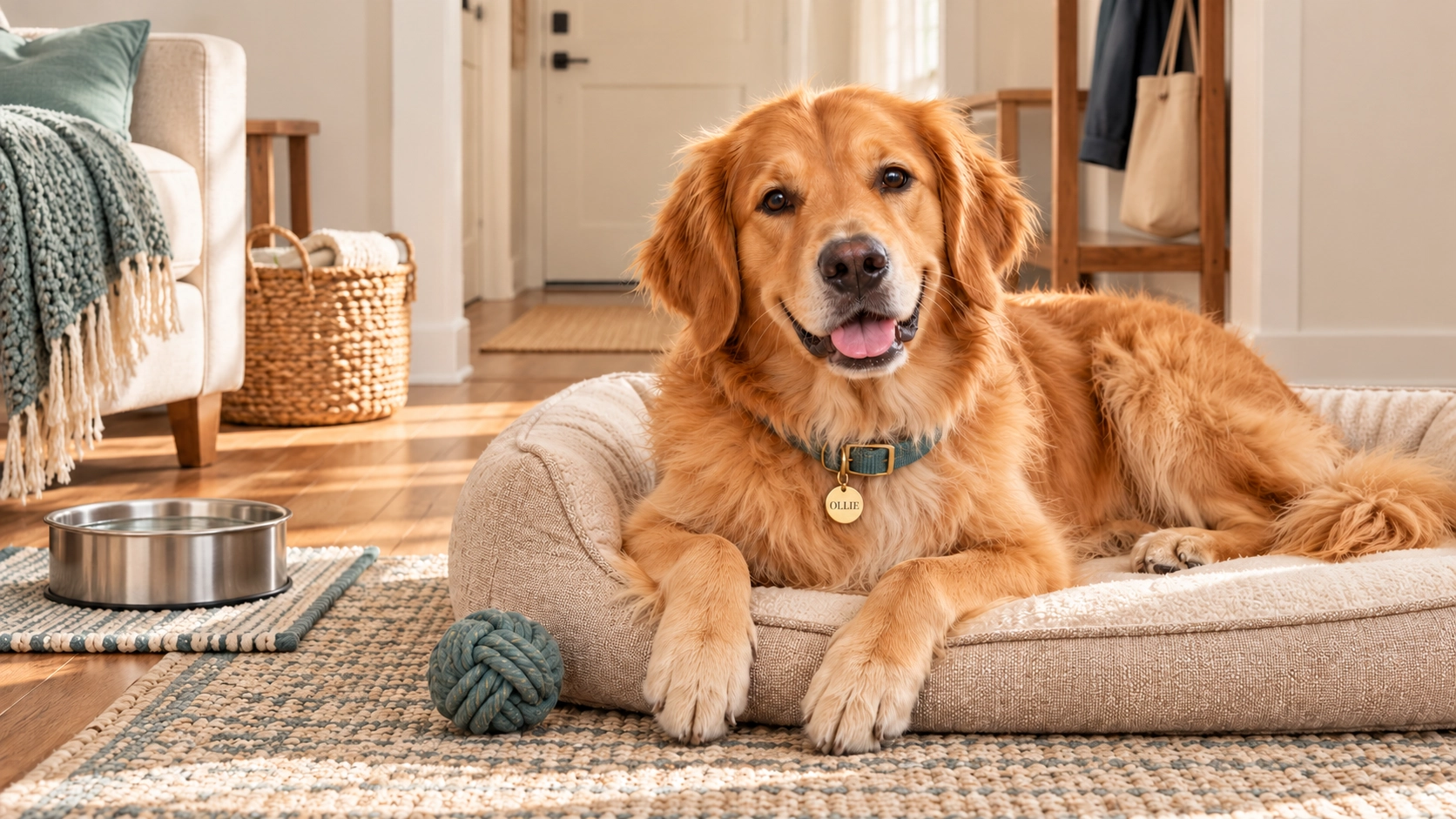
Welcoming a dog into a small home starts with a few practical decisions: where they will rest, how you will handle walks and bathroom breaks, and where everyday supplies will go. Get those basics ready before the dog arrives, then adjust the setup as you learn what works for them.
This new dog checklist covers puppies and newly adopted adult dogs. Adapt it to your dog’s size, age, comfort, and care needs. You can begin with a modest set of supplies and make room for useful additions over time.
Your New Dog Checklist at a Glance
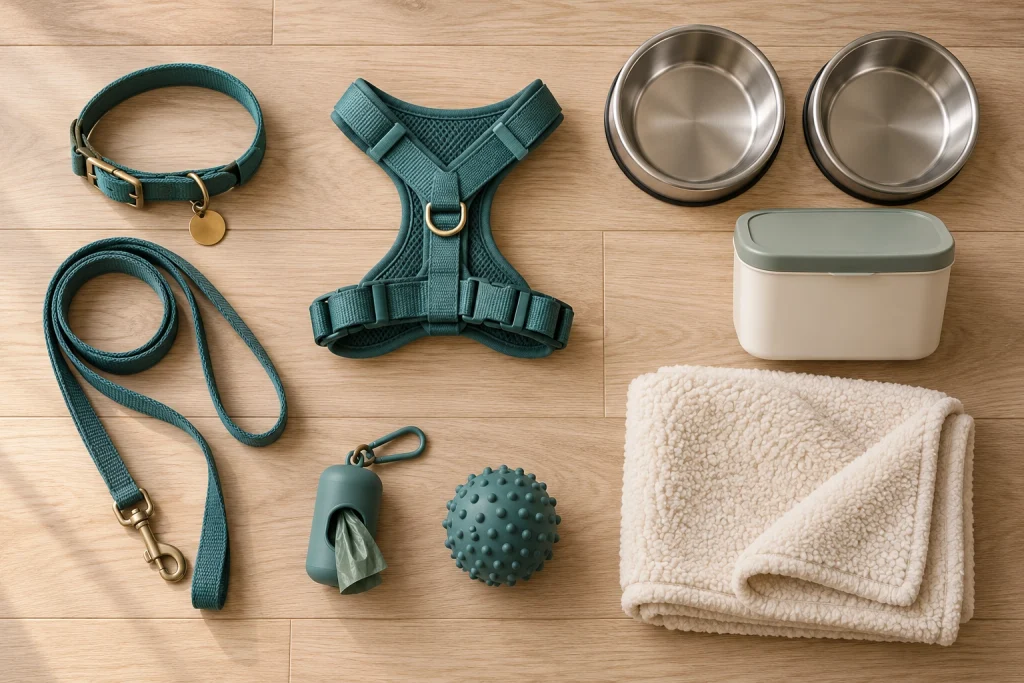
Have these essentials ready before pickup. Ask the shelter, rescue, foster caregiver, or breeder what your dog already uses so you can choose suitable sizes and avoid buying duplicates.
| Item or arrangement | What to prepare | Small-home tip |
|---|---|---|
| Food and bowls | Your dog’s current food, plus clean food and water bowls. | Choose a washable spot that keeps bowls clear of doors and foot traffic. |
| Walking gear and identification | A properly fitted collar or harness, a leash, and an ID tag with current contact details. | Keep the gear together near the exit, beyond your dog’s reach. |
| Resting space | A suitable bed or mat in a quiet area. | Measure the available floor space while leaving a clear walking route. |
| Boundaries | A dog-safe room or appropriate gate or pen if needed. | Check the actual doorway dimensions before buying equipment. |
| Toys | A small selection appropriate for your dog’s size, age, and chewing habits. | Use one storage basket and offer toys under supervision at first. |
| Bathroom and cleanup supplies | Waste bags, cleaning supplies suitable for the surfaces you have, and a toilet-break plan. | Keep the walking kit easy to grab; store cleaning products securely. |
| Care information | Current feeding instructions, health records, microchip details, and veterinary contacts. | Keep a digital folder and one short household care note. |
For the basic supply categories, see the ASPCA’s dog supply checklist and the American Kennel Club’s puppy preparation guide. Check product fit and suitability for the individual dog before buying.
Ask These Questions Before Buying Supplies
A few questions can make your shopping list more useful:
- What food is the dog eating, and what is their current feeding routine?
- What collar or harness size are they wearing? Can the fit be checked before pickup?
- Where do they usually sleep, and are they comfortable with a crate or pen?
- What is their current bathroom routine?
- Are there particular toys, surfaces, household situations, or handling routines they find difficult?
- What records, medications, and care instructions will come home with them?
Write down the answers and share them with everyone who will help care for the dog. For a puppy or a dog with health needs, discuss the care plan with your veterinarian rather than relying on a general checklist.
Give Everyday Activities a Place
You do not need a separate room for every activity. A simple plan can help you use the floor space you have.
A Resting Area
Choose a quiet resting spot where the dog can settle without being stepped over or repeatedly disturbed. Explain to the household that resting dogs need space. Keep the bed clear of door swings, heaters, and busy walkways.
A Food and Water Area
Place bowls on a surface you can clean easily. Keep fresh water available and choose a position the dog can reach comfortably. A crowded doorway or narrow passage usually makes an awkward feeding station.
A Walking Station
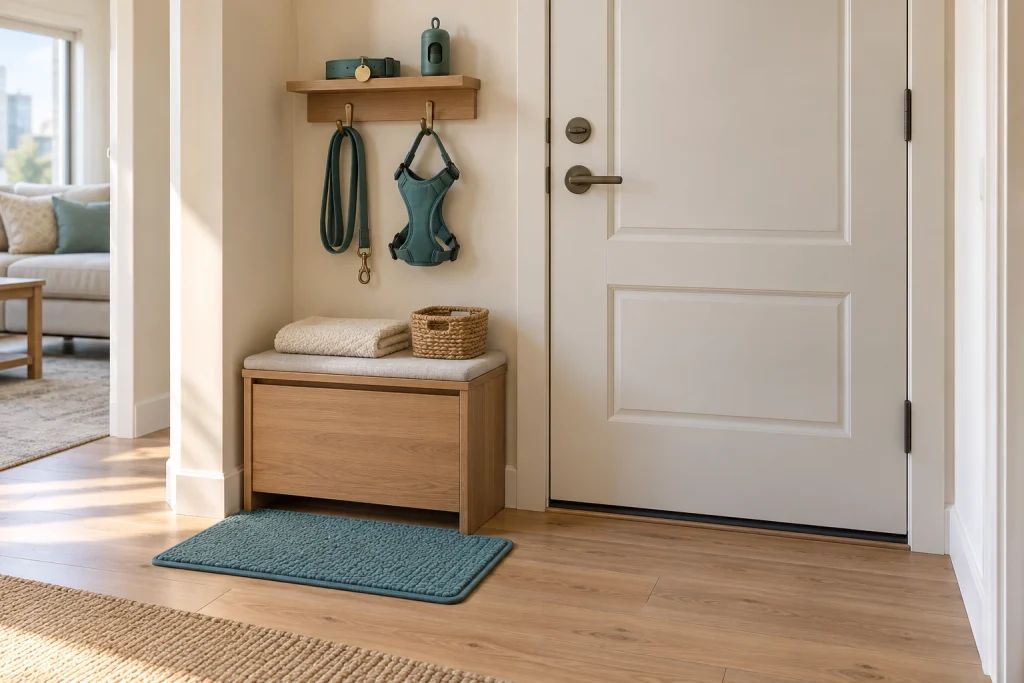
Pick one place for the leash, harness, waste bags, and a towel. Store them so the dog cannot chew them. Having everything together makes it easier to leave the apartment without searching through drawers.
A Compact Example
In a small living room, the bed might sit beside a quiet wall, the bowls might go at the edge of the kitchen, and the walking gear might live in a closed entryway drawer. Keep a route between the rooms clear. Adjust the arrangement if the dog avoids a spot or cannot move through it comfortably.
Do a Dog-Level Safety Check
Look around from the height of the dog you are bringing home. Put medicines, cleaning products, small objects, and loose cords out of reach. Secure trash, check accessible plants, and move items that could be knocked over. Check doors, windows, balconies, and any outdoor boundaries before allowing access.
Best Friends Animal Society recommends checking the home for reachable hazards and escape routes before a new dog arrives. Its new-dog home preparation guide is a useful starting point. Your own check should reflect the dog’s size and the spaces they can actually reach.
If you rent, review your written pet agreement and the building’s shared-space rules. Plan how you will use hallways, elevators, stairs, and entrances with the dog.
Decide How Bathroom Breaks Will Work
Walk through the route from your front door to the intended toilet area. Think about elevator waits, stairs, nighttime access, and bad weather. Agree on who will take the dog out and where the walking supplies will be kept.
Ask the dog’s current caregiver about their routine. For a puppy, ask your veterinarian which outdoor areas and precautions are appropriate while vaccinations are being completed. A new home can also mean changes to an adult dog’s routine, so leave room for frequent supervision and adjustments.
Choose Boundaries That Suit Your Dog
A gate or suitable pen can help you manage access while you supervise your new dog. Check that equipment fits both the opening and the dog; a compact product is only useful if it provides suitable space and secure boundaries.
If you plan to use a crate, choose one that allows the dog to move and rest comfortably. Introduce it gradually and positively. A crate should not be used as punishment or as a place to leave a dog for long periods. Blue Cross explains appropriate use in its dog crate guide and puppy crate training guide.
A dog who is unfamiliar with a crate needs an introduction plan. Ask the rescue, shelter, or a qualified reward-based trainer for help if the dog appears distressed by confinement.
Keep the Arrival Plan Simple
- Before pickup, have the supplies, identification, and care information ready.
- Confirm the fit of walking equipment and arrange suitable transport.
- Follow your agreed bathroom plan when you arrive home.
- Introduce the prepared area at the dog’s pace, with fresh water available.
- Keep household activity low-key and postpone a busy welcome party.
- Offer the familiar feeding routine and opportunities to rest.
This is a flexible arrival outline, not a timetable every dog must follow. If other pets already live in the home, make a separate introduction plan with the adoption organization or an appropriate professional.
Purchases You Can Review After Arrival
Consider leaving room in the budget for things you discover you need. Extra beds, large toy collections, multiple enrichment gadgets, and decorative storage can wait while you learn the dog’s preferences.
For example, measure the space and watch how the dog rests before buying another bulky bed. Try a small selection of suitable toys before filling a basket. Keep spending on required veterinary care, essential equipment, and any prescribed treatment separate from optional purchases.
A Final Check Before Pickup
- The dog’s current food and clean bowls are ready.
- Walking gear and an ID tag are prepared.
- The resting area and clear walking routes are in place.
- Household hazards and access points have been checked.
- The bathroom-break and supervision plans are agreed.
- Care records and veterinary contact details are easy to find.
- Everyone in the household knows the basic routine.
Frequently Asked Questions
What should I buy first for a new dog?
Start with current food, clean bowls, correctly fitted walking gear, identification, a suitable resting place, waste bags, and a few appropriate toys. Confirm the dog’s individual care needs and any existing supplies before completing the shopping list.
Do I need a crate in a small apartment?
You need a suitable resting area and a plan for supervision and safe access. A crate may be part of that plan if it suits the dog and is introduced properly. Choose equipment for the dog’s needs as well as the space available.
Can the bed and bowls go in the same room?
They can be in the same room if both locations work for the dog. Keep water accessible, allow space around the resting area, and avoid placing bowls or bedding where people regularly need to step over them.
How long will a new dog take to settle in?
There is no fixed adjustment period that fits every dog. Their previous experiences, health, temperament, and the new environment all matter. Keep the routine consistent and ask the adoption organization, your veterinarian, or a qualified behavior professional for help with concerns.
Sources and Further Reading
- ASPCA: General Dog Care and Dog Supply Checklist
- American Kennel Club: New Puppy Checklist
- Best Friends Animal Society: Bringing a New Dog Home
- Blue Cross: Dog Crates
- Blue Cross: How to Crate Train Your Puppy
Learn about our research and correction process in the Dog Life Notes editorial policy.
