
How to Play Find It With Your Dog Indoors
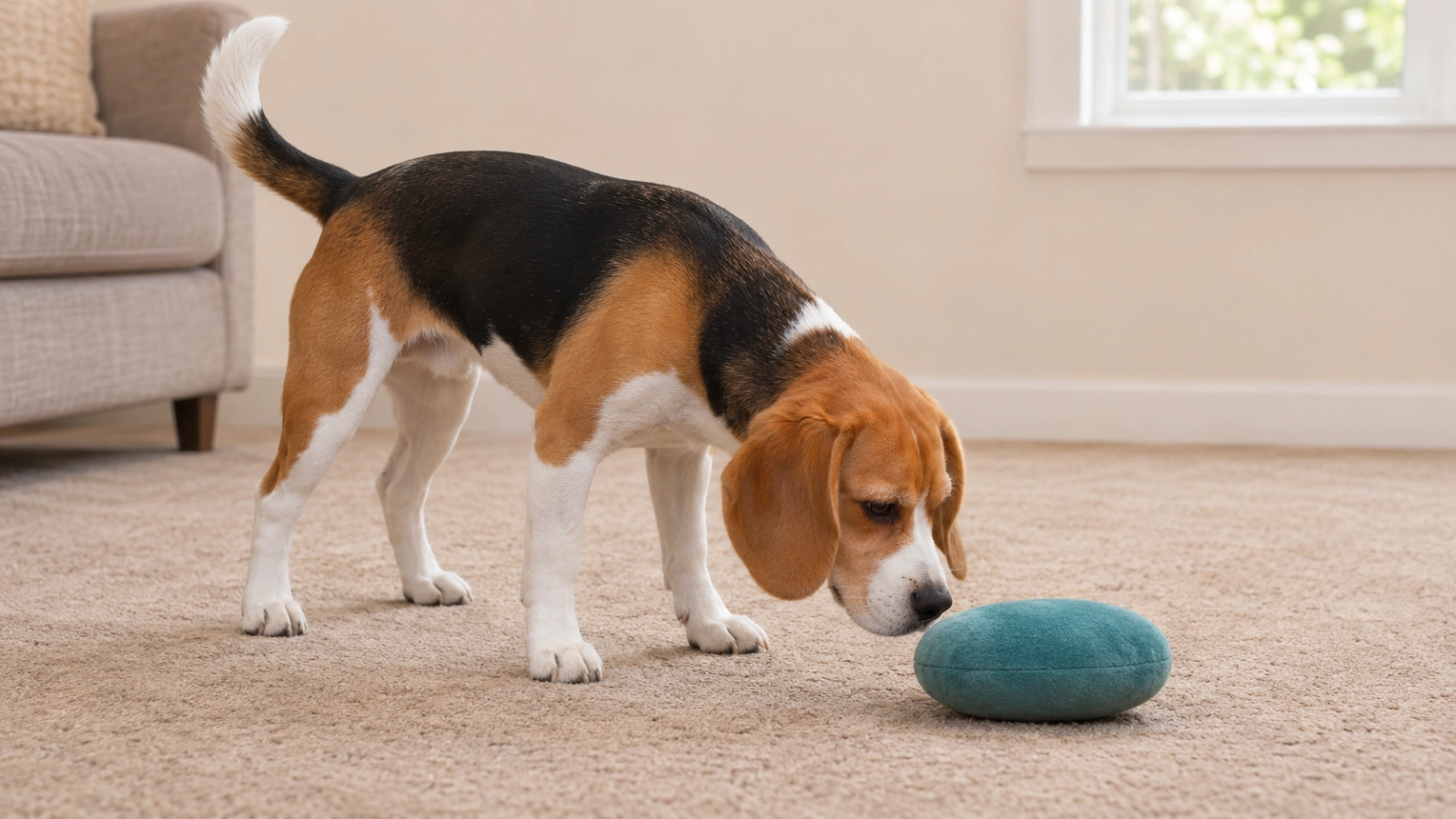
To play Find It with your dog indoors, show them a suitable toy or food reward, place it in an obvious spot, and let them investigate. Say “find it” once as you begin. Make the first find easy enough that your dog can reach the reward without squeezing, climbing, or moving obstacles.
Here, Find It means searching for a toy or food reward. Finding a hidden person is a different game. You can use a small patch of floor and repeat the easiest version; there is no need to complete a set number of searches. Our indoor games for dogs in small spaces guide offers other activities when your dog would prefer something else.
Prepare a Clear Area and a Reward Your Dog Wants
Choose a quiet, familiar area with secure footing and room for your dog to turn around. Clear away cords, small objects, spills, and unrelated items that could be swallowed or knocked over. A flat rug that stays in place may help on a slippery floor. Keep the game away from stairs, busy doors, heaters, and household traffic.
Check the space from the dog’s level. Our room-by-room puppy-proofing checklist can help you notice reachable hazards. Stay with the dog throughout the game. Give other pets their own comfortable space rather than asking them to compete for the same reward.
Choose a Toy or Food Reward
Toy option: Use an intact toy your dog already likes to investigate, carry, or play with. Check its size, condition, and intended use. Humane World’s toy guidance emphasizes individual suitability, supervision, and removing damaged toys. Finding the toy can lead to a short game together if your dog wants one. Dogs Trust’s indoor-play advice includes this toy-search approach.
Food option: Use suitable food your dog is allowed to eat, in pieces appropriate for them. Account for it within their current feeding plan, including any restrictions. Battersea’s search-game guidance suggests using part of the dog’s daily food. Ask your veterinarian if you are unsure about adding treats or adapting a prescribed diet.
Treats are optional. Choose the version your dog engages with willingly. The AKC’s brain-games guide also describes searching for either food or a favorite toy. Start with one type of reward so the task stays straightforward.
Start With an Obvious Find
Begin with a reward on open floor, close enough to be easy to notice. Let your dog watch you place it; a visible find is a useful first step.
- Show it: Briefly let the dog see the toy or suitable food reward without teasing them with it.
- Place it: Set it down in clear view. Begin with one easy target so you can keep track of it.
- Invite the search: Say “find it” once and give the dog room to approach. You can point to the reward if that helps.
- Let the find pay off: Allow the food reward, or let the dog enjoy the toy appropriately. Add quiet praise if your dog enjoys it.
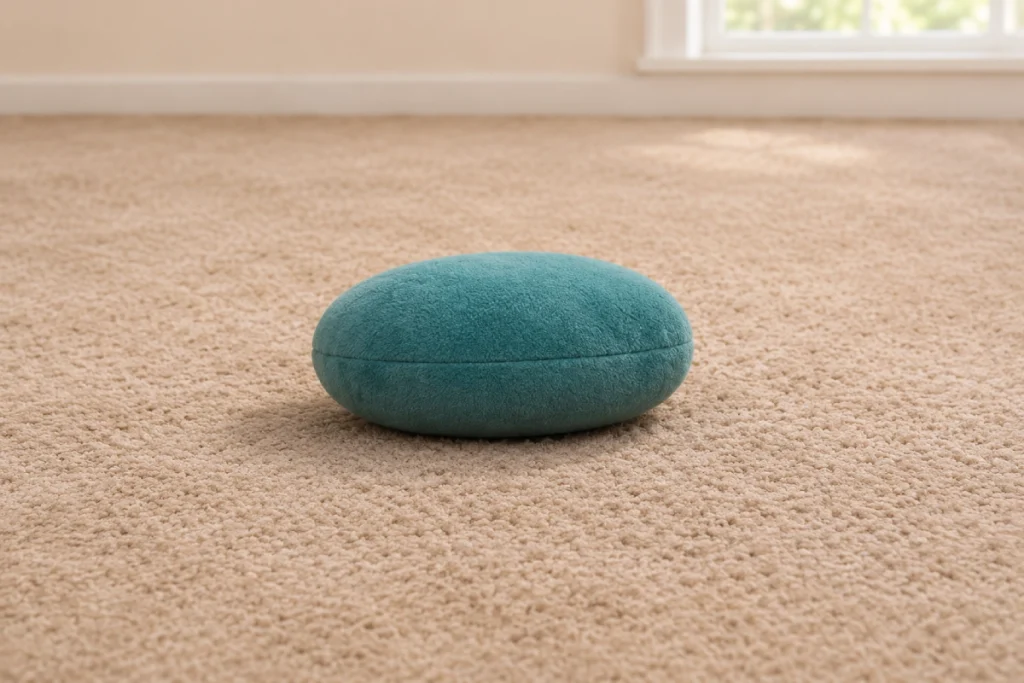
Your dog can look as well as sniff. There is no requirement to use their nose in a particular way. A toy find does not require a formal retrieve, a sit, or bringing the item back to your hand.
A stay command is not required either. If the dog follows you during placement, keep the reward close and obvious. For toy rounds, wait for a natural pause before resetting. Do not chase your dog or pull the toy from their mouth to start another turn.
Use These Three Beginner Levels
Move on only when the current version is easy and your dog continues to participate willingly. Change one feature at a time, such as location or visibility. These levels are adjustable examples, not a daily schedule or a test your dog must pass.
| Level | Try this | Easier version | When to return a step |
|---|---|---|---|
| 1. In plain view | Let the dog watch you place the reward nearby on clear floor. | Place it closer and point to it. | They do not notice it or cannot reach it comfortably. Stop if they prefer to leave. |
| 2. A small location change | Keep the reward fully visible but place it a little farther away in the same clear area. Let the dog watch. | Return to the previous close placement. | They repeatedly lose track or look to you for help. End the game if they leave. |
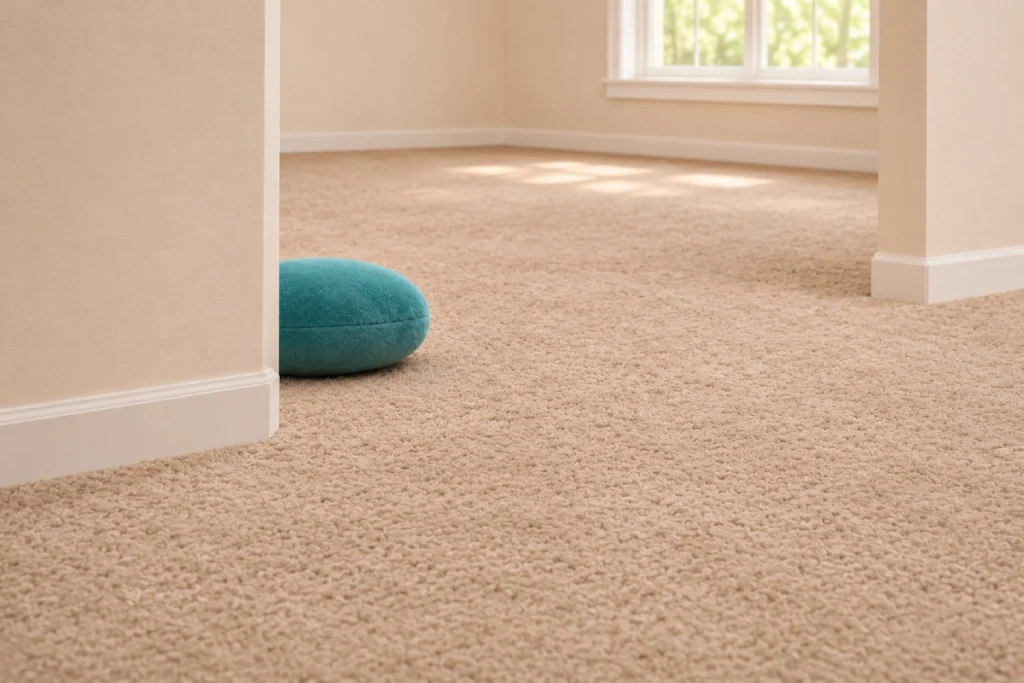
| 3. A partly visible toy | Place part of the toy just beyond the edge of a wide, open doorway, with an unobstructed route to the whole toy. | Show the entire toy again in the same nearby area. | They search at the wrong gap, try to squeeze or move something, or need repeated prompting. |
For the doorway example, choose an opening without a door in the route, or secure the door safely open before practice. Keep part of the toy visible and enough clear floor for a normal approach. The dog should not need to put their head into a gap or retrieve anything from underneath furniture.
Food searches can stay uncovered and obvious while you vary the location gently. You do not need to hide food under pots, in clothing, or inside disposable props. Keep track of what you place and collect any uneaten pieces afterward.
Offer Help and Reset When Needed
If your dog stops finding the reward, help promptly instead of repeating “find it” louder. Point to the target, make the toy fully visible, or offer a closer, obvious placement. Battersea recommends helping a dog who is struggling with a food search rather than leaving them frustrated.
Notice the whole situation. Looking away, barking, or leaving can have different causes; no single action diagnoses frustration. Check whether the reward is interesting, the floor is comfortable, the room is distracting, or the placement is simply too difficult. Dogs Trust’s enrichment guidance recommends watching engagement and making an activity easier when needed.
For example, if the dog keeps nosing the wrong side of a doorway, bring the toy back into full view on open floor. If they choose to investigate, let that complete the find. Next time, use the easier placement. If they walk away, end the session rather than following them with the reward.
If the dog stiffens over a toy or food, growls when approached, or tries to guard the item, give space and stop arranging the game. Do not reach in or punish the warning. Dogs Trust’s resource-guarding advice recommends veterinary and qualified behavior support before continuing activities around guarded items.
Finish While the Game Is Still Comfortable
End after an easy find while your dog is still participating comfortably, or sooner if they want to stop. Use a quiet finish cue if helpful. Let them have an appropriate pause with the toy; collect it later when they have finished and it is safe to do so. Remove damaged items from use.
Clear leftover food and return supplies to storage. Keep water accessible and offer undisturbed rest. For a closer look at changes during play, see dog body language during play and when to pause.
Repeat a version that worked on another occasion. You can keep the search in plain view indefinitely if that suits the dog. Stop if movement appears uncomfortable or you suspect illness, and ask your veterinarian for advice. An enjoyable beginner game does not need harder hiding places or a score.
Sources and Further Reading
- Dogs Trust: Enrichment Activities for Dogs
- Battersea: Brain Games for Dogs—Search Games and Helping When Needed
- American Kennel Club: Cognitive Training Games—Toy or Food Searches
- Dogs Trust: Cold-Weather Advice—Indoor Toy Searches
- Humane World for Animals: Choosing Dog Toys
- Dogs Trust: Resource Guarding Food and Toys
