Potty Training a New Dog in an Apartment: Starter Plan
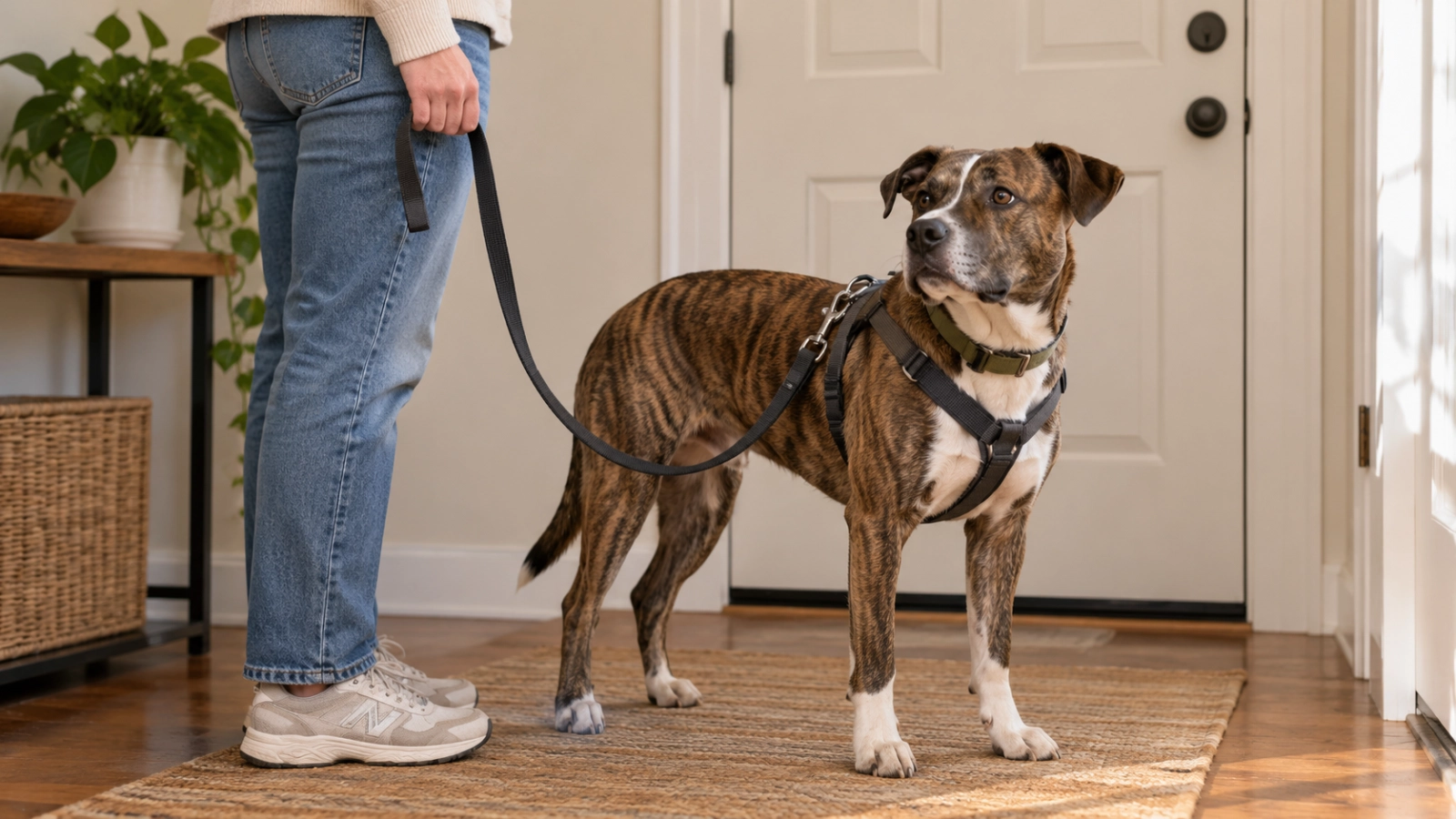
Potty training a new dog in an apartment starts with a reachable toilet area, frequent opportunities, and a reward delivered where the dog finishes. Plan for the whole trip: finding keys, fitting walking gear, reaching the elevator, and getting outside all take time.
Use this starter plan for a puppy or a newly arrived adult, adjusting it to their age, health, previous habits, and what you observe. There is no fixed number of days in which every dog becomes reliable. For the broader supplies and home setup, use our new dog checklist for small homes and apartments.
Ask About Existing Habits and Choose a Suitable Toilet Area
Ask the current caregiver where the dog usually urinates and passes stool, what surface they use, how often opportunities are offered, and what signals they show. Find out whether they have used grass, pavement, pads, or another designated area. Ask about nighttime needs and any medical or mobility instructions, too.
An adult’s experience in another home does not mean they understand your exit or routine. American Humane Society’s housetraining guidance emphasizes teaching both puppies and newly adopted adults the new household’s arrangement.
Choose the intended location before starting. For a puppy with an incomplete vaccination series, discuss the route and toilet area with your veterinarian. AAHA’s new-puppy guidance recommends veterinary advice about vaccination status and local health risks. A shared building relief area, patch of grass, or balcony is not automatically appropriate for every dog.
If outdoor access cannot meet the dog’s immediate needs, discuss a designated indoor option with your veterinarian or a qualified reward-based trainer. VCA’s housetraining guide includes teaching a specific indoor toilet location. Keep that area separate from resting and feeding spaces, and agree on one plan rather than moving pads around after each accident.
Prepare the Route, Supervision, and Cleanup
Walk from the dog’s main supervised area to the intended toilet spot. Check floor traction, doors, elevator access, and building exits. Allow for waiting rather than expecting the dog to hold on through an unpredictable delay. For reachable hazards inside, use our room-by-room puppy-proofing checklist.
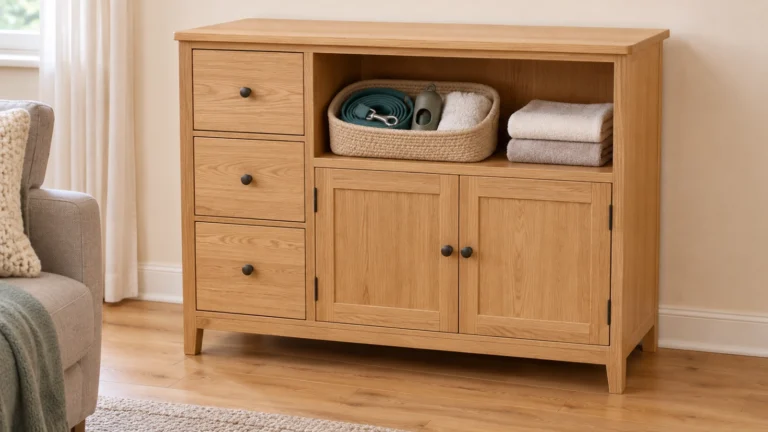
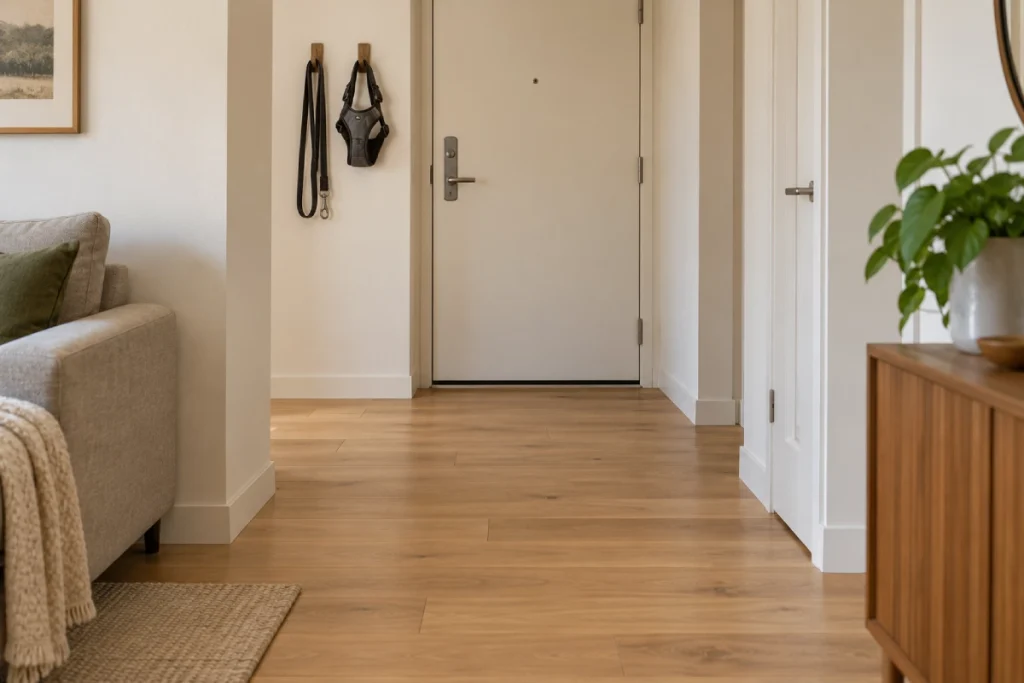
Keep keys, waste bags, suitable food rewards, and the dog’s walking equipment ready for the person handling the trip. Confirm equipment fit and use with the caregiver and manufacturer’s instructions. Secure the leash before opening the apartment exit; keep gear stored off the walking route.
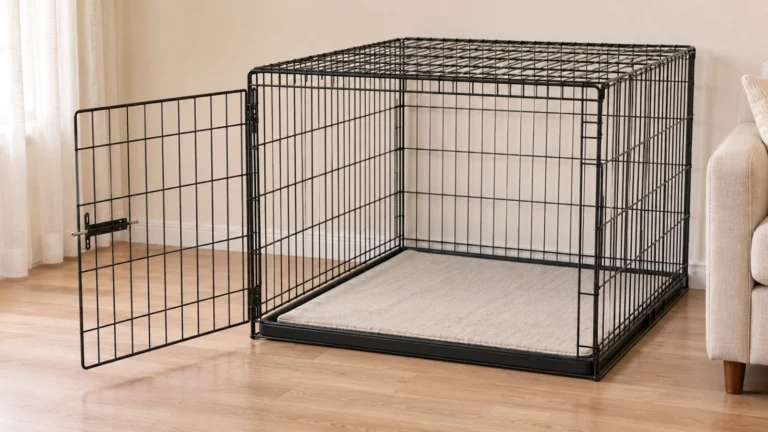
Supervise in a prepared area where you can notice the dog’s behavior. If you cannot watch, arrange another caregiver or an appropriate prepared space and bathroom coverage. Do not tether the dog to furniture. Restricting access does not remove the need to urinate or pass stool.
Have an enzymatic pet-urine cleaner suitable for your flooring, plus cleanup materials, stored securely. Follow the product’s surface, application, and access instructions; avoid improvising a cleaning mixture. American Humane Society recommends enzymatic cleaning after accidents.
Keep fresh drinking water available, including overnight. The ASPCA’s general dog-care guidance recommends access at all times. Do not restrict water to make the toilet schedule easier. Follow an individual medical plan only as directed by your veterinarian.
Offer Toilet Opportunities Around Daily Events
Start with frequent opportunities, using the caregiver’s account and veterinary advice where needed. Add trips around the events below, plus regular opportunities between them. The table is a set of prompts, not a complete timetable: do not wait for a listed event if the dog needs to go sooner.
Dogs Trust’s toilet-training guide identifies waking, eating or drinking, play, and excitement as useful times to offer an opportunity. Age alone cannot tell you exactly how long an individual dog can wait.
| Event | What to offer | Apartment adjustment |
|---|---|---|
| Waking in the morning or after a nap | A prompt trip to the agreed toilet area. | Have the walking kit ready before the dog wakes. |
| After eating or drinking | An opportunity based on the dog’s emerging pattern. | Record the interval instead of assuming one fixed delay. |
| During or after play and excitement | Pause for a quiet toilet opportunity. | Allow time for gear and elevator waits before urgency builds. |
| Awake periods between major events | Additional planned opportunities; watch for the dog’s signals. | Set reminders and shorten gaps if the current plan misses needs. |
| Before bed or when waking overnight | The planned bathroom opportunity and appropriate follow-up. | Agree who handles the trip and keeps the route accessible. |
| Before an absence and when care resumes | Offer a trip and arrange coverage for needs while you are away. | A trip before leaving does not cover an unlimited absence. |
Sniffing, circling, restlessness, or moving toward the exit can be clues to offer a trip. Watch the pattern rather than treating every sniff as certainty. Do not wait for a new dog to invent a clear door signal before helping.
For the resting arrangement and overnight responsibilities, our guide to your new dog’s first night covers the sleep setup separately.
Reward the Result Where It Happens
Accompany the dog to the agreed area and stay close enough to observe and reward. Use the leash appropriately outdoors and allow time without crowding or rushing them. Keep the opportunity focused on toileting rather than immediately starting a busy greeting or game.
When the dog has completely finished, promptly give a small, suitable food reward and calm praise they enjoy. Use rewards that fit the dog’s usual or prescribed diet. Reward at the toilet location, before returning through the building. Humane World for Animals’ potty-training advice stresses waiting until the puppy finishes before rewarding; interrupting with the reward can distract them.
If nothing happens, return to the prepared area and supervise closely. Offer another opportunity soon, guided by signals and the log. A trip without a result does not mean the dog can now wait through a long unsupervised period. Dogs Trust recommends close observation and another opportunity when needed.
Handle Accidents Without Punishment
If you notice the early signs, calmly offer the correct location. If the dog is already toileting, stay calm and avoid startling or grabbing them. If you find an accident later, clean it up without scolding. The RSPCA’s toilet-training guidance advises against punishment both during an accident and afterward.
Clean according to the pet-urine product’s directions and keep the dog clear while you work. Then review the practical setup: was there a long gap, a missed waking event, an elevator delay, or a handoff in which each person thought the other had taken the dog out? Record what happened without assuming every accident is a training error.
Copy This Toilet Log and Review the Pattern
Use one shared note so everyone records the same information. In the Result column, distinguish urine, stool, no result, and an accident; note whether the reward was given. The example row is illustrative, not a suggested clock schedule.
Dog: ____________________ Date: ____________________
| Time | Event | Location | Result | Next adjustment |
|---|---|---|---|---|
| Example: 7:10 a.m. | Woke from a nap | Agreed outdoor spot | Urinated; rewarded | Keep the kit ready for waking. |
| ____________ | ____________ | ____________ | ____________ | ____________ |
| ____________ | ____________ | ____________ | ____________ | ____________ |
| ____________ | ____________ | ____________ | ____________ | ____________ |
Look for an adjustment you can act on. If accidents repeatedly happen on the way out after play, offer the opportunity earlier and allow more time for the route. If handoffs are unclear, name the person responsible for the next trip. Preserve meal and care instructions while you learn the dog’s pattern.
When the current plan cannot provide access often enough, arrange help or review the toilet-location plan. Do not solve the problem by expecting longer holding. Share the log with a trainer or veterinarian when you need support.
Keep Health Concerns Separate From Training
Contact your veterinarian about a sudden change in a previously reliable dog, persistent accidents, blood in urine, or apparent pain while urinating. VCA advises veterinary consultation when a previously house-trained dog starts soiling indoors. A move or an incomplete training routine does not rule out a health problem.
Seek urgent veterinary help if the dog repeatedly strains and produces little or no urine. The American College of Veterinary Surgeons’ urinary-obstruction guidance advises immediate care when a dog cannot urinate. Do not wait to complete several days of logging or treat this as refusal to use the correct spot.
For ongoing training difficulties, ask a qualified reward-based trainer to review access, supervision, timing, and rewards alongside any veterinary advice. Mention if accidents happen specifically when the dog is alone; that pattern needs individual assessment rather than punishment or an assumption about the cause.
Sources and Further Reading
- Dogs Trust: How to Toilet or House Train Your Dog
- Humane World for Animals: Potty Training a Dog or Puppy
- RSPCA: Toilet Training Your Puppy or Dog
- VCA Animal Hospitals: House Training for Puppies and Dogs
- American Humane Society: Housetraining Puppies and Dogs
- AAHA: Bringing Home a New Puppy
- ASPCA: General Dog Care
- American College of Veterinary Surgeons: Urinary Obstruction in Dogs