How to Measure Your Dog for a Bed: Size Worksheet
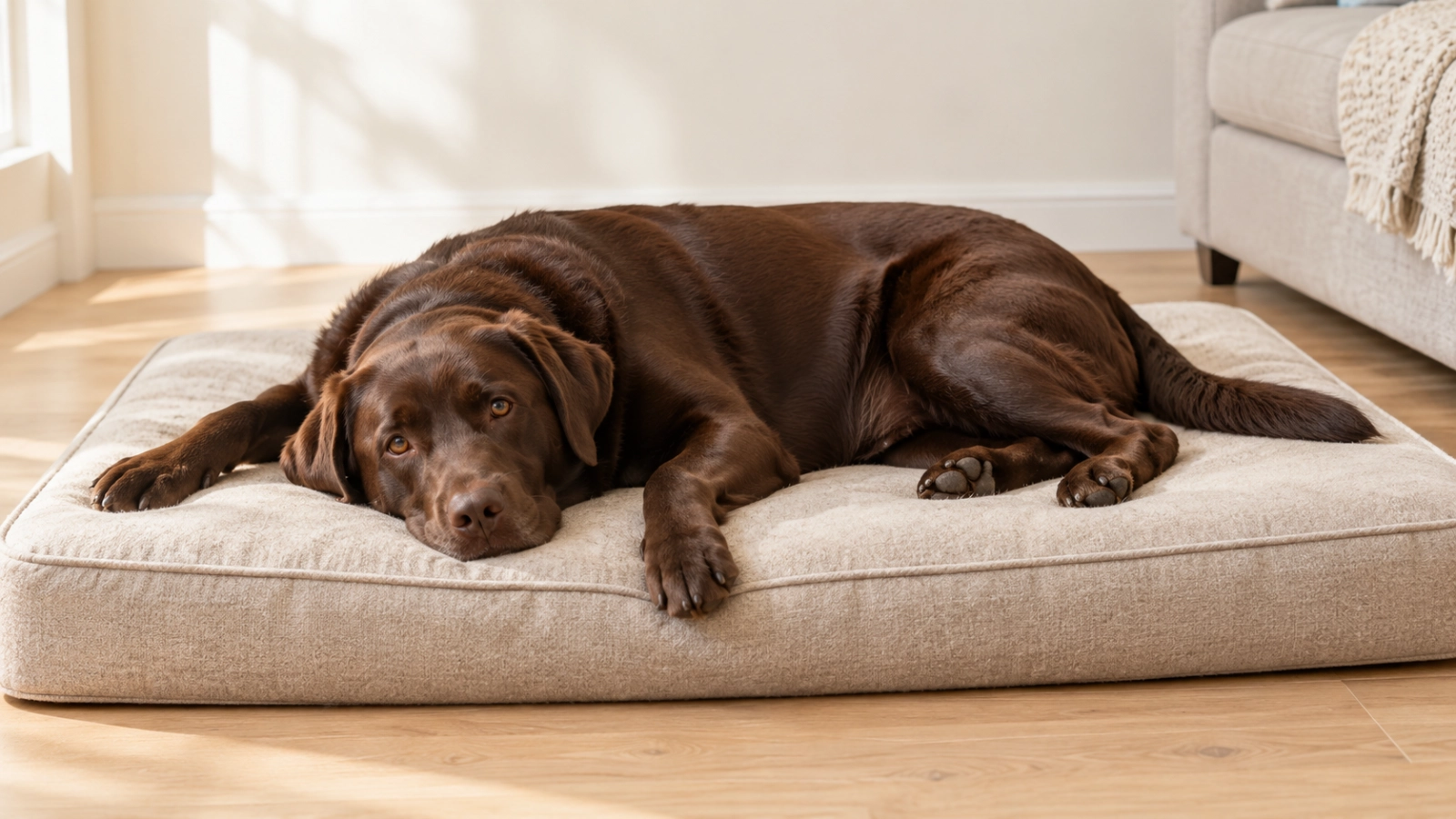
To measure your dog for a bed, record the space they occupy while resting naturally, then compare that footprint with the bed’s usable sleeping surface. Keep the bed’s outside dimensions separate: a large-looking bolster bed may offer less space inside than you expect.
You need a tape measure, a few notes, and an ordinary opportunity to observe your dog. There is no universal number of extra inches to add. The useful result is a set of measurements you can compare with the exact bed’s sizing guidance, shape, and access requirements.
Watch How Your Dog Naturally Rests
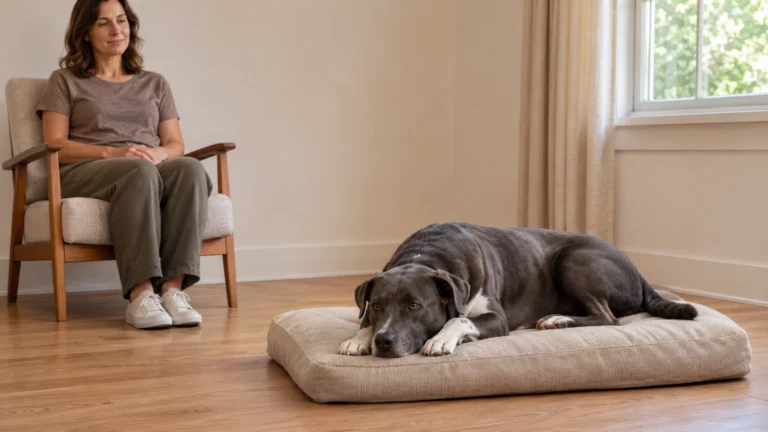
Notice more than one resting position. Your dog might curl up for one nap and lie on their side with their feet extended for another. The RSPCA’s dog-bed guidance says a bed should accommodate natural resting positions, including stretching out. Measuring only a compact curl can miss space the dog uses at other times.
Observe quietly without arranging the dog for a photograph or measurement. Do not wake a sleeping dog, straighten their legs, or pull their tail into position. Wait for a relaxed, awake resting opportunity if measuring nearby would disturb them.
If your dog has not arrived yet, ask their current caregiver for resting measurements and information about the bed they use. Treat that as a starting point and check again once you can observe the dog at home.
Measure a Resting Footprint Without Forcing a Pose
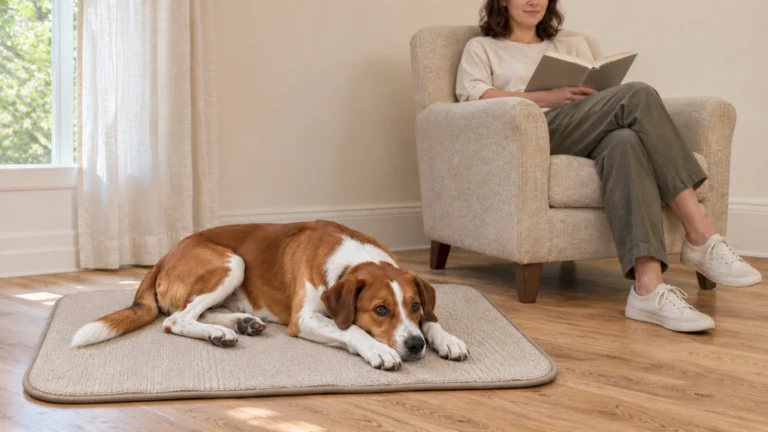
For this worksheet, a resting footprint means the length and width of the space occupied by your dog in a chosen resting position. Measure across the floor or resting surface, rather than following the curve of their back.
- Record the position. Write a short description, such as “lying on side, front feet extended.” This makes later measurements easier to interpret.
- Measure length. Hold a flexible tape straight beside the dog, without touching or restraining them. Record the full head-to-rear span of the resting position, including feet or a tail that naturally extend beyond the body.
- Measure width. Record the widest side-to-side span of the resting position, at a right angle to that length. Include legs or a tail extending sideways rather than measuring only the torso.
- Repeat for other usual positions. Keep the largest observed length and largest observed width, even if they come from different positions. These are starting dimensions for comparing beds, not a guarantee of fit.
If the tape makes your dog move away or become uncomfortable, stop and try another opportunity. You can instead note the space they occupy on an existing mat, then measure that area after they get up. Keep measuring tools out of their mouth and put them away afterward.
Separate Sleeping Space From Outside Dimensions
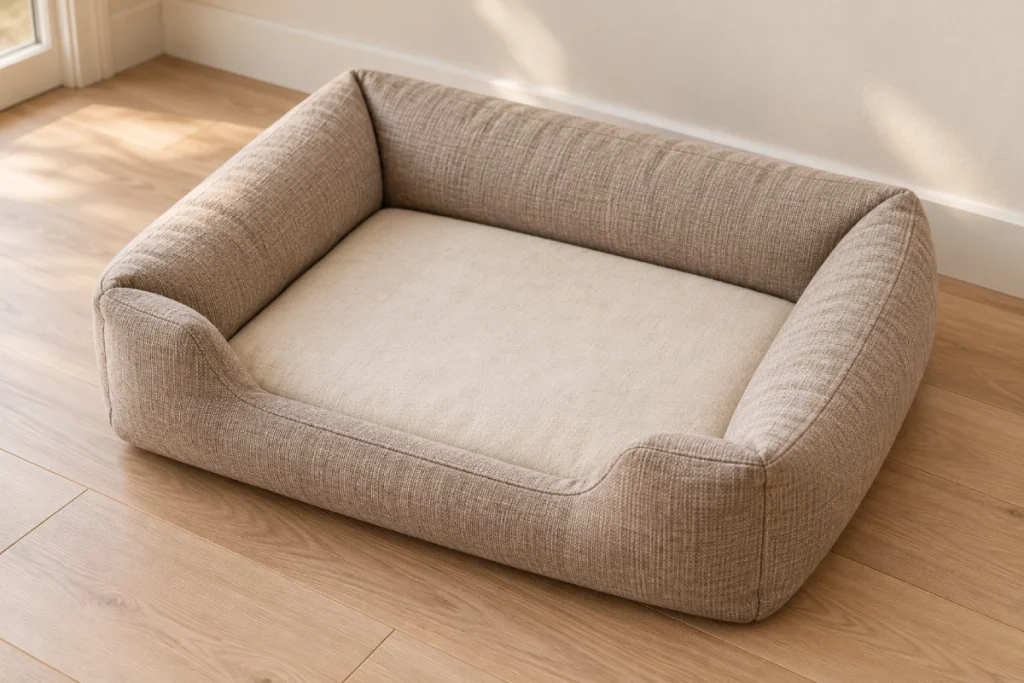
Usable sleeping space is the area available for resting. Outer dimensions describe the bed’s full footprint, including bolsters, rims, or a frame. Use the first measurement to assess space for the dog and the second to assess space in your home.
For example, K9 Ballistics’ sizing instructions explain that raised bolsters can reduce the sleeping area within the overall footprint. Its breed and weight suggestions are starting references rather than guarantees that an individual dog will fit.
When checking an empty bed, leave it assembled in its normal shape. Measure the usable surface between the inside edges of the bolsters at the level where the dog would rest. Measure outside edge to outside edge separately. Do not press the sides outward to create a larger reading. If the sides slope or the manufacturer measures at a different level, ask for clarification.
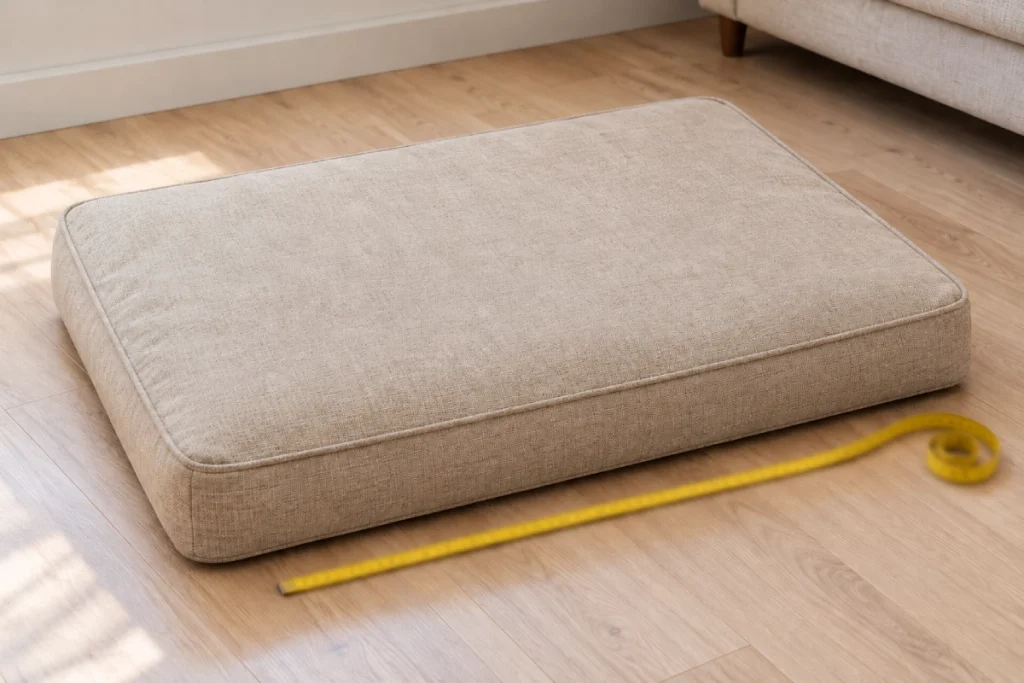
For a round bed, ask for the usable inside diameter; for an oval, ask for both inside length and width. Curved edges do not offer the same outline as a rectangle. Compare the shape as well as the numbers, especially for a dog that extends their legs.
Read the Exact Bed’s Sizing Guidance
Check the selected model and size, not just a general “large dog” category. Orvis’ sizing guide notes that the same size name can differ between its bed styles. A weight range or breed example should help you find options to investigate, not replace measurement.
Some manufacturers ask for a separate body measurement, such as nose to tail base. Label that measurement separately from the resting footprint and follow the instructions for the specific product. Any suggested extra allowance belongs to that sizing method; do not turn it into a rule for every bed.
Ask whether the published dimensions describe the assembled bed and whether they are exact or approximate. K9 Ballistics’ measurement explanation distinguishes rigid-frame dimensions from the variability of some soft-filled beds. If space is tight, confirm the tolerances instead of assuming a soft bed will squeeze into the gap.
Copyable Dog Bed Measurement Worksheet
Copy these rows into a document to fill in, or print them for handwritten notes. Use inches throughout, with centimeters alongside if helpful. To convert, multiply inches by 2.54. Keep unconfirmed product information marked “unknown” until the manufacturer answers.
Date: ______ Position 1: ______ Position 2: ______
Candidate manufacturer, model, and size: ______
| What to record | Inches | Optional centimeters |
|---|---|---|
| Position 1: length × width | ____ × ____ | ____ × ____ |
| Position 2: length × width | ____ × ____ | ____ × ____ |
| Largest observed resting length | ____ | ____ |
| Largest observed resting width | ____ | ____ |
| Separate body length, if the maker requests it | ____ | ____ |
| Bed’s usable length × width | ____ × ____ | ____ × ____ |
| Usable inside diameter, for a round bed | ____ | ____ |
| Bed’s outer length × width | ____ × ____ | ____ × ____ |
| Sleeping-surface height above the floor | ____ | ____ |
| Lowest entry-edge height, if different | ____ | ____ |
| Available floor space: length × width | ____ × ____ | ____ × ____ |
Sizing-page link and date checked: ______
Measurement method or tolerance still to confirm: ______
Care instructions and access questions: ______
An Illustrative Comparison
Illustrative example only: These hypothetical figures do not describe a tested dog or any manufacturer’s product. Suppose the recorded resting footprint is 32 × 22 inches.
- Bed A: Outside dimensions are 40 × 30 inches, but the usable surface is 28 × 20 inches. The impressive outside size does not provide the recorded sleeping length or width.
- Bed B: Outside dimensions are 38 × 28 inches, with a usable surface of 34 × 24 inches. It clears this initial length-and-width comparison, although shape, access, and the manufacturer’s guidance still need checking.
The example demonstrates which dimensions to compare. It does not establish a recommended clearance or prove that Bed B would be comfortable for a particular dog.
Check Access, Cleaning, and the Room Footprint
Before buying, check the height of the sleeping surface and any edge the dog must cross. Can they approach and leave without an awkward squeeze? If pain or mobility concerns affect bedding choice, ask your veterinarian about the dog’s individual needs. Measurements alone do not determine orthopedic support.
Read which parts can be removed and washed, whether the complete bed fits your washing equipment, and what drying method the maker allows. Do not assume a washable cover means the filling is washable. The ASPCA’s general-care guidance includes regular bedding washing; the actual care label should guide how you clean the chosen bed.
Finally, compare the full outer footprint with the available floor space and leave access around it. The RSPCA’s home-environment advice calls for a clean, dry, comfortable place for undisturbed rest. Our guide to where to put a dog bed in a small home covers location, doors, and household walking routes in more detail.
If the right sleeping surface will not fit in the first spot you measured, reconsider the location or bed design rather than choosing an undersized sleeping area. After the bed arrives, check its assembled dimensions and let your dog investigate voluntarily. Keep the measurements and revisit them as the dog grows or their resting habits change.