Where to Put a Dog Bed in a Small Home
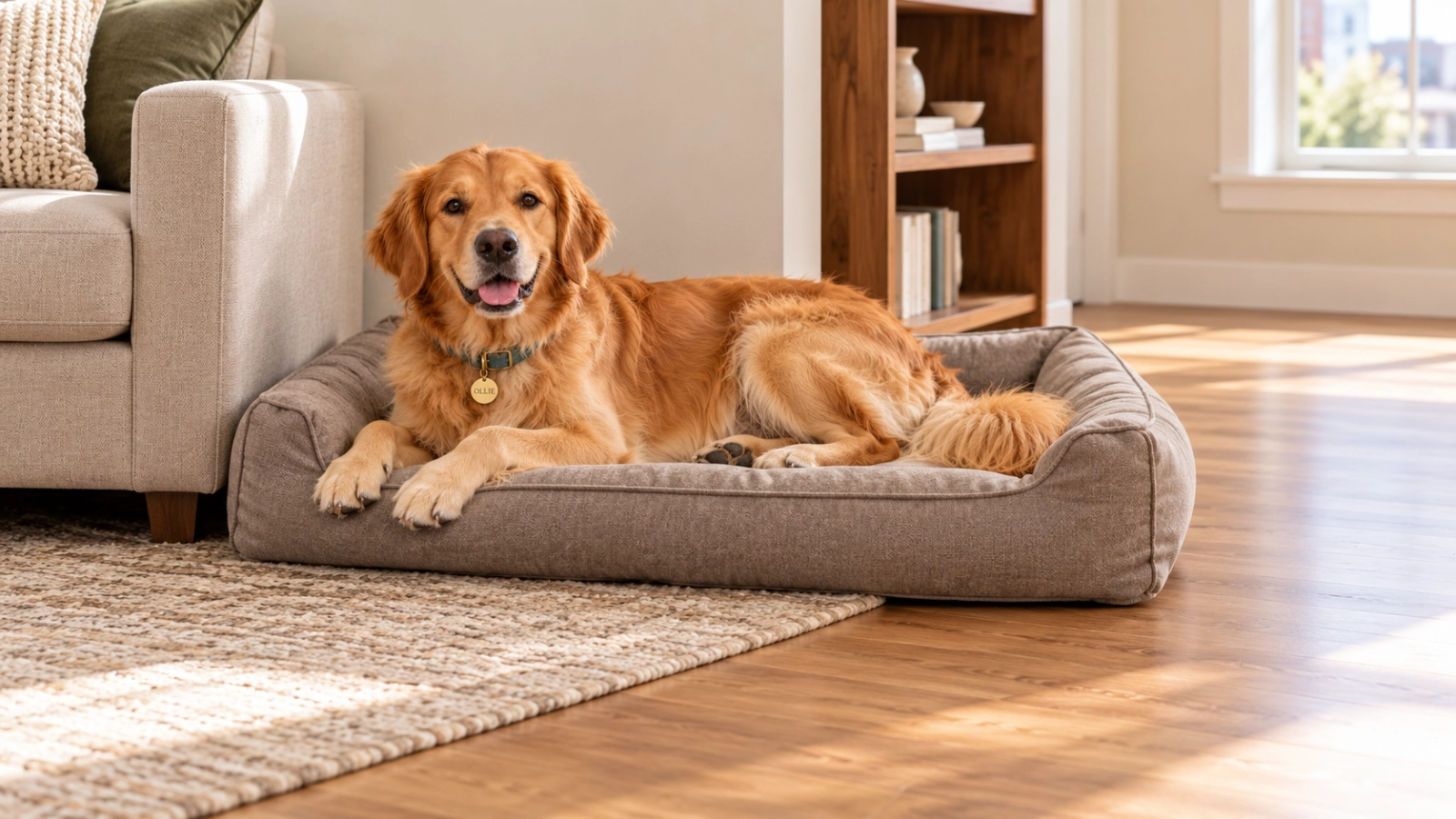
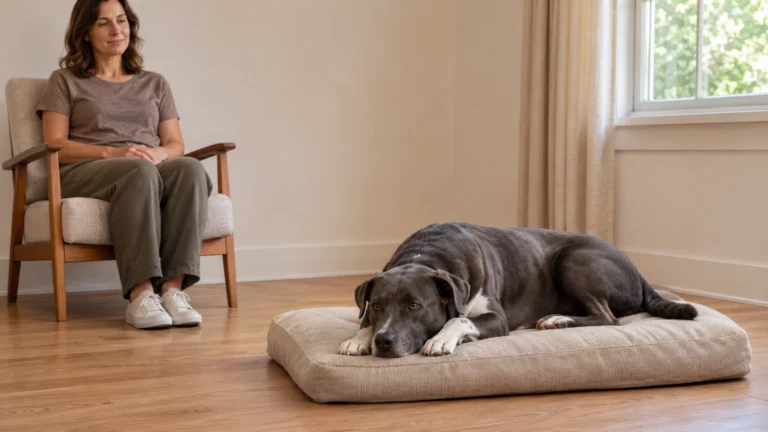
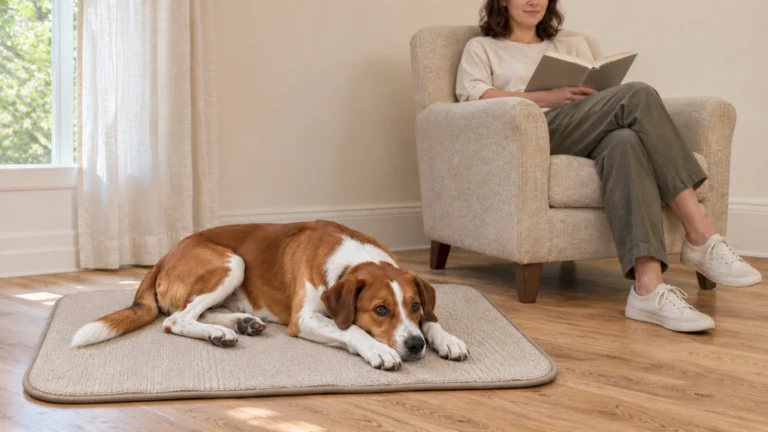
Put your dog’s bed in a quiet, comfortable spot they can reach easily, with enough room to get in and out without blocking a doorway or walking route. In a small apartment, that might be beside the sofa, along a bedroom wall, or in a quiet corner of a shared room.
Start with two possible locations and compare how they work during an ordinary day. The best choice depends on your dog’s preferences, the room’s activity, and whether people can leave the resting dog undisturbed. You do not need a separate dog room or a single permanent sleeping location.
Watch Where Your Dog Already Chooses to Rest
Notice where your dog lies down when the household is going about its day. Do they settle beside the couch while you read, or choose a quieter room when the television is on? Look for a pattern across different times rather than judging the location from one nap.
Dogs Trust’s guidance on creating a resting space suggests starting with a familiar area where the dog already spends time or rests. It also recognizes that some dogs prefer being near the family, even when a quieter space is available.
A chosen spot is useful information, not proof that the whole setup works. Check what changes there: an afternoon sun patch may disappear, a work call may start, or the nearby door may open repeatedly. Use those observations to make a short list of places worth trying.
If your dog has not arrived yet, ask their current caregiver where they usually rest. Dogs Trust’s rescue-dog settling advice emphasizes finding out an adult dog’s existing routines and preferences. Prepare a sensible starting spot, then allow room to adjust.
Compare Living Room and Bedroom Locations
The living room can offer company without requiring your dog to lie in the middle of household movement. A bedroom may provide quieter daytime rest, provided your dog can actually access it. Neither room is automatically the right answer.
The RSPCA’s dog-bed guidance supports offering both an undisturbed resting option and a place near the family. If space allows, those can be separate spots. If it does not, begin with the most workable location and observe how your dog uses it.
| Possible location | When it may work | What to check |
|---|---|---|
| Beside a sofa | Your dog chooses to rest near people and that side of the room stays relatively quiet. | People can sit down and stand up without stepping over the bed; recliners or other moving furniture cannot catch it. |
| Along a living-room wall | You can keep a resting place near household activity while leaving the central route open. | The wall is outside the kitchen-to-door route and away from speakers, heating equipment, and reachable cords. |
| In a bedroom corner | The bedroom provides an accessible place for rest away from daytime activity. | The bed does not block the closet, bedroom door, or route around the human bed. |
| In a studio’s quieter corner | One room serves several purposes and you need a spot away from the busiest activity. | Work-chair movement, cooking, television use, and the route to the bathroom do not repeatedly interrupt the area. |
| In an entryway or narrow hallway | The empty floor space looks convenient, but it may be a poor resting location. | Check door swings, arrivals, deliveries, and escape routes. Choose another spot if anyone must squeeze past or step over the dog. |
Use the table to narrow your choices, then check each spot with your own furniture and household routine. A corner that looks empty in a photo can still be busy in daily use.
Test the Walking Route and Door Swing
Before putting the bed down, walk between the places people use most: the couch, kitchen, bathroom, bedroom, and front door. Carry a laundry basket or imagine bringing groceries inside. A location that only works when everyone walks carefully around it needs another look.
Place the bed while your dog is elsewhere, then check these ordinary movements:
- Open nearby doors fully and check the space they sweep across.
- Open closet doors and drawers without pushing the bed aside.
- Pull out desk or dining chairs and check moving furniture.
- Walk the main route without stepping across the bed.
- Leave room for the dog to enter, turn, and leave without squeezing between objects.
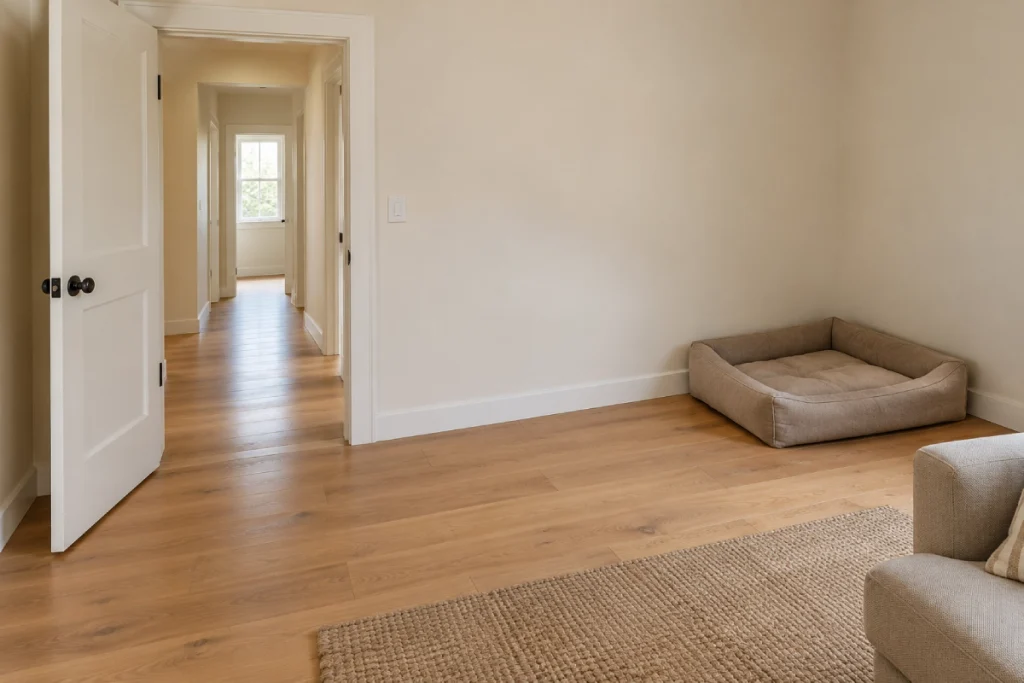
A household member using a cane, walker, wheelchair, or other mobility aid should be able to use their usual route with the bed in place. Keep exits clear. Do not solve a space problem by choosing a bed too small for your dog; compare another location instead.
Before buying, use our guide to measuring your dog for a bed to compare their resting footprint with the bed’s usable sleeping space.
Check the immediate surroundings as well. The RSPCA’s home-environment advice calls for a clean, dry, quiet resting place away from drafts. Avoid putting the bed directly beside a heater, in a strong air-conditioning draft, or where the floor regularly gets wet.
For a puppy, use our room-by-room puppy-proofing checklist to check reachable cords, stored items, and access around the chosen spot.
Keep Water Accessible Without Crowding the Bed
Your dog should be able to reach clean drinking water; the ASPCA’s general dog-care guidance recommends keeping fresh water available at all times. Check access during the hours your dog uses the bed, including when household doors are closed.
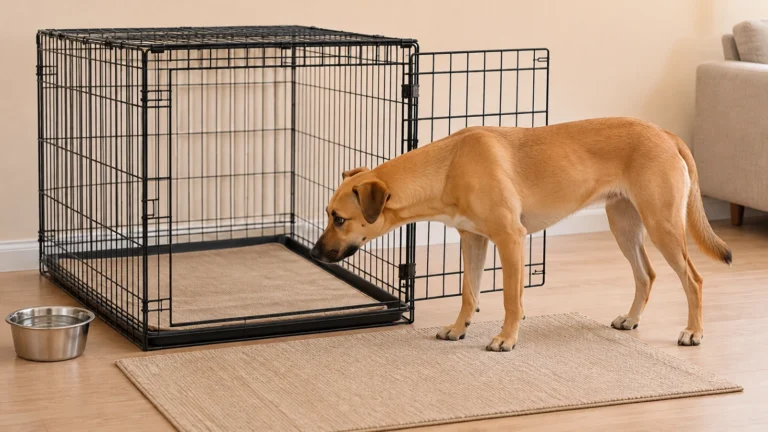
The bowl does not have to touch the bed. Choose a nearby washable spot with a clear approach, and arrange it so spills do not soak the bedding or leave a wet patch across the walking route. Keep both the bowl and bed accessible without making people step between them.
In a small bedroom, for example, the bed might sit along a quiet wall while the water bowl stays in an accessible adjoining area. If that room’s door will be closed, the arrangement needs to change so the dog still has water.
One Small Home, Two Corners That Could Work
Imagine a one-bedroom apartment with an open living area. There are two possible bed locations: beside the sofa’s fixed arm, or along a bedroom wall beyond the door’s swing. Both leave a clear route, but they suit different routines.
Corner A: Beside the Sofa
In one household, evenings are quiet: someone reads or watches television at a modest volume, and the dog often rests nearby. The sofa-side corner lets the dog stay close while people move through the room along the opposite wall.
That corner becomes less useful if it is also where visitors stand, children play, or a work chair rolls back. The same floor space can work well in one household and cause repeated interruptions in another.
Corner B: Along the Bedroom Wall
In another household, the living area is used for daytime video calls and frequent movement. The bedroom corner offers an alternative while its door stays open. The bed leaves the closet and route around the human bed accessible.
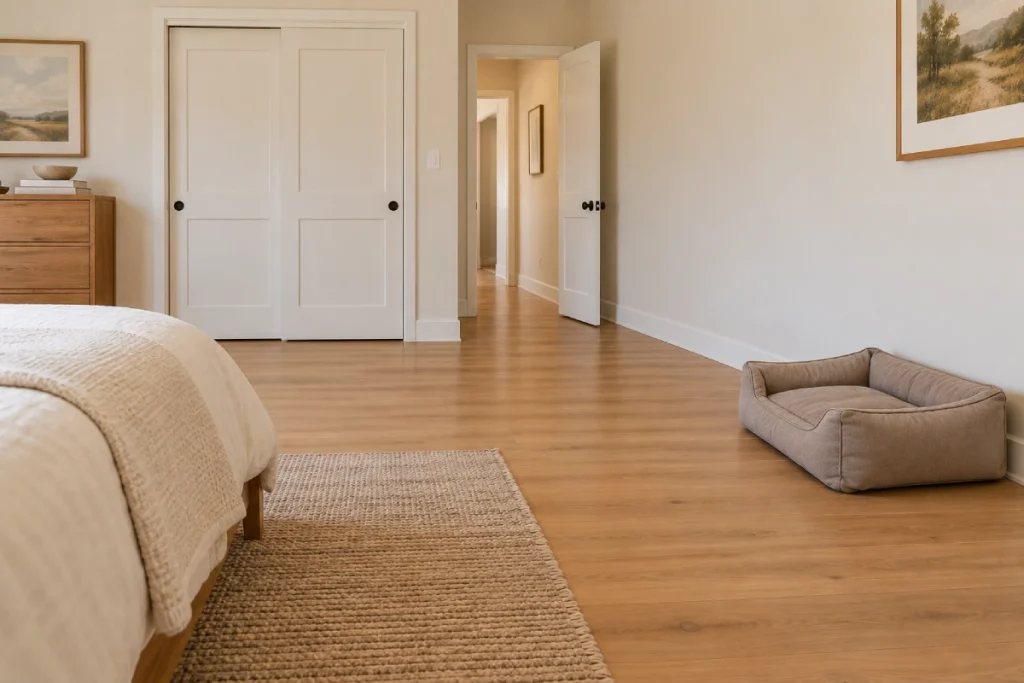
This option would need reconsidering if the bedroom is kept closed, someone works there, or the dog consistently chooses company in the other room. A quiet location should offer a choice rather than require isolation.
These examples show how the same floor plan can serve different routines. Your decision should follow the available space, household access, and what you observe about your own dog.
Adjust the Setup After Observing Your Dog
Try the chosen location through normal household routines. Jot down when the dog uses it, when the area becomes busy, and whether anyone needs to move the bed to reach furniture. Change one part of the arrangement at a time so you can tell what helped.
If the spot is repeatedly disturbed, try the other suitable corner when your dog is already up. Do not keep placing the dog back on the bed to make the location work. Agree that household members and visitors will leave a resting dog alone.
For a new dog, keep the wider arrival setup simple; our new dog checklist for small homes and apartments covers the other basic arrangements.
If your dog suddenly has trouble lying down, getting up, or settling comfortably, ask your veterinarian rather than assuming furniture placement is the cause. VCA’s guidance on signs of pain explains why changes in comfort and everyday activity deserve attention.
Keep a location that works, and revisit it when furniture, household routines, or your dog’s needs change. The useful result is a comfortable resting option your dog can access and people can move around easily.