How to Teach a Dog to Settle on a Mat | Dog Life Notes
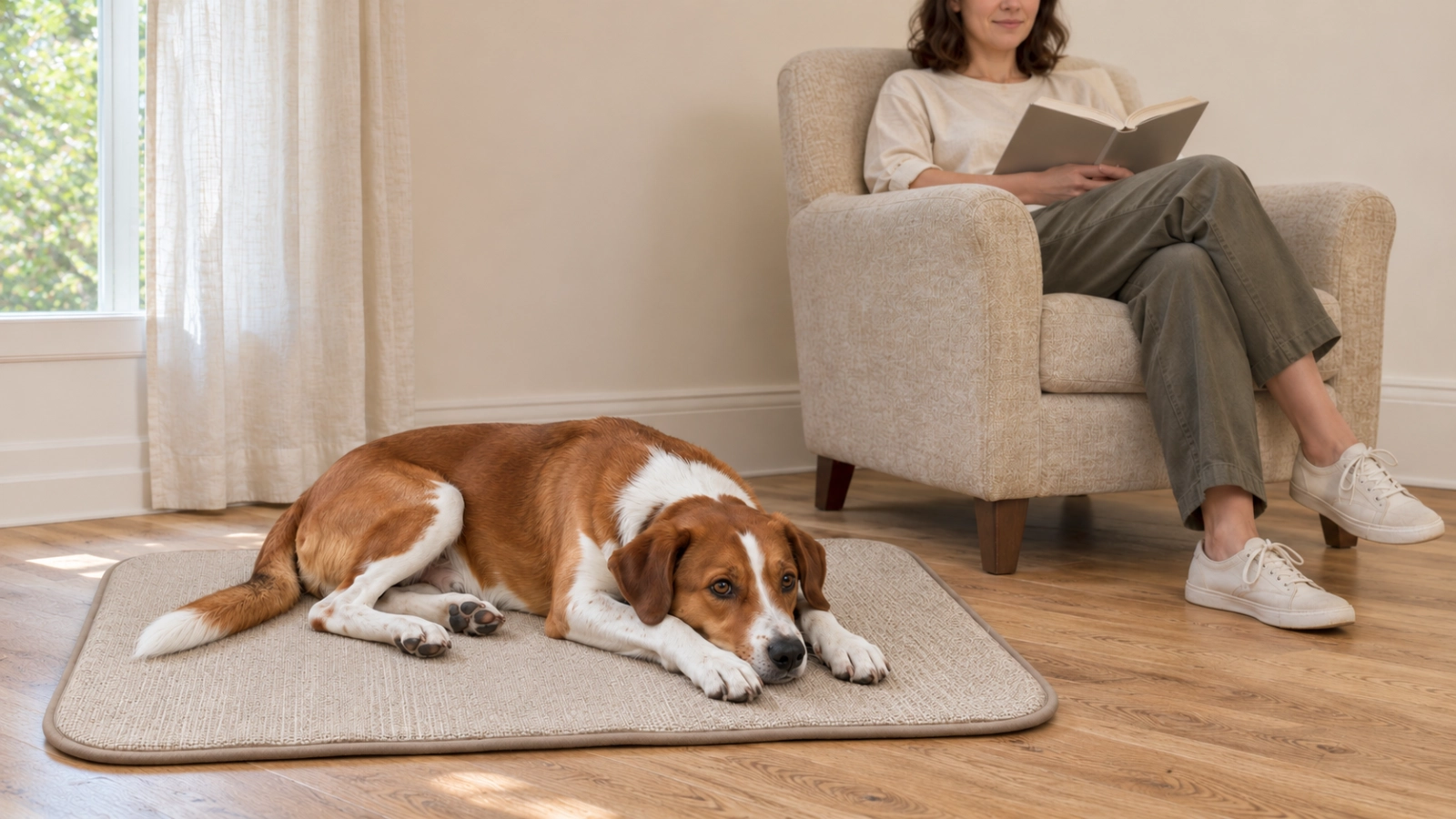
To teach a dog to settle on a mat, start in a quiet room, reward voluntary interest in a comfortable mat, and gradually reward easy resting behavior. Once that feels familiar, add a little time or a small household distraction. Let your dog leave, and make the next attempt easier when needed.
A mat can give your dog a familiar place to rest beside you while you read or take a quiet break. Progress depends on the individual dog and the situation. Keep meeting their needs for bathroom access, water, activity, company, and undisturbed sleep throughout training.
Set Up a Comfortable Place to Practice
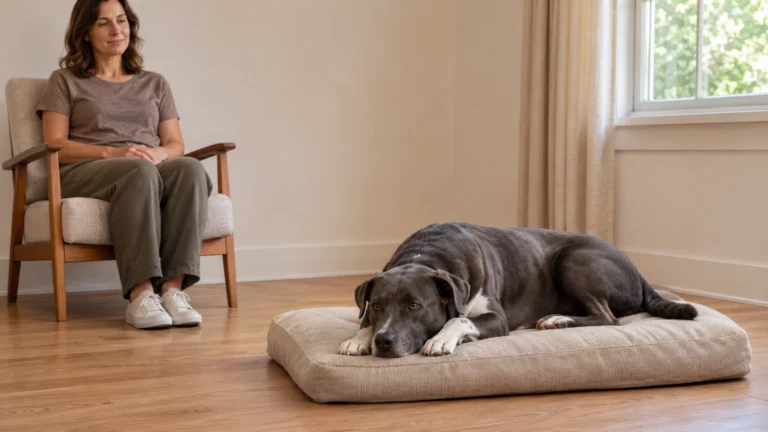
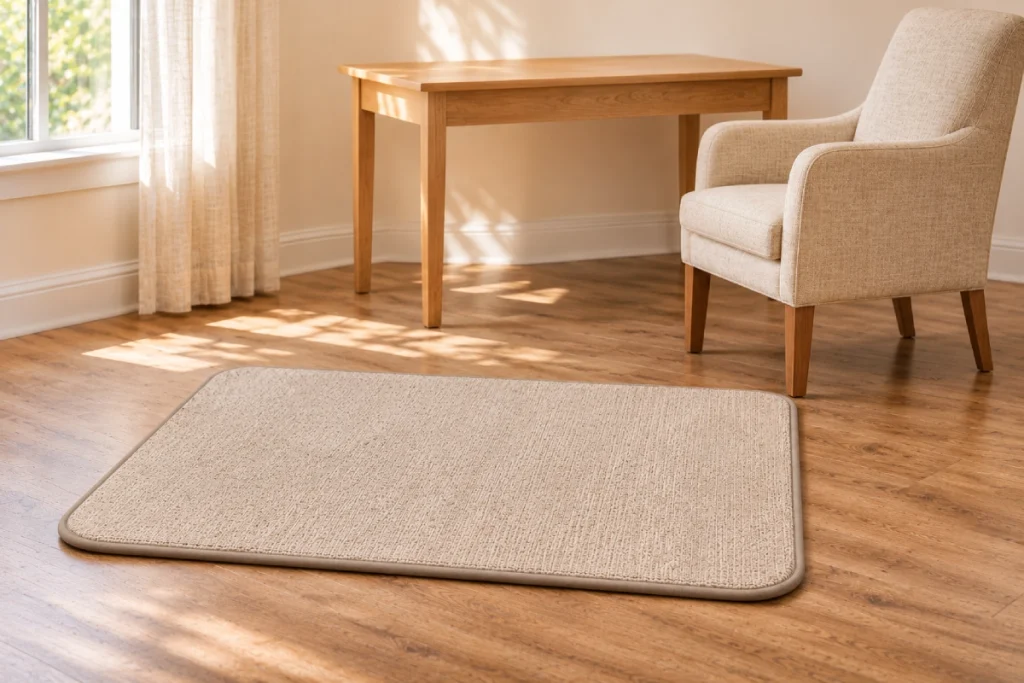
Choose a clean mat or bed with enough room for your dog to lie comfortably and change position. It should lie flat and stay in place when the dog steps onto it. A thin blanket may need a nonslip layer underneath; use a more supportive resting surface if that is what your dog needs.
Begin near a chair in a familiar, quiet area, with a clear route away. Turn down distracting noise and keep other pets from crowding the mat. Our guide to choosing a dog-bed location in a small home can help you assess household traffic and access.
For this home exercise, use a secure area where your dog can move freely. Do not tether them to furniture, hold them on the mat, or push their body into position. Keep a resting place available outside practice, too: RSPCA home-environment guidance emphasizes comfortable, quiet rest and access to a retreat.
Have small pieces of suitable food ready without waving them around. Follow any dietary restrictions. Pick a moment when immediate care needs are met and your dog is already beginning to wind down; there is no need to exhaust them first.
Make the Mat Worth Approaching
Put the mat down and sit nearby. Give your dog time to investigate. Quietly place a reward on the mat when they look toward it, sniff it, or step onto it. Choose a starting point your dog can manage, rather than waiting for a complete lie-down immediately.
Over repeated brief attempts, reward stepping farther onto the mat and pausing there. Battersea’s mat-training guidance similarly builds from investigation to having more paws on the surface. Keep the rewards easy to reach without making the dog stretch into an awkward position.
If your dog walks away, allow it. Check whether the mat slides, the surface is uncomfortable, or something else needs attention. You can offer another opportunity later. Avoid repeatedly calling the dog back or using food to coax them through something they are trying to avoid.
Reward Comfortable Resting Behavior
When your dog begins offering a lie-down, quietly place a reward on the mat within easy reach. Start with frequent enough rewards that the task is easy. Keep your movements small and your voice soft.
Watch the whole dog over time. You might notice their weight resting more fully on one hip, their head lowering, or attention drifting away from your hands. Dogs Trust’s settle-training guidance recommends rewarding progressively more relaxed behavior, with easier starting points for dogs who need them. No single posture proves a particular emotion; consider tension, movement, the surroundings, and the dog’s usual behavior together.
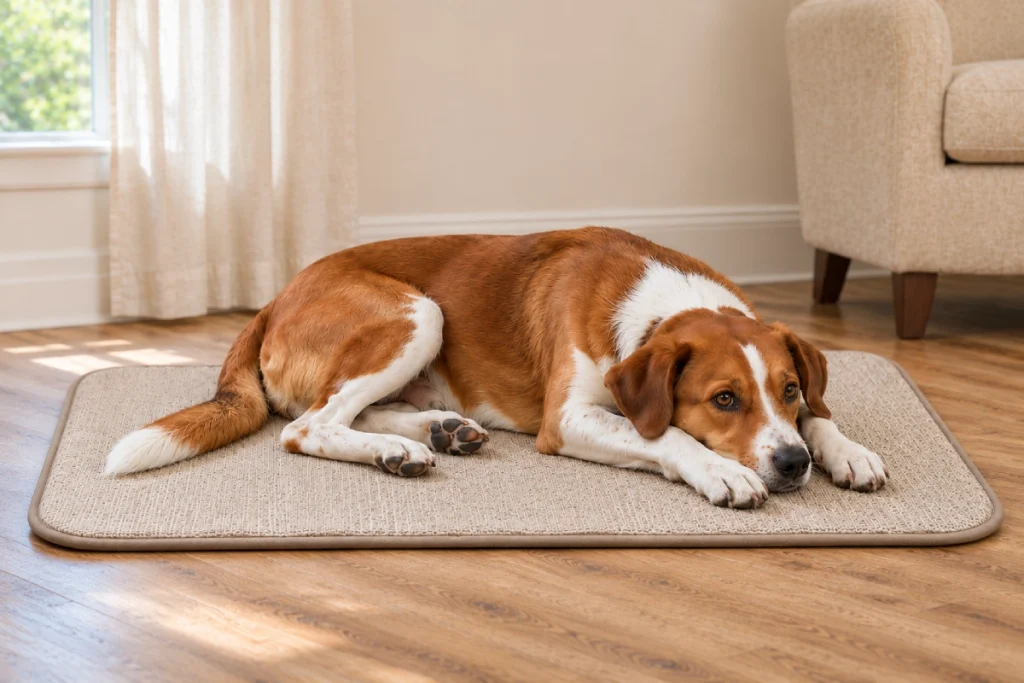
Avoid making head-down stillness a requirement. A dog may comfortably change sides, stretch, or briefly look around. If they are lying rigidly and watching the food intensely, keep the next attempt simpler instead of extending the wait. VCA’s veterinary behavior guidance on teaching settle and calm also distinguishes relaxed resting from intense attention to a possible reward.
An optional quiet cue such as “settle” can be paired with behavior your dog is already offering. Say it once as they ease into rest, then reward. Repeating the word will not create comfort, and you can begin without a verbal cue.
Add Time and Household Movement Gradually
Once your dog repeatedly rests comfortably in the easy setup, leave a slightly longer gap before the next reward. A tiny increase may be enough. Mix easier gaps back in, and shorten the gap if the dog repeatedly gets up or starts watching you more intensely.
Change one part at a time. Keep the familiar reward pattern while you make one small movement, such as shifting in your chair. Later, try reaching for a book or briefly standing. Avoid combining a longer wait, greater distance, and a noisier room in the same attempt.
When adding a distraction, begin with a quieter or more distant version. If the dog leaves the mat, let them move away. Reduce the difficulty before trying again. Do not continue an overwhelming situation while waiting for the dog to stop responding to it.
End a short practice opportunity while things are still easy. Quietly signal that you are finished, then return to ordinary care. If the dog chooses to keep resting, leave them undisturbed.
Use This Practice Table to Choose the Next Step
These are adjustable examples, not a calendar or a test of obedience. Note what happened before choosing one change for the next attempt.
| Current situation | What to observe | What to change next |
|---|---|---|
| Investigating the mat | Does the dog approach freely? Does the mat stay flat and steady? | Reward an easy approach or step. Fix slipping or crowding before asking for more. |
| Lying down beside you | Look at the whole body and attention, including whether the dog is rigidly watching for food. | Reward easy resting. Keep the setup quiet rather than immediately extending time. |
| A longer gap between rewards | Does resting remain easy, or does the dog repeatedly stand and follow your hand? | Return to a shorter gap. Increase again in a smaller step. |
| You move in your chair or stand | Does the dog briefly notice, keep resting, or get up? | Try a smaller movement while keeping the rest of the setup familiar. |
| The mat moves to another room | Is the surface secure? What new sounds, traffic, or smells draw attention? | Restart with easier rewards and fewer distractions. Stay nearby. |
| Avoidance, tension, or repeated difficulty | Check the surroundings, unmet needs, and possible discomfort. | Pause. Change the setup or seek help rather than requiring the dog to stay. |
A useful note might read: “Stayed resting while I shifted in the chair; got up when I stood. Next time: a smaller movement, with the same quiet room.” Describe what you saw without assigning a diagnosis.
Fit Practice Into Ordinary Household Moments
Try the familiar mat beside you while you read a page or fold a few towels. Choose a small, predictable activity you can interrupt. A busy doorway, excited visitors, or a loud appliance can wait until easier situations are comfortable.
To practice in another calm room, take the same mat and return to the easiest version of the exercise. Being comfortable in one room does not mean your dog is ready for every location. Build from what they show you there.
Use our flexible daily routine for a new dog to arrange care and rest around household responsibilities. Mat practice can fit into that routine, but it does not replace care breaks or require the dog to remain beside you through a workday.
When to Pause and Ask for Help
Pause if your dog repeatedly moves away, becomes tense or unusually still, avoids your approach, or cannot disengage from the activity. Check for bathroom needs, thirst, fatigue, an uncomfortable surface, or too much noise. Barking or getting up is information to investigate, not a reason to punish the dog.
Contact your veterinarian about sudden changes in resting behavior, apparent pain, or difficulty lying down or getting up. Do not keep practicing to see whether rewards overcome discomfort. Dogs Trust’s handling guidance explains why pain and fear warrant veterinary attention and individual support.
For persistent difficulty, fear, growling, snapping, or other safety concerns, seek help from your veterinarian and a qualified reward-based behavior professional. Give the dog space and never punish a warning signal. Ask prospective professionals about their methods: AVSAB’s current humane-training position recommends reward-based training and rejects physical or psychological punishment.
Settling on a mat does not establish that a dog is comfortable being left alone, and it is not treatment for separation anxiety. If distress happens around departures or absences, ask for an individual assessment rather than extending mat practice. Let comfortable participation guide the next step; there is no fixed number of days to complete.