Questions to Ask Before Adopting a Rescue Dog
Before bringing a rescue dog home, ask what daily care looks like now, which records will come with them, what people have actually observed, and whom you can contact afterward. Write down the gaps as well as the answers. A useful conversation helps you prepare for this dog without expecting anyone to predict every part of life in your home.
Use the question sheet below before pickup, ideally while there is time for follow-up. These questions to ask before adopting a rescue dog complement our new dog checklist for small homes and apartments, which covers supplies and home setup.
Start With Who Knows the Dog and What Is Documented
Ask who has cared for the dog, in which settings, and for how long. A foster caregiver, daily care worker, previous owner, and veterinary team may each have different information. Find out whether an answer comes from direct observation, a previous caregiver’s report, or a document, and note who supplied it.
Ask what is known about the dog’s background and age, including whether details are estimated. You do not need to invent a difficult past to explain a behavior, and an incomplete history does not automatically rule a dog out. The practical question is what your household can provide and which uncertainties need more discussion before pickup.
Describe your own circumstances honestly: household members, resident animals, housing, work patterns, and the help available. Best Friends’ guidance on choosing a dog recommends sharing your needs with the adoption organization and asking about the dog’s experience in care.
Ask About Familiar Food, Routines, and Equipment
Request the current food, measured portions, meal times, and any dietary instructions. Ask where and when the dog usually goes to the bathroom, where they sleep, and what their walks and rest periods look like. Find out which handling routines and cues are familiar rather than assuming the dog knows the words your household uses.
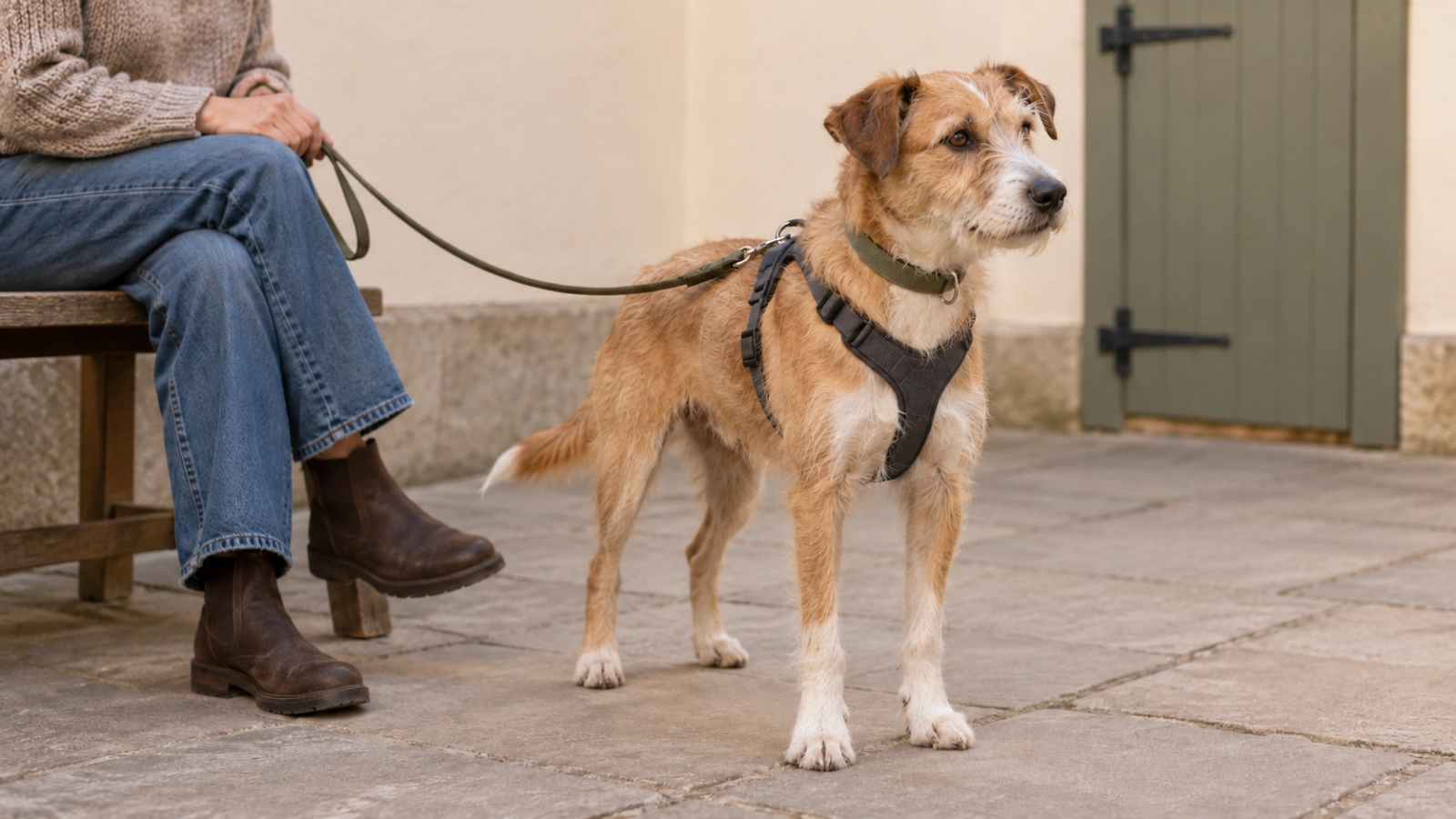
Ask which collar, harness, or other equipment fits and has been used comfortably. Can the caregiver demonstrate its usual fit and use without pressuring the dog? What comes home with them, and what must you supply? Check transport arrangements separately; do not assume ordinary walking equipment is a vehicle restraint.
Dogs Trust’s rescue-dog settling advice highlights established routines, dietary needs, and ongoing care. Carry those instructions into a written plan; our flexible daily routine for a new dog helps assign the household tasks once you have the answers.
Request Care Records and Clear Support Contacts
Ask for available veterinary records, including dated vaccination and treatment information, test results, procedures, known health concerns, and pending follow-up. Request microchip information and instructions for updating the registered contact. Ask which care has already been completed, what remains, and who is responsible for arranging it.
If there are medications, special feeding instructions, or activity restrictions, request the current written directions and ask whom to contact if directions are unclear. Have a veterinarian explain medical findings or resolve uncertain treatment instructions; do not interpret a record or change a care plan yourself.
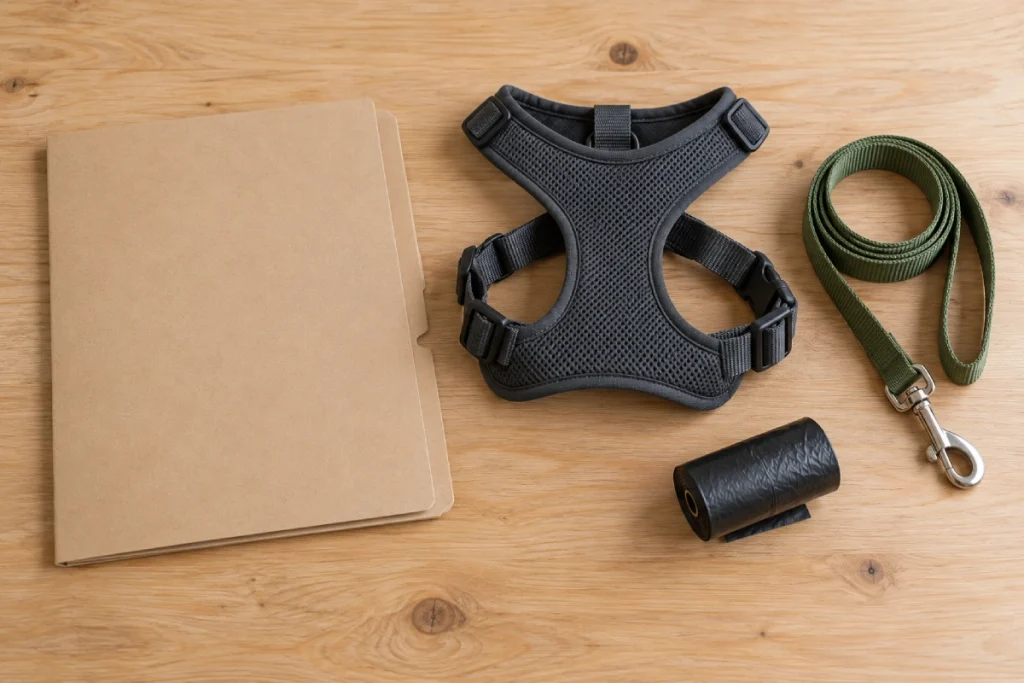
Save the rescue’s routine and after-hours contact routes, the veterinary contact where available, and the appropriate emergency veterinary service. Ask what post-adoption help is offered, who can use it, and whether there are fees or other conditions. Do not assume every organization offers the same support: ASPCA’s adoption overview explains that processes, fees, and requirements vary.
Ask for Behavior Examples With Context
Instead of stopping at “friendly,” “quiet,” or “good with dogs,” ask what happened. Who was present? Was the dog in a kennel, foster home, yard, or on a walk? How close were people or animals? Was there food, handling, noise, or a barrier involved? What did the caregiver do, and what happened next?
Ask about reported bites or snaps, guarding of food or objects, escape attempts, handling difficulties, and distress when apart from caregivers. Request the circumstances and any management recommendations, including professional advice already given. Take reported concerns seriously without turning a brief label into a prediction of the dog’s character.
“Not observed” is different from “does not happen.” The ASPCA’s position on shelter dog behavior assessments describes limits in predicting behavior after adoption. Observations from a shelter or foster home can inform preparation; they cannot guarantee the same response in a different household.
Do not create your own test by taking food or a toy from the dog, cornering them, or forcing a greeting. Dogs Trust’s resource-guarding guidance advises avoiding taking valued items and seeking appropriate support. Ask staff about an individual management plan when there is a concern.
Discuss Household Fit and Introduction Arrangements
Explain the ages and needs of children in the home, resident dogs or cats, frequent visitors, stairs, elevators, shared hallways, and periods when care must be covered by someone else. Ask which of these situations the dog has actually experienced and which remain unknown. Time spent around one dog or one child is not a guarantee about other animals or people.
Ask the organization to help plan any meetings: who should attend, where they should happen, and what arrangements are needed before pickup. Do not organize an improvised encounter to settle an unanswered question. If there are specific safety concerns, resolve the management plan with the organization and an appropriately qualified professional before bringing the dog into that situation.
Discuss where the dog can rest, how people and resident pets will be managed, and what happens if the initial arrangement does not suit them. Prepare a quiet area with accessible essentials, and agree who will supervise the first arrival.

Copy This Pre-Pickup Question Sheet
Keep brief answers here and attach longer records separately. In the Unknown column, state the missing detail, such as “not observed,” “record requested,” or “caregiver unsure.” Use Follow-up for a named task and an agreed date where appropriate. Add questions specific to your home.
Dog or adoption reference: ____________________
Contact and role: ____________________ Date: ____________________
| Question | Answer | Unknown | Follow-up |
|---|---|---|---|
| Who has cared for the dog, in which settings, and what history is documented or estimated? | ____________ ____________ | ____________ ____________ | ____________ ____________ |
| What food, portions, meal times, and dietary instructions are currently used? | ____________ ____________ | ____________ ____________ | ____________ ____________ |
| What bathroom, daytime rest, and overnight routines are familiar? | ____________ ____________ | ____________ ____________ | ____________ ____________ |
| Which cues, walking equipment, and handling arrangements have been used comfortably? | ____________ ____________ | ____________ ____________ | ____________ ____________ |
| Which health records, written care instructions, and microchip details will come home? | ____________ ____________ | ____________ ____________ | ____________ ____________ |
| What care or appointments are pending, who arranges them, and what costs are included? | ____________ ____________ | ____________ ____________ | ____________ ____________ |
| What behavior concerns have been observed or reported, in what circumstances, and what helped? | ____________ ____________ | ____________ ____________ | ____________ ____________ |
| What contact with children, dogs, cats, or other animals has actually been observed? | ____________ ____________ | ____________ ____________ | ____________ ____________ |
| What household preparations and introduction arrangements do we need before pickup? | ____________ ____________ | ____________ ____________ | ____________ ____________ |
| Where and when is pickup, who handles the dog, and what transport, gear, or paperwork is needed? | ____________ ____________ | ____________ ____________ | ____________ ____________ |
| Who provides follow-up support, what are the contact routes and conditions, and what happens if difficulties arise? | ____________ ____________ | ____________ ____________ | ____________ ____________ |
Example only: Answer: “Caregiver reports using a harness on quiet walks.” Unknown: “Elevator experience not observed.” Follow-up: “Ask the adoption counselor to help plan arrival in our building before pickup.” The gap becomes a task rather than an invented assurance.
Agree on Pickup and What Happens Next
Confirm the pickup location, time, responsible contact, paperwork, payment arrangements, and equipment you must bring. Ask staff to help confirm fit before departure. Best Friends’ homecoming guidance emphasizes identification and checking equipment fit before leaving the adoption site.
At handoff, confirm when the dog last ate, went to the bathroom, and received any scheduled care. Check that documents and instructions match the dog you are collecting. Review unresolved questions and agree who will respond; discuss any issue affecting immediate care or safe arrival before leaving.
Ask how to report concerns after adoption and what the organization’s written follow-up or return process involves if the placement becomes difficult. This is planning for support, not assuming that something will go wrong.
For the sequence after pickup, follow our first-day arrival plan for a new dog. For overnight preparation, see your new dog’s first night. Keep the question sheet with your care records and update it as more reliable information becomes available.
Sources and Further Reading
- Best Friends Animal Society: How to Choose a Dog
- Best Friends Animal Society: Bringing a New Dog Home
- Dogs Trust: Helping a Rescue Dog Settle
- ASPCA: Adoption Preparation and Processes
- ASPCA: Position Statement on Shelter Dog Behavior Assessments
- Dogs Trust: Resource Guarding and Professional Support