Your Dog’s First Day at Home: A Calm Arrival Plan
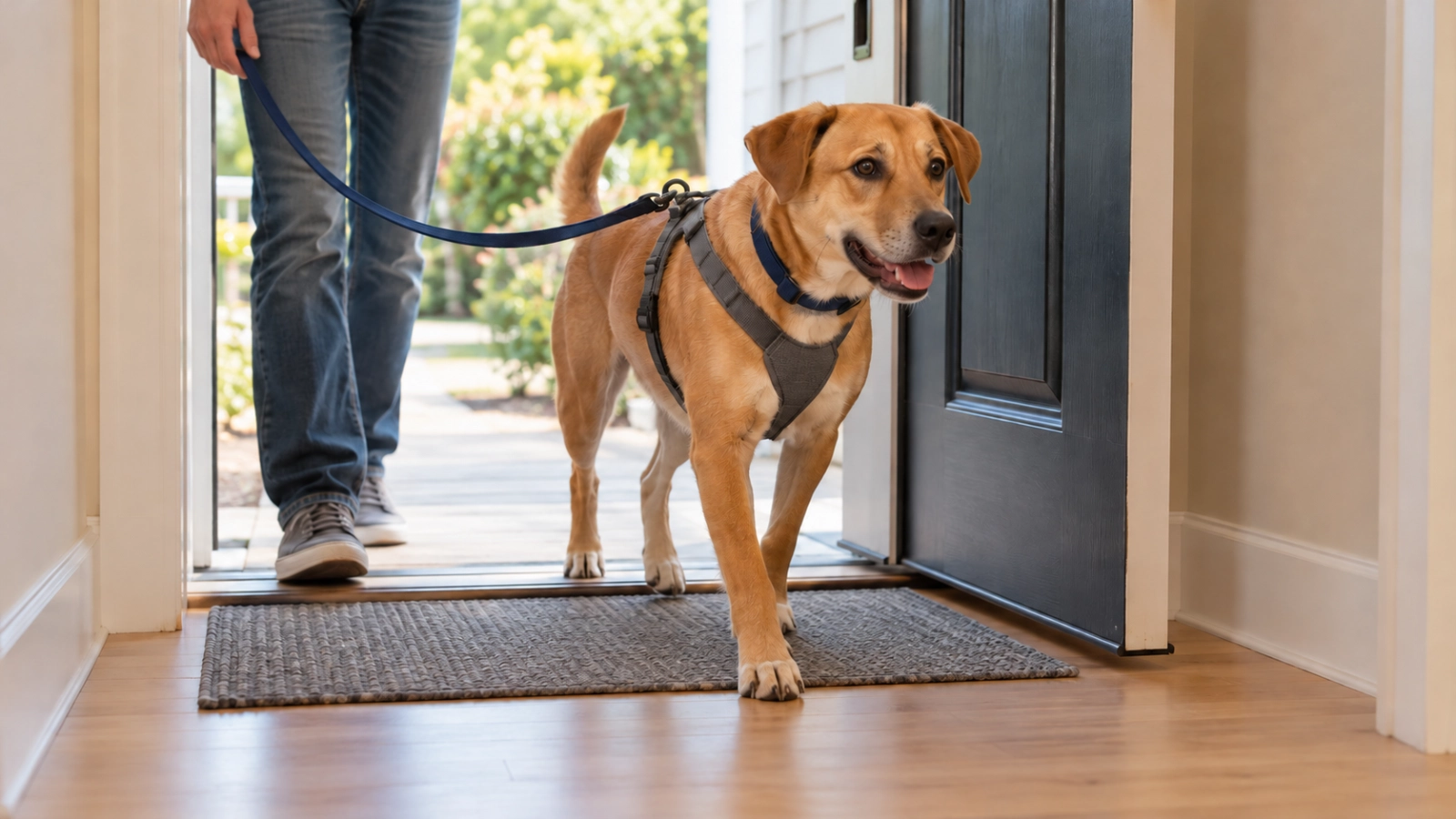
Your new dog’s first day at home can be simple: arrive without a crowd, offer a bathroom opportunity, introduce a prepared area, and make time for food, water, quiet company, and rest. Give the dog room to explore without turning the day into a tour of every room and family member.
Use the sequence below as a flexible guide. A puppy, a newly adopted adult, and a dog moving from a familiar caregiver may need different support. Adjust to the dog in front of you, their care instructions, and what happens during the day.
Agree on the Household Plan Before Pickup
Choose who will manage the dog during arrival, who will handle doors and belongings, and who will take over when the first person needs a break. If you live alone, prepare the entrance and essential areas before leaving so you can concentrate on the dog when you return.
Humane World for Animals recommends agreeing on household routines in advance, including feeding, walks, resting arrangements, and access to rooms. Write a short note rather than relying on everyone remembering a conversation.
- Agree on the first supervised area and which doors will stay closed.
- Decide who will handle bathroom breaks, meals, and any prescribed medication.
- Keep the day free of optional visitors and errands.
- Confirm how children and resident pets will be managed.
- Save the current caregiver’s, veterinarian’s, and emergency clinic’s contact details.
Before leaving the shelter, rescue, foster home, or breeder, confirm when the dog last ate and went to the bathroom, what food and routine they know, and any medical or handling instructions. Ask for clarification if records or medication directions are unclear.
For supplies and pre-arrival arrangements, use our new dog checklist for small homes and apartments. For the final hazard check, use our room-by-room puppy-proofing checklist.
A Flexible First-Day Order of Events
Move through these stages according to the dog’s needs. You may repeat bathroom breaks and resting periods several times or postpone further exploration. There is no hourly target to meet.
| Stage | What the household can do | What to observe or adjust |
|---|---|---|
| Before pickup | Agree on responsibilities, access, care instructions, and contacts. | Resolve unclear information before the handoff. |
| Arrive near home | Use secure handling and offer the planned bathroom opportunity. | Allow time; adjust the route if the surroundings are too busy. |
| Enter the home | Keep the doorway clear and begin with the prepared area. | Pause if the dog hesitates; avoid a crowd at the entrance. |
| Explore and find essentials | Make water and a resting place accessible; supervise. | Notice where the dog goes and whether they can move comfortably. |
| Continue basic care | Follow familiar feeding instructions and repeat bathroom opportunities. | Note meals, drinking, elimination, and any health concerns. |
| Offer company and rest | Let the dog approach; leave them undisturbed when resting. | Reduce interaction if they move away or cannot settle. |
| Prepare the evening | Share observations, check access, and confirm the next care handoff. | Adjust the evening plan and contact the appropriate person if needed. |
Arrive Without Adding Extra Stops
Plan the trip home with appropriate transport and handling arrangements agreed with the dog’s current caregiver. Confirm the fit of the collar or harness before leaving. Best Friends Animal Society’s homecoming guide emphasizes identification, equipment fit, and preventing escapes.
Skip the pet-store visit and introductions to friends on the way home. RSPCA Victoria’s arrival advice recommends heading home without those extra stops. A necessary travel or care break is different from adding an outing for entertainment.
After travel, offer a bathroom opportunity in the location you planned. In an apartment, account for hallways, elevators, and the route outside. For a puppy, ask your veterinarian before pickup which toileting locations are appropriate while vaccinations are being completed.
Keep hold of the leash while moving through shared areas and the entrance. Allow time at an unfamiliar threshold without pulling the dog through it. Keep the doorway clear, then secure the exterior door once everyone is inside.
Begin With Calm Exploration and Essential Places
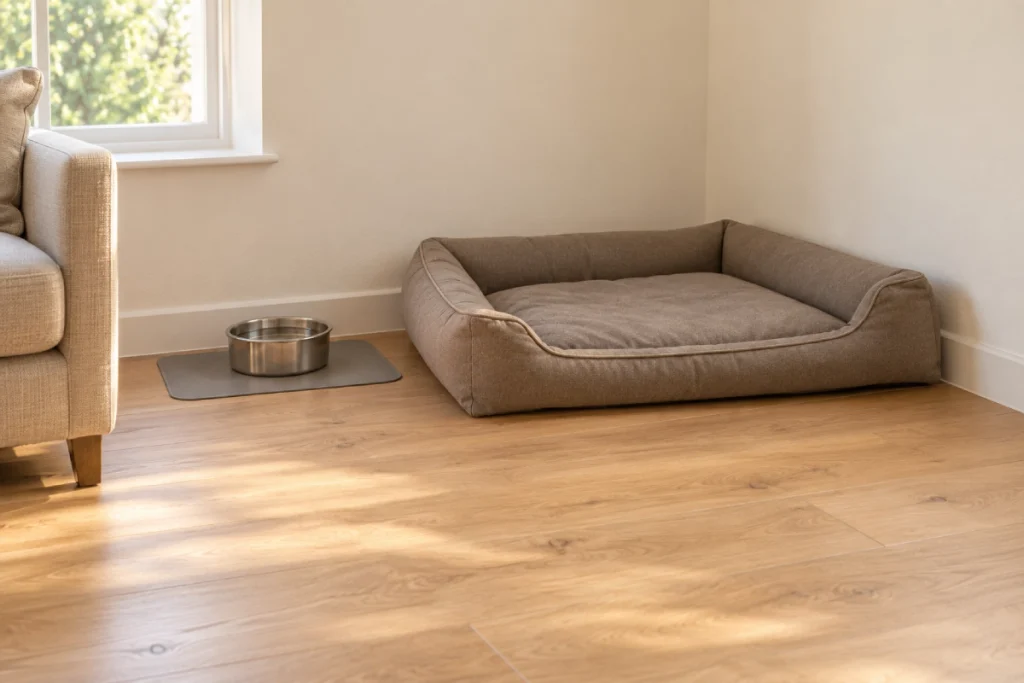
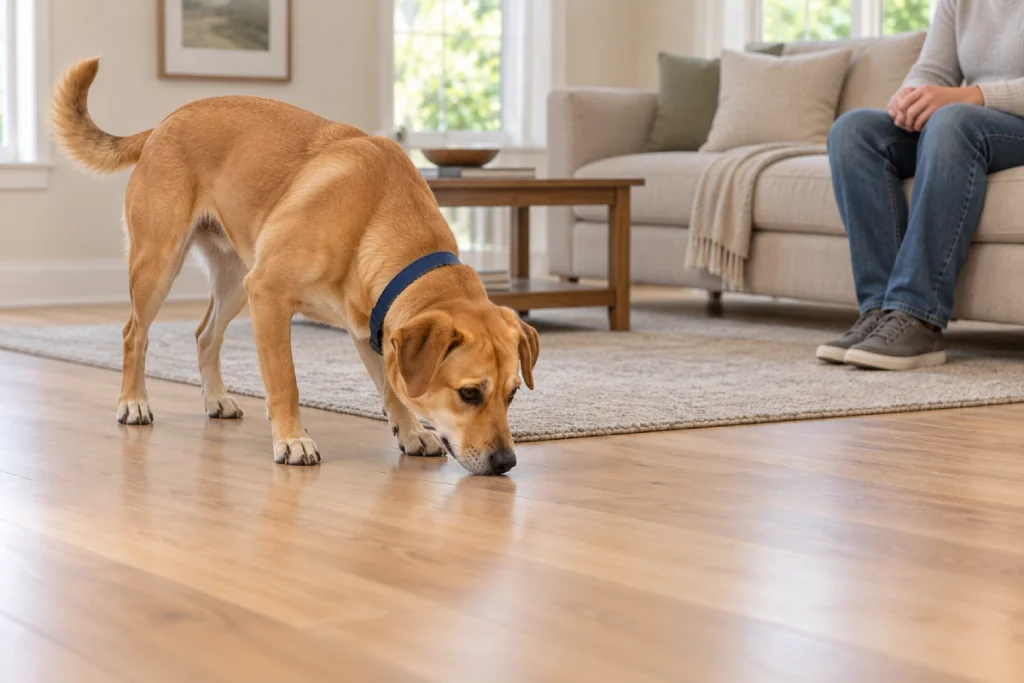
Start with the prepared area rather than opening the whole home at once. Let the dog sniff and move around while you stay available and supervise. Keep fresh water accessible and allow the dog to discover the resting place without placing them onto it repeatedly.
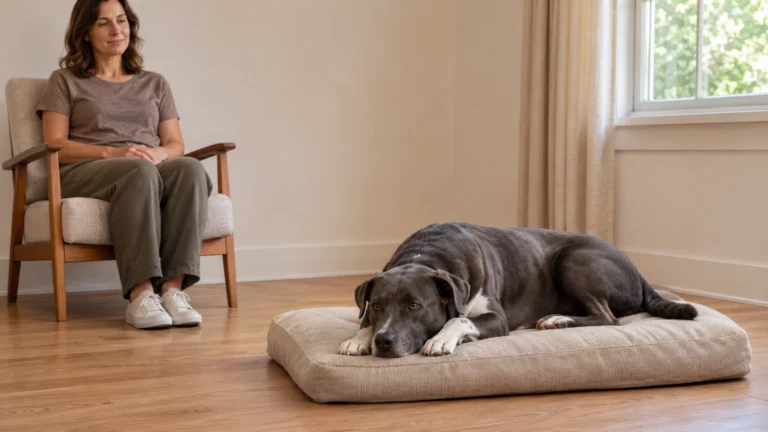
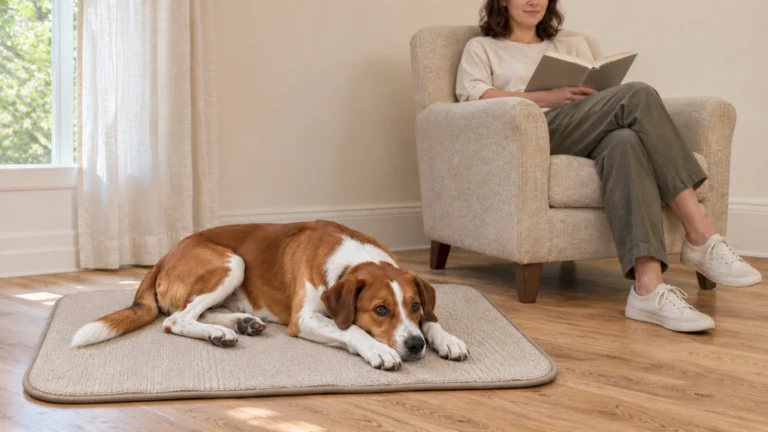
A rest corner should be out of the walking route, with enough space to enter and leave comfortably. Our guide to where to put a dog bed in a small home covers choosing that location.
Keep supervision practical: sit where you can observe without following every step or blocking the dog’s way. If they hesitate to explore, reduce activity around them. They do not have to investigate every corner on arrival.
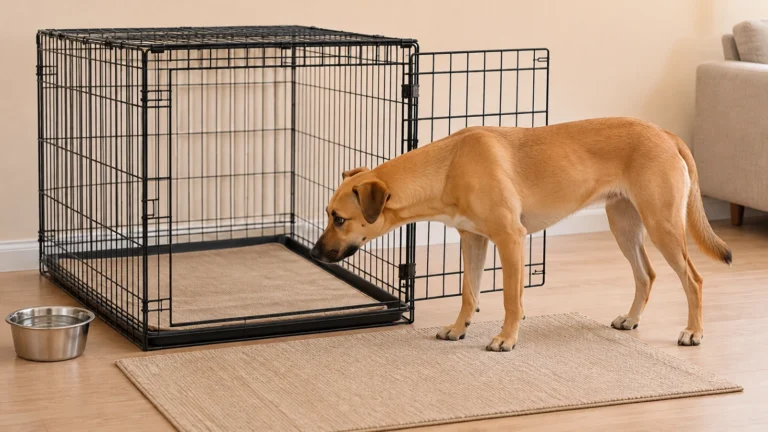
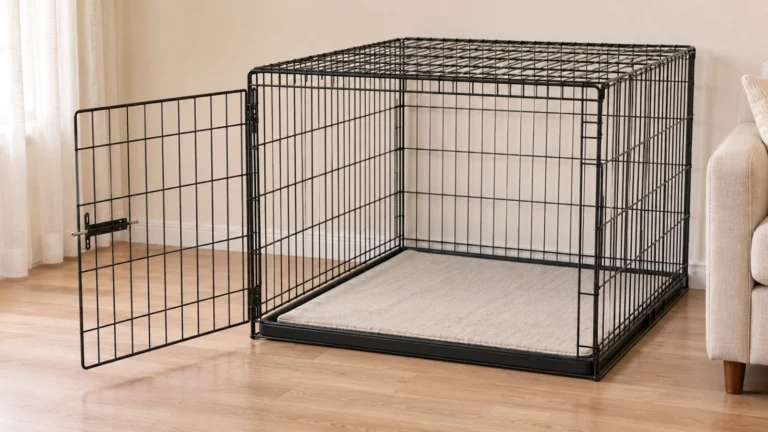
Use the access arrangement that suits this dog. A room, pen, or crate still needs appropriate preparation and introduction. Do not shut an unfamiliar dog into a crate simply to complete the arrival plan. RSPCA Victoria advises against confining a dog to a resting area if it causes distress.
If other pets live with you, follow the introduction and separation plan arranged beforehand. Do not open a door and let everyone meet at once. VCA’s puppy-preparation guidance emphasizes planning separate spaces and avoiding forced interactions. Introductions need their own plan, including protection for resident animals.
Offer Familiar Care and Keep Simple Notes
Follow the current caregiver’s feeding instructions, including the usual food and any prescribed diet. Keep the meal area quiet and allow the dog space while eating. Humane World’s homecoming guide recommends maintaining the familiar food initially rather than changing it at arrival.
Make bathroom opportunities part of the day rather than waiting for the dog to learn your household’s signals. An adult dog’s previous house-training does not guarantee they understand a new home’s routine immediately. Respond to an accident calmly, clean up, and reconsider supervision and bathroom access.
Use a short note to track the care you have actually provided:
- When food was offered and how much was eaten.
- Whether you saw the dog drink and where water is available.
- Bathroom opportunities and whether the dog urinated or passed stool.
- Resting periods and situations the dog approached or avoided.
- Any medication given exactly as directed, with the time recorded.
These observations help the next caregiver and can support a conversation with your veterinarian. They are not a way to diagnose the dog’s emotions or health. If eating, drinking, elimination, or comfort concerns you, call your veterinarian for advice appropriate to the dog’s age and medical needs.
Let Quiet Interaction Stay Optional
Spend time nearby without making every moment an invitation to interact. If the dog approaches, offer gentle attention and pause to see whether they choose more. Avoid leaning over them, hugging, following them into their retreat, or gathering everyone around for a photograph.
Dogs Trust’s rescue-dog settling guidance recommends letting the dog approach at their own pace. Some dogs seek company early; others need more space. Neither response tells you how quickly the relationship will develop.
For households with children, an adult should actively manage interactions and separate dog and child when they cannot supervise. Explain that the dog can move away and must be left alone while eating, sleeping, or resting. Dogs Trust’s child-and-dog guidance emphasizes choice and undisturbed rest.
A quiet toy interaction can be optional if the dog seeks it, but arrival day does not need a training session or a full program of games. If the dog turns away, retreats, or stops engaging, let the interaction end.
Prepare the Evening and Share What You Learned
Before the household gets busy with dinner, check water, bathroom access, and the resting area. Confirm who will supervise next and how the dog’s evening care will be covered. Keep the environment low-key as activity changes around them.
Share useful observations: “They drank after we moved the bowl away from the doorway,” or “They rested when we stopped walking through that corner.” Those are examples of practical notes, not experiences every dog will have.
Carry familiar care instructions into the evening and leave room to adjust. Detailed overnight arrangements are a separate decision; this first-day plan ends with a clear care handoff rather than a prescribed sleeping location.
Use our guide to your new dog’s first night to prepare the sleeping area and plan overnight care.
Use our flexible daily routine for a new dog to assign daily care and plan household handoffs.
Know Whom to Contact
- The shelter, rescue, breeder, or previous caregiver: ask about familiar routines, records, equipment, and agreed follow-up support.
- Your veterinarian: ask about health concerns, medication instructions, suitable care, and the timing of the first examination.
- A qualified reward-based trainer or behavior professional: seek help with ongoing difficulty around handling, separation, or introductions; involve your veterinarian when health could contribute.
- An emergency veterinary hospital: seek immediate care for difficulty breathing. Cornell’s respiratory-distress guidance advises going to an emergency animal hospital and calling ahead when possible.
A first day does not have to look settled to be useful. Aim to meet immediate needs, prevent avoidable pressure, and learn what to adjust next. There is no fixed recovery timetable that every new dog follows.
Sources and Further Reading
- Best Friends Animal Society: Bringing a New Dog Home
- Humane World for Animals: Bringing Your New Dog Home
- Dogs Trust: Helping a Rescue Dog Settle
- RSPCA Victoria: Bringing Your New Dog Home
- VCA Animal Hospitals: Preparing for a New Puppy
- Dogs Trust: Dogs and Children
- Cornell University: Canine Respiratory Distress