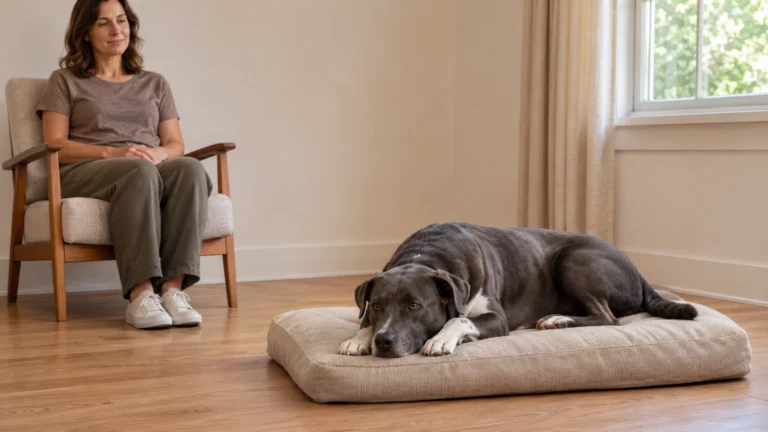
New Dog’s First Night: A Comfortable Sleep Setup

For your new dog’s first night, prepare a comfortable resting place near someone who can respond, keep water accessible, and agree on a bathroom plan before everyone is tired. A useful setup makes it easy to notice a need and help without turning every waking moment into playtime.
The goal is to meet the dog’s needs, not to achieve an uninterrupted night or prove they can sleep alone. A puppy, an adult arriving from a foster home, and a dog with medical needs may need different arrangements. For the earlier arrival sequence, follow our first-day arrival plan for a new dog.
Ask About the Dog’s Previous Nighttime Routine
Before pickup, ask the shelter, rescue, breeder, or previous caregiver what nighttime has actually looked like. Useful questions include:
- Where did the dog sleep, and was a person or another animal nearby?
- What kind of bed or resting area did they use comfortably?
- When were the last evening and first morning bathroom opportunities? Were overnight breaks needed?
- Did they wake, vocalize, or have difficulty settling? What helped?
- Are there feeding, medication, mobility, or other care instructions that affect the night?
Treat that information as a starting point. A familiar routine may need adapting to your home, and an unfamiliar history is a reason to observe carefully rather than make assumptions.
Humane World for Animals recommends agreeing on care routines in advance, including where the dog will rest at night. Decide who will respond first, who can take over, and how you will share observations.
Choose a Nearby Resting Place
Two possible starting arrangements are a dog bed in your bedroom or a temporary sleeping place for an adult near the dog’s prepared resting area. Dogs Trust’s first-night guidance for puppies describes both approaches. Choose according to the dog’s needs and your household; the first night does not have to settle the permanent sleeping arrangement.
Provide clean, dry bedding and room for the dog to change position comfortably. Keep the approach clear, away from door swings, drafts, direct heater output, and passing feet. Let the dog investigate while you are awake, without repeatedly placing them on the bed. Our guide to where to put a dog bed in a small home compares suitable locations.

Ask specifically about any crate use. An existing, comfortable routine is different from a first experience of being shut in. Do not make bedtime the first test of unfamiliar confinement. If the arrangement causes distress, use another suitably prepared space and seek individual advice. This is a sleep-space plan, not a crate-training program.
Dogs Trust’s rescue-dog settling advice emphasizes an accessible resting place and choosing a room where the dog can relax. Keep children and resident pets from disturbing that area; do not add an unplanned overnight introduction.
Plan Water, Bathroom Access, and Responsibilities
Keep clean drinking water available overnight, including when doors are closed. The ASPCA’s general dog-care guidance recommends fresh water at all times. Put the bowl where the dog can reach it without soaking the bed or creating a wet walking route. Do not routinely remove water to avoid accidents; clarify any individual medical instructions with your veterinarian.
Offer a bathroom opportunity before bed and plan for overnight needs. Puppies may need breaks, and an adult dog’s familiar schedule may not transfer neatly to a new home. Ask the current caregiver and veterinarian about an appropriate starting plan rather than relying on a universal timer or an age-based promise.
Walk through the nighttime route yourself. In an apartment, think about keys, hallway access, elevator waits, and the trip outside. Keep the equipment you need ready for the person handling the break. For a puppy, confirm appropriate toileting locations with your veterinarian while vaccinations are being completed.
Agree on who will listen for waking and handle planned care. If you live alone, prepare what you need before lying down. Keep bathroom trips quiet and purposeful, then offer the resting place again. If an accident happens, clean up calmly and reconsider access and timing.
Before-Bed Checklist: What to Prepare
Use this checklist before you turn in. It is a preparation check, not an hourly schedule.
- Care information: Review the familiar feeding routine and any prescribed care; resolve unclear instructions.
- Bathroom plan: Offer the final planned opportunity and agree who will handle overnight needs.
- Resting place: Check clean bedding, comfortable access, and enough room to change position.
- Water: Refill the bowl and check that the dog can reach it with the overnight door arrangement.
- Clear route: Remove reachable hazards and anything people might trip over. Use our room-by-room puppy-proofing checklist for the wider inspection.
- Undisturbed rest: Confirm how children and resident pets will be managed.
- Calm surroundings: Lower unnecessary activity and noise; keep enough light for safe movement.
- People and contacts: Confirm the first responder, backup if available, and saved caregiver, veterinarian, and emergency clinic details.
Notice Comfort and Respond to Distress
Observe the pattern, not a single pose or sound. Note whether the dog can lie down, change position, drink, and return to resting. Quietness alone does not prove comfort, and one yawn or whine does not tell you the cause.
VCA’s guidance on stress signs describes behaviors such as pacing, trembling, increased vocalization, and panting, while emphasizing context. Repeated attempts to escape the resting area, escalating activity, or an inability to rest deserve attention. Physical discomfort can also affect behavior; do not automatically label a difficult night as separation anxiety.
If your dog cries or wakes repeatedly, respond calmly and check likely needs. Do they need a bathroom opportunity? Can they reach water? Is there an obvious disturbance or a reason to suspect discomfort? Stay nearby and offer quiet company without insisting on touching or holding them.
For puppies, Dogs Trust’s settling guidance advises returning to sleeping in the same room if moving away leads to crying. For an adult dog, ask the adoption organization or a qualified professional about a suitable arrangement. Adjusting your proximity is a practical response; it is not a diagnosis or a treatment plan for separation distress.
Avoid scolding or using frightening noises to stop vocalizing. The American Veterinary Society of Animal Behavior’s humane-training position rejects aversive methods. If proximity or the prepared space is not helping, seek individual support rather than repeatedly testing how long the dog will tolerate the arrangement.
Copy This Short Overnight Observation Log
Write a brief entry when you are already awake to provide care. Do not repeatedly wake a resting dog just to fill in the log; follow the bathroom and medical plan you have agreed.
Dog: ____________________ Night/date: ____________________
| Time or event | What I observed | What I did | What happened next |
|---|---|---|---|
| Example only: after waking | Walked toward the doorway | Offered a bathroom trip | Urinated, then returned to the bed |
| ________________ | ________________ | ________________ | ________________ |
| ________________ | ________________ | ________________ | ________________ |
| ________________ | ________________ | ________________ | ________________ |
Record visible events rather than interpretations such as “being stubborn.” A note about when the dog woke, whether they eliminated, and what followed is more useful for the next caregiver or a professional.
Adjust the Next Night and Know When to Get Help
In the morning, keep the parts that worked and identify one practical change, such as moving a water bowl out of the walking route or reducing a nighttime disturbance. Share the log with anyone taking over care. One night does not establish a fixed recovery timeline.
Contact your veterinarian about health or comfort concerns, including difficulty lying down, changes in drinking or elimination, or persistent restlessness. For repeated or marked distress around confinement or being apart, contact the adoption organization and a qualified reward-based behavior professional, with veterinary involvement as needed. Do not wait for an arbitrary number of nights if the dog is struggling or trying to escape in a way that could cause injury.
Difficulty breathing needs urgent veterinary attention. Cornell’s respiratory-distress guidance advises going promptly to an emergency animal hospital and calling ahead when possible. If you are unsure whether breathing is abnormal, seek veterinary help rather than assuming it is first-night worry.
Sources and Further Reading
- Dogs Trust: Helping a Rescue Dog Settle Into Your Home
- Dogs Trust: First Nights With a New Puppy
- Dogs Trust: Helping Your Puppy Settle Into Your Home
- Humane World for Animals: Bringing Your New Dog Home
- ASPCA: General Dog Care
- VCA Animal Hospitals: Signs Your Dog Is Stressed
- AVSAB: Position Statements on Humane Dog Training
- Cornell University: Canine Respiratory Distress