Introduce Your Dog to a Crate Gradually: Comfort Checklist
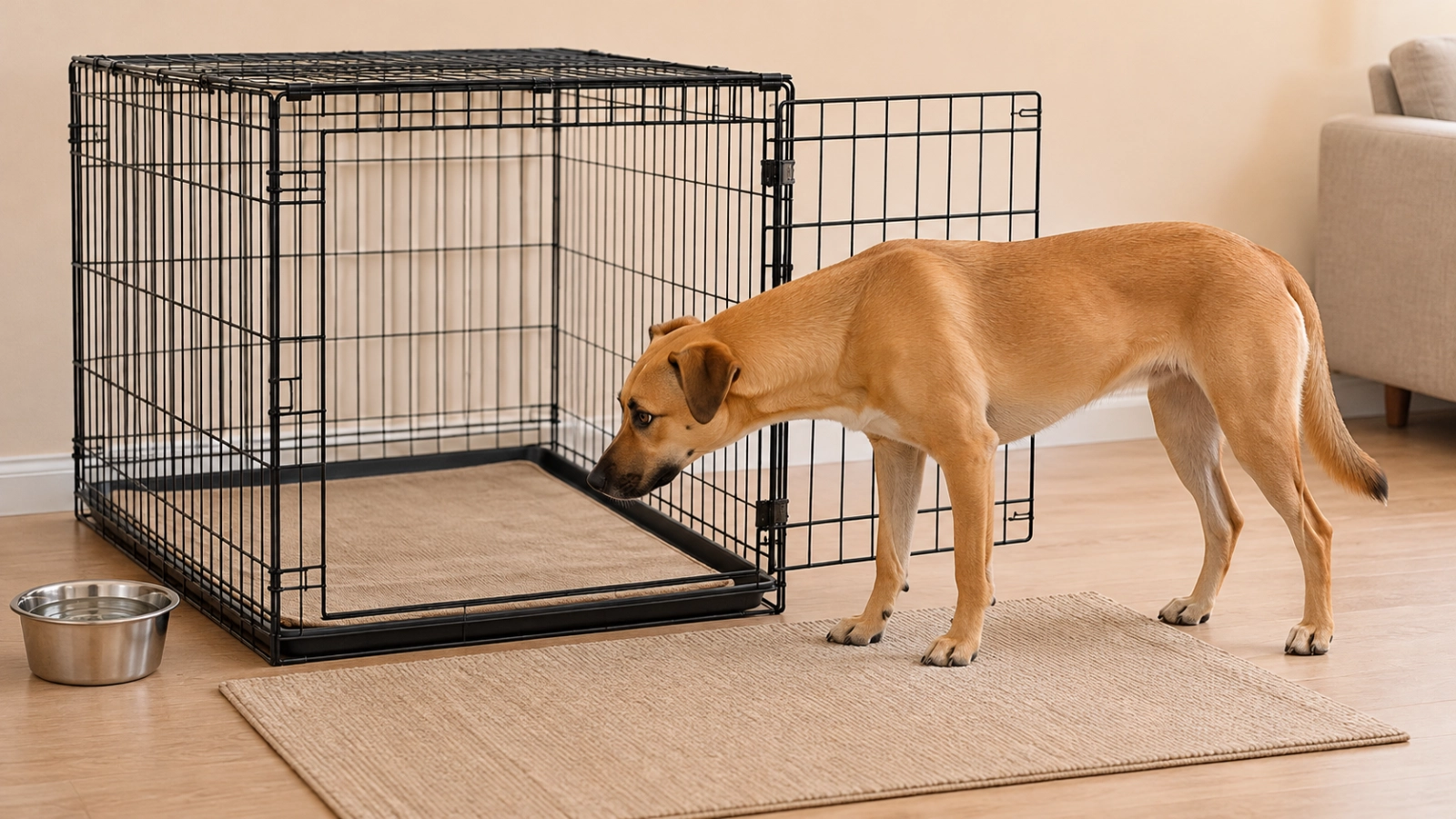
Introduce your dog to a crate gradually by starting with an open door, rewarding voluntary interest, and changing one small part of the experience at a time. Let the dog’s responses guide your next step. Approaching, entering, and resting inside are separate experiences from having the door closed.
A useful introduction gives your dog opportunities to investigate and leave. Progress may include repeating an easy version or deciding that another resting arrangement works better. The checklist below helps you observe comfort without setting deadlines or alone-time targets.
Prepare an Appropriate Open Crate
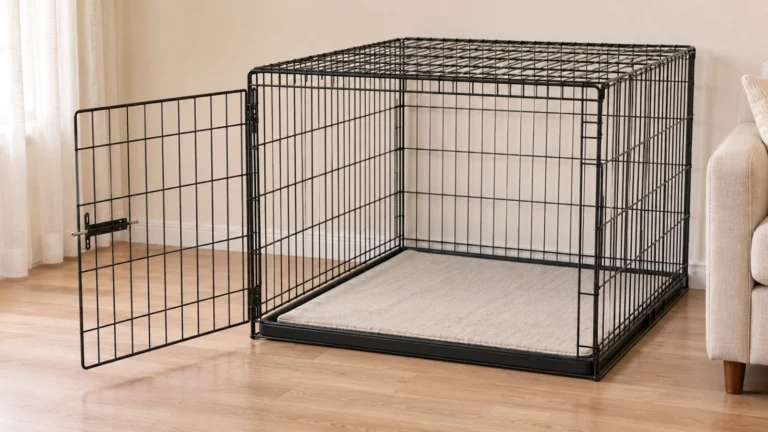
Begin with a correctly assembled crate that allows normal standing, sitting, turning, lying down, and stretching. Check it with the intended bedding and water equipment in place. Our guide to choosing a dog crate for a small home covers usable space, access, and construction.
Choose a calm area where your dog can have company without being repeatedly disturbed. Keep the approach and ventilation clear. Secure the door fully open using a method permitted by the manufacturer so it cannot swing into the dog. Use suitable, clean bedding and keep fresh water accessible throughout the introduction. Do not restrict water to reduce bathroom breaks.
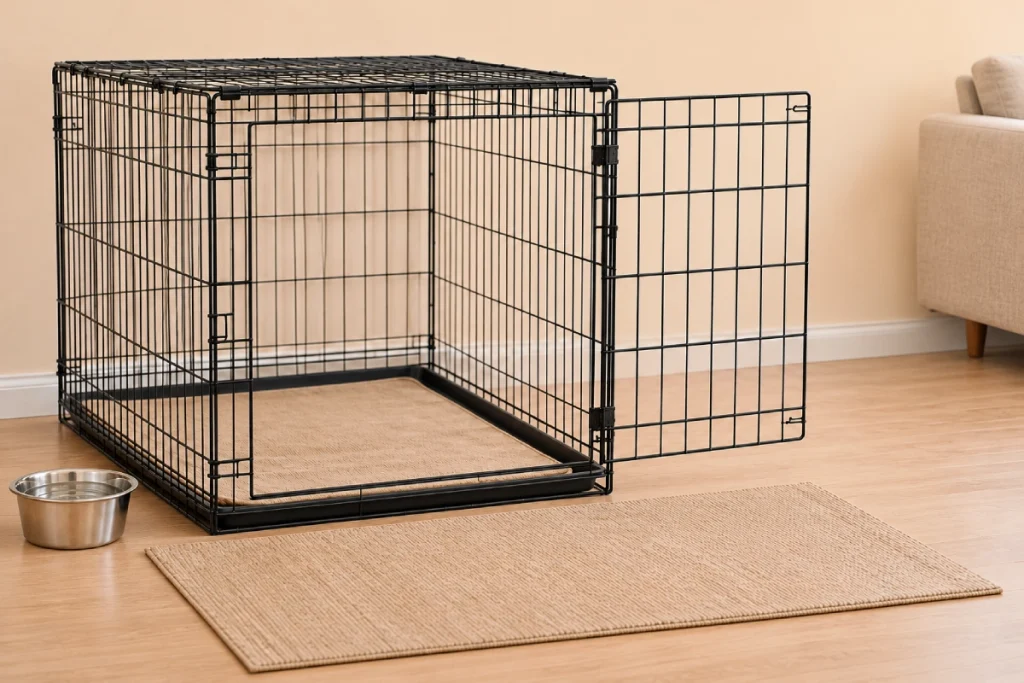
Read the model’s entanglement warnings. For example, MidWest’s wire-crate instructions require removing collars, tags, and leads before use. Keep dangling straps and cords away. Ask household members to leave a resting dog undisturbed and avoid reaching through the bars.
The RSPCA’s initial setup guidance supports comfortable space, water access, an open secured door, and pleasant early experiences. If your dog has a history of substantial distress around crates, seek individual advice before trying to progress.
Reward Interest the Dog Offers Voluntarily
Allow your dog to become familiar with the crate being in the room. You can sit nearby without hovering over the entrance or blocking it. Notice a glance, a sniff, an approach, or a step inside. Offer a small suitable food reward where the dog is already comfortable, rather than requiring them to move farther inside to get it.
Keep early food games open and easy. If your dog chooses to enter, reward them and let them come out again. Avoid repeatedly calling them back or following them with food when they leave. You can offer another opportunity later. Finishing treats is not, by itself, a reason to close the door.
If the doorway is too much, begin farther away. If the dog is reluctant to eat inside, provide their normal meal somewhere comfortable. Do not withhold meals to make the crate more persuasive. Choose rewards that fit any existing dietary instructions.
Build Comfort Before Adding Door Changes
Observe what happens between rewards as well as while your dog eats. Look for a pattern of voluntary approaches, easy movement, and choosing to remain or return. A single still posture or the absence of barking does not establish comfort. Note whether the dog rushes in and retreats, repeatedly checks the exit, or becomes hesitant.
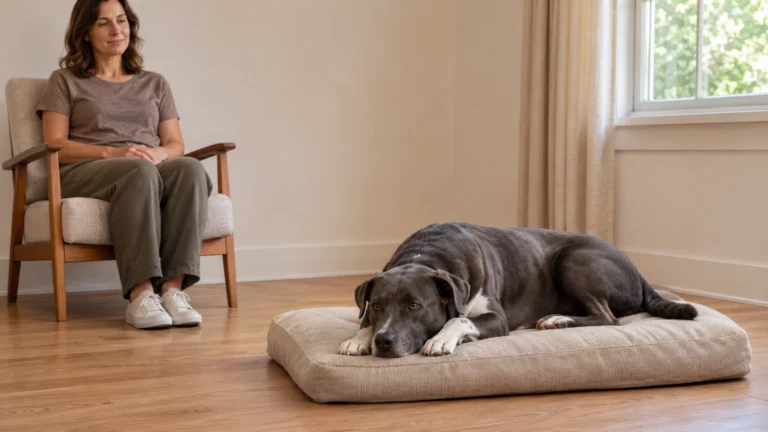
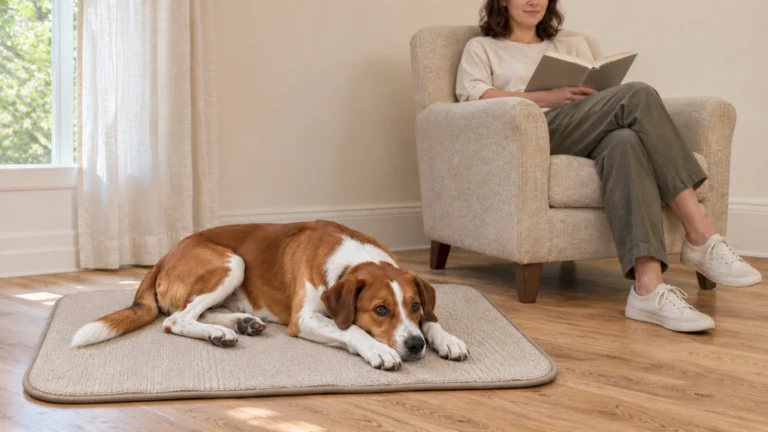
Give your dog time to change position or rest without asking for a stay. Quiet praise or an occasional reward can acknowledge a choice without interrupting every pause. Resting beside the entrance is an acceptable choice too; you do not need to move the dog inside to finish the session.
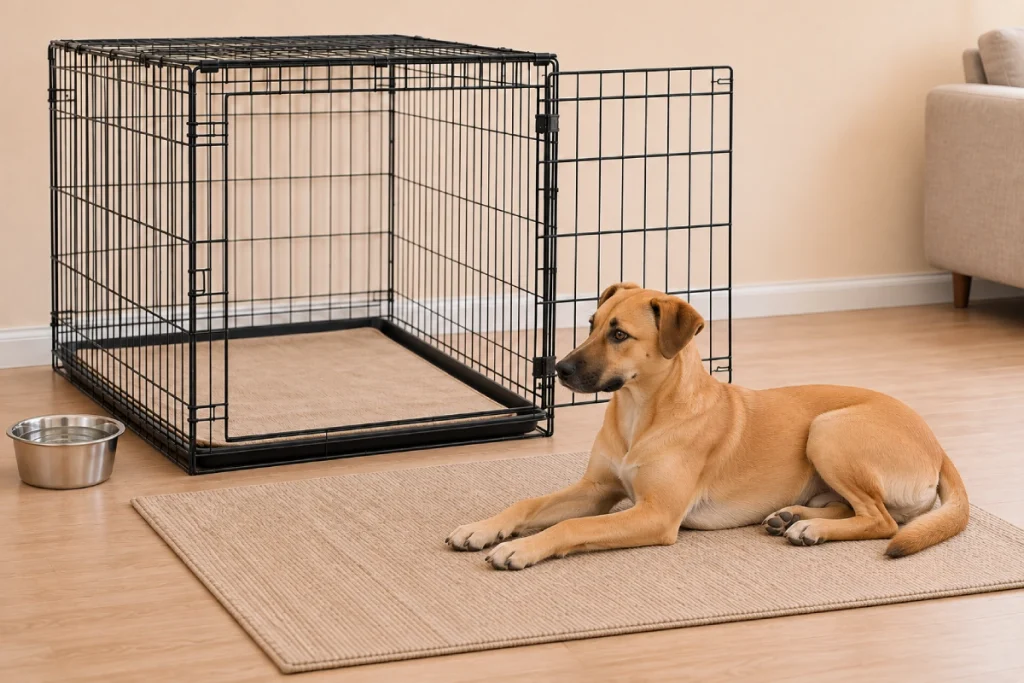
End while the activity is still easy, or when your dog chooses to disengage. Keep the door secured open for voluntary access whenever the crate is available for that purpose. Continue supervising according to the dog’s needs and the surrounding setup.
Introduce Door Movement as a Separate Change
When your dog repeatedly chooses to spend time inside, start with a very small change, such as touching the door. Next, move it slightly and return it to fully open while keeping the exit available. Stay nearby and observe the dog throughout. Do not close the door unexpectedly while they are occupied with food.
Only after small movements are comfortable should you try momentarily securing the door, with you beside the crate. Reopen while the experience is still easy and allow the dog to leave. If they show worry or try to get out, allow a safe exit and make the next version easier. Dogs Trust’s crate guidance recommends returning to a comfortable stage when worry appears, including whining or scrabbling.
Change one feature at a time: the door’s position, how long it remains closed, or your own movement nearby. Keep yourself present during these initial exercises. Being comfortable with you beside a closed crate does not demonstrate readiness for you to leave the room or home.
A Progression Checklist Based on Comfort
Use these checkpoints as observation notes, not a calendar. Repeat a familiar version or step back whenever needed. You do not have to complete a row before ending a session.
| Current experience | What to observe | A sensible next decision |
|---|---|---|
| Open crate nearby | Can the dog investigate or ignore it without pressure? | Reward chosen interest at a comfortable distance. Keep the approach open. |
| Entering and leaving | Does the dog approach voluntarily and move out freely? | Continue open-door exploration; avoid trapping them after a reward. |
| Spending time inside | What happens between rewards? Can the dog change position and choose to stay or leave? | Support quiet time without requiring a stay. Accept resting outside too. |
| A small door movement | Does the dog continue ordinary movement, or hesitate, freeze, or seek the exit? | Return the door to open. Reduce the movement if the change causes concern. |
| Momentary closure with you beside it | Is the dog comfortable through the change, rather than merely busy eating? | Reopen before difficulty develops. If worry appears, end the attempt and return to an easier setup. |
| Another small change nearby | How does the dog respond during and after the change? | Alter one feature at a time. Do not treat this as an alone-time test. |
Quick session note: What I offered: ______. What my dog chose: ______. What changed: ______. Next time I will repeat or simplify: ______.
Pause When the Dog Needs a Different Version
Pause for withdrawal, reluctance to return, whining, repeated scratching, freezing, or attempts to escape. These observations do not identify one definite emotion or cause. Consider the whole situation and check ordinary needs such as bathroom access, water, rest, and company. You can make the session easier without waiting for the behavior to become severe.
If the door is closed and your dog becomes worried, calmly allow a safe exit. Do not make release depend on a silence requirement or punish the dog for communicating. Cornell’s veterinary guidance warns against forcing a highly stressed dog to remain crated alone.
For marked distress or frantic escape attempts, stop training and seek professional guidance before another session. VCA’s confinement guidance advises ending the session and consulting a veterinarian or veterinary behaviorist when a dog is very distressed. Seek veterinary attention promptly if the dog is injured.
Keep Everyday Care and Alternatives in Place
Crate introduction is not treatment for separation anxiety. An AVSAB-published veterinary behavior article explains that confinement can worsen anxiety for some dogs and that similar-looking behaviors can have different causes. Your veterinarian can assess health concerns and help arrange an appropriate behavior plan, including referral to a veterinary behaviorist or a qualified professional who uses reward-based methods.
Have another suitable arrangement ready, such as a prepared room, gated area, or appropriate pen, and assess your dog’s comfort there too. Our puppy-proofing checklist for a small home can help you inspect accessible hazards. Another barrier does not automatically resolve distress.
Keep normal bathroom opportunities, drinking water, activity, company, and rest in the household care plan. For bedtime, our guide to preparing for your dog’s first night covers sleep-space arrangements; bedtime should not become a first test of unfamiliar closed confinement.
If your veterinarian has prescribed confinement for recovery and your dog cannot cope with it, tell the clinic and request an adapted plan. For everyday introductions, choose the arrangement your dog can use comfortably while their care needs are met.
Sources
- RSPCA: Crates and Crate Introduction — initial setup and voluntary exploration.
- Dogs Trust: Playpen and Crate Training — gradual door changes and returning to an easier stage.
- Cornell University College of Veterinary Medicine: Dog Crates — suitability and distress.
- VCA Animal Hospitals: Crate Training and Confinement — professional help for marked distress.
- AVSAB: Separation Anxiety—The Great Imitator, Part 2 — confinement concerns and professional care.
- MidWest: SL54 Wire Crate Instructions — assembly and entanglement warnings.