Help Your Dog Get Used to Being Alone: A Gentle Start
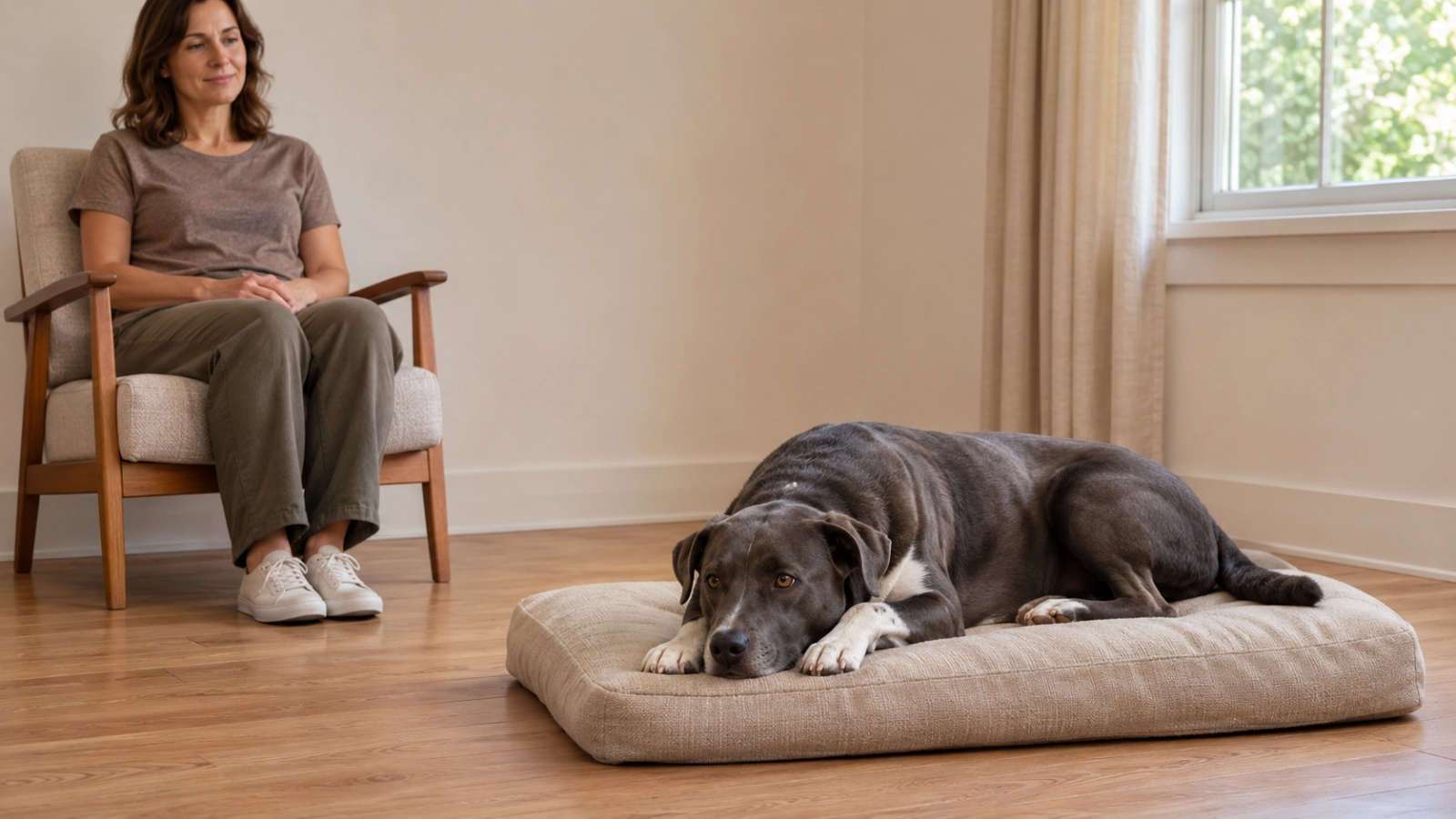
To help your dog get used to being alone, begin while you are at home with a change they can comfortably manage. That might be standing up and sitting down again, or moving a little farther away while remaining visible. Observe their response before making the next change, and keep everyday care available throughout.
This introduction is for dogs who are comfortable with the starting setup. If your dog already becomes distressed when you prepare to leave or move away, contact your veterinarian and seek qualified behavior support. Repeatedly extending an upsetting separation is not a way to build confidence.
Prepare a Familiar Place and Meet Care Needs
Ask a previous caregiver what the dog is used to, including where they rest and how they have responded to people leaving. Treat missing information as unknown. Comfort in a previous home does not establish what the dog can manage in yours.
Before practice, offer an appropriate bathroom opportunity and meet the dog’s current needs for food, water, suitable activity, and company. Follow existing care instructions. Choose a quiet moment when the dog is ready to wind down; extra exercise is not a substitute for help with distress.
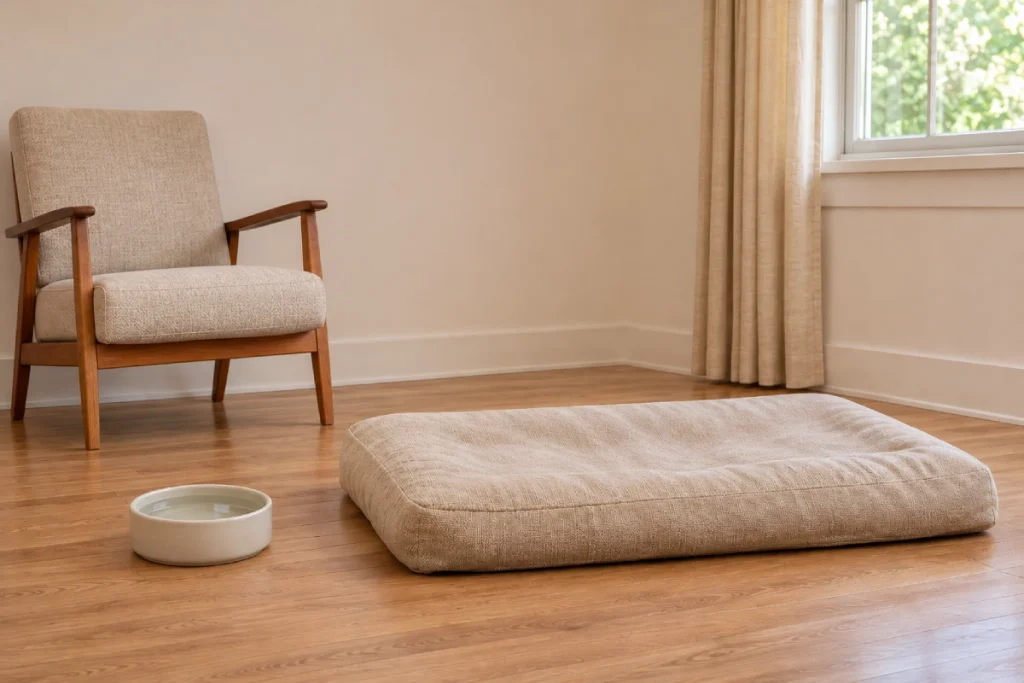
- Rest: Provide familiar, comfortable bedding that suits this dog and room to change position.
- Water: Keep fresh drinking water accessible without blocking the resting area or walking route.
- Surroundings: Check reachable cords, trash, food, small objects, and anything the dog might chew or swallow. Reduce avoidable noise and disturbance.
- Access: Choose an area the dog already uses comfortably. A new closed door, gate, or crate adds a separate challenge.
Leave loose clothing out of the starter setup. Food puzzles and chews are optional, and a toy does not prevent separation anxiety. Before leaving any item unattended, verify its suitability for this dog, its condition, and the manufacturer’s use and supervision instructions. A successful supervised try does not establish suitability for unattended use. If an item requires supervision, omit it when you cannot supervise.
Begin With a Change Your Dog Can Manage
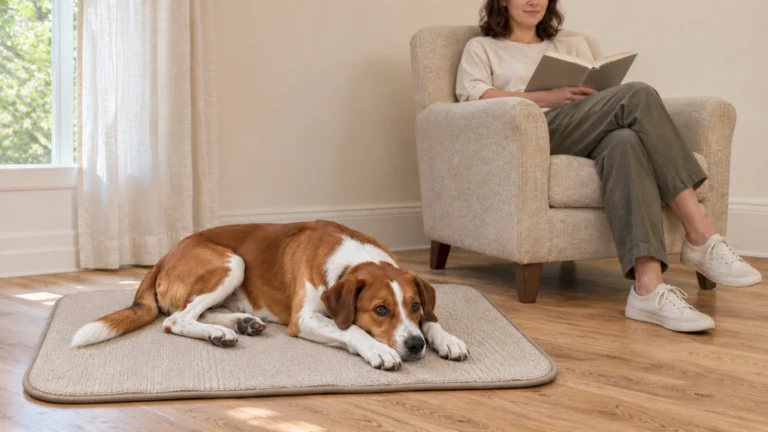
Start nearby while your dog rests or quietly occupies themselves. If resting beside you is still unfamiliar, our guide to teaching a dog to settle on a mat covers that skill separately. The dog does not have to pass a mat exercise before receiving care or company.
Try one small movement, such as shifting in your chair or briefly standing and sitting again. If that is already easy, a small step away while you remain visible may be suitable. These are possible starting points, not stages every dog must complete in order.
Let your dog move freely within the prepared area. If they get up or follow you, do not hold them in place or repeatedly command a stay. Following once does not diagnose anxiety. Return to an easier setup and notice what else is happening.
Dogs Trust’s time-alone guidance emphasizes gradual practice and adjusting to the dog’s response. Begin with the change your dog can manage now, even if it is much smaller than an actual departure. Offer a quiet, suitable reward for easy resting while you are present, without making the exercise increasingly exciting.
Observe Before Changing the Next Step
Notice the pattern before, during, and after your movement. Does the dog briefly look up and return to their previous activity? Or do they become increasingly watchful, pace, vocalize, or repeatedly try to reach you? Consider the whole dog and the surroundings; quietness, stillness, or eating alone does not prove comfort.
When the easy version is repeatedly comfortable, change just one feature: your distance, the length of the moment apart, or whether you remain visible. Keep other parts familiar. Include easy repetitions rather than making every attempt longer. There is no required daily increase.
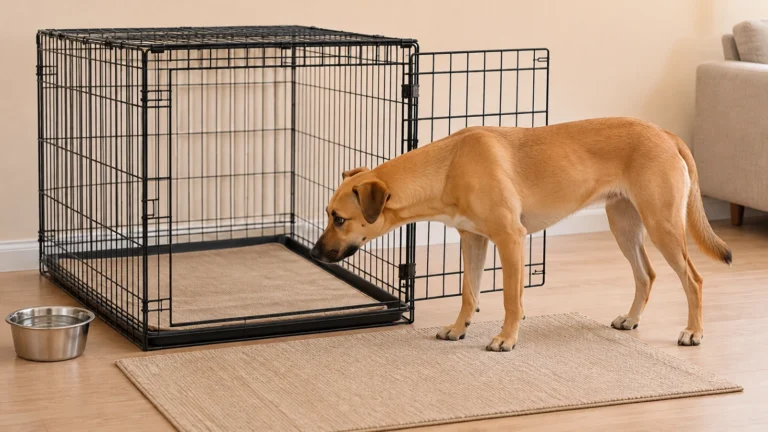
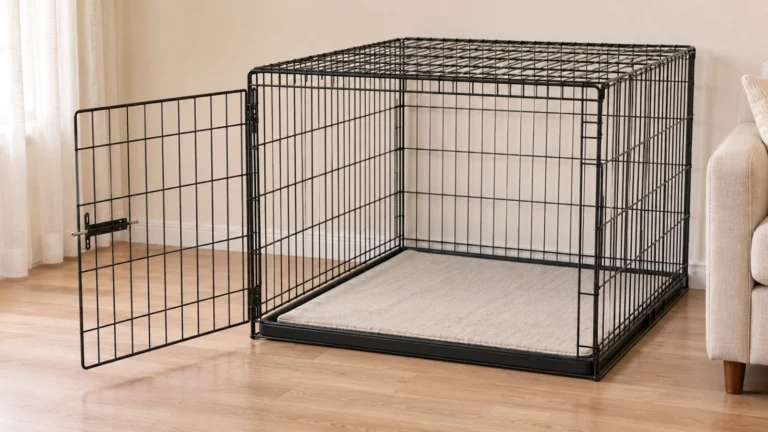
A doorway, barrier, or front-door departure can change the experience even if the time apart stays brief. Use a barrier only if the dog is already comfortable with it. Calm resting near an open crate does not establish comfort with a shut door or your absence. Our gradual crate-introduction guide covers that separate introduction.
If you reach a comfortable point where you briefly step out of view, a live camera can help you observe while remaining close enough to return promptly. Position the device and cables beyond the dog’s reach. The RSPCA’s alone-time guidance recommends video because distress can otherwise go unnoticed. Do not extend an absence to collect footage.
Keep a Simple Observation Log
Copy this log into a note, or edit the table for each practice opportunity. The filled rows are illustrative examples, not a progression schedule or reports of tested dogs. Record what you saw rather than naming an emotion or diagnosis.
Date and time: __________ Observer: __________
| Setup | Brief change | Dog’s response | Next adjustment |
|---|---|---|---|
| Familiar open room; caregiver seated nearby | Stood up, then sat down | Looked up, then rested their head again | Repeat the same easy version before changing another feature. |
| Same room; dog free to move | Took a small step away while still visible | Got up and followed; no other change noted | Allow following. Try a smaller movement next time; avoid requiring a stay. |
| Previously comfortable doorway setup | Briefly moved out of view | Began pacing and whining | Return and end the exercise. Seek help if difficulty recurs; do not lengthen it. |
| __________ | __________ | __________ | __________ |
| __________ | __________ | __________ | __________ |
You can note actual elapsed time to describe an event, but it is not a target for the next attempt. A comfortable response in one setup does not certify a longer absence, a different room, or a full workday.
Stop if Your Dog Starts Struggling
End the separation if the dog becomes increasingly unsettled: for example, repeated pacing, whining or howling, trembling, heavy panting unrelated to heat or activity, or persistent attempts to reach you. Return calmly and help them regain a comfortable setup. Do not wait outside for silence before responding to distress.
Check immediate needs and possible disturbances. A sound outside, a bathroom need, discomfort, and difficulty with a barrier can affect the response. You do not need to determine the diagnosis before stopping an exercise that is going badly.
The RSPCA advises against leaving dogs to cry it out. Avoid scolding, frightening noises, or punishment for barking, damage, or accidents. If there is frantic escape behavior or self-injury, stop practice and seek help rather than trying another departure. Contact a veterinarian promptly if the dog may be injured.
Arrange Care for Departures You Cannot Avoid
Plan necessary absences separately from practice. Arrange a familiar person or suitable sitter who can provide the company and care this dog needs. Check that the dog can actually settle with that person; a different caregiver is not automatically an easy substitute.
Confirm who will be there, what care is due, and what happens if plans change. A brief check-in may meet one bathroom need without covering the rest of an absence the dog cannot manage. Use our flexible daily routine for a new dog to organize responsibilities and backup help.
Do not use all-day crating or an unverified toy to bridge a gap in care. There is no universal number of hours that this introduction makes safe or comfortable. If the available arrangement is not working, tell your veterinarian or behavior professional what the practical constraints are so you can plan support.
Know When to Seek Individual Help
Seek support if you cannot find a comfortable starting point, difficulty keeps recurring, or distress appears around departure preparations or absences. Ask your veterinarian to assess possible health contributors, especially with a sudden behavior change, apparent pain, or new toileting problems. Dogs Trust’s separation-related guidance explains why veterinary assessment and practical care support matter.
Request a qualified reward-based behavior professional with experience in separation-related concerns, with veterinary involvement as needed. Ask about their training, methods, and referral arrangements. Cornell’s veterinary behavior guidance emphasizes individual causes, positive reinforcement, and avoiding harsh methods or quick-fix promises.
An AVSAB-published article by a veterinary behaviorist also explains that confinement and separation concerns can look similar, and that a crate may worsen distress for some dogs. Share your observations and any safely obtained footage; leave diagnosis and an individual treatment plan to the professionals. This starter introduction is not treatment for established separation anxiety.
Sources and Further Reading
- Dogs Trust: Helping Your Dog Get Used to Spending Time Alone
- Dogs Trust: Separation Anxiety in Dogs—Signs and Support
- RSPCA: Training Your Dog to Be Left Alone
- RSPCA: Separation-Related Behavior
- Cornell University College of Veterinary Medicine: Anxious Behavior
- AVSAB: Separation Anxiety—The Great Imitator, Part 2