How to Choose Dog Toy Size: A Practical Checklist
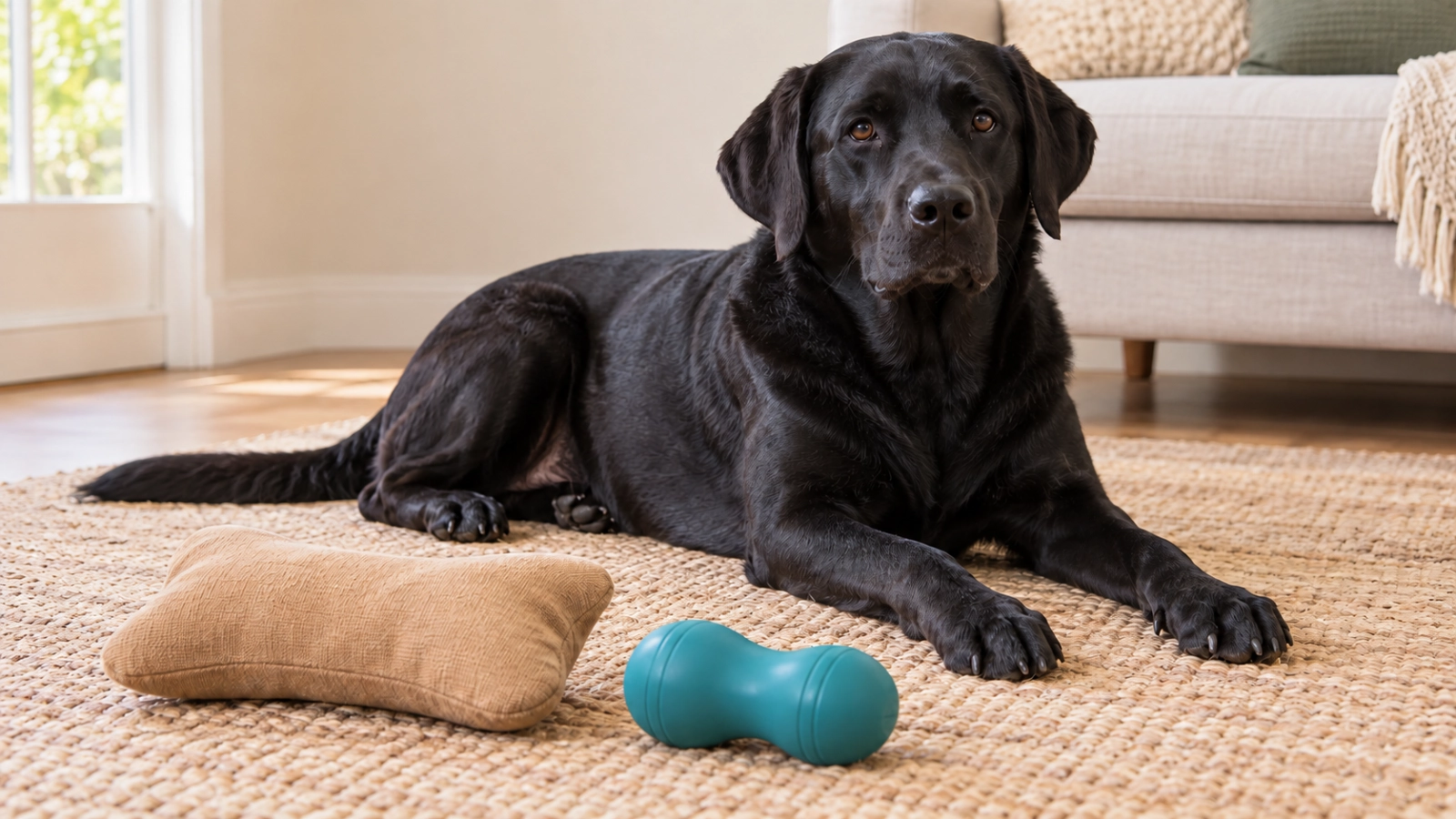
To choose a dog toy size, start with the exact product’s instructions, then consider your dog’s mouth and what they actually do with toys. A “large dog” label or a familiar breed pictured on the package cannot settle the decision on its own.
There is no single measurement that makes every ball, tug, plush toy, and puzzle suitable. Check the whole toy, its parts, and how it may change during play. Use the checklist below before buying, then supervise and reassess when your dog tries it.
Read the Instructions for That Exact Toy
Find the manufacturer’s current guidance for the specific model and size you are considering. Look for the intended activity, any age or weight guidance, chewing restrictions, supervision requirements, and cleaning and replacement instructions. A fetch toy or interactive puzzle should not automatically become a toy for sustained chewing.
Size names are useful for finding a product variant, but ask for actual dimensions when the listing is unclear. “Medium” on one product does not tell you the dimensions of another. Do not estimate size from a promotional photo.
As one manufacturer example, KONG’s sizing guidance distinguishes its rubber products from interactive toys that are not intended for heavy chewing. Its advice to size up when uncertain belongs to its own product guidance. Read the directions for the toy in front of you rather than applying that advice to every toy design.
Match the Toy to Your Dog and the Game
Think about previous play: Does your dog carry toys gently, hold them while chewing, pull at seams, or quickly remove pieces? Describe those actions rather than relying only on a label such as “strong chewer.” A soft toy that suits gentle carrying may not suit a dog that immediately opens it.
Consider mouth size alongside body size, age, and any known dental or health needs. Two dogs of similar weight may use the same toy differently. Ask your veterinarian about restrictions if your dog has dental problems, mouth discomfort, or a history of swallowing objects.
Dogs Trust’s enrichment guidance emphasizes the individual dog’s health, abilities, preferences, and observed interaction. Once you have a suitable toy and activity, our guide to indoor games for dogs in small spaces offers ways to adapt play to your room.
A Pre-Purchase Dog Toy Inspection Checklist
Copy this list into your shopping notes. Write down what you know and mark missing information as a question. If an important answer is unavailable, wait for clarification or choose a different toy.
- Exact product: Record the model, size variant, intended use, and relevant manufacturer restrictions. Keep the instructions for later checks.
- Dimensions: Note length and width or ball diameter, with units. For an irregular shape, ask which parts the quoted measurements describe; overall length alone may leave important details unclear.
- Swallowing or lodging concern: Could the whole toy or an accessible part be swallowed or become stuck in your dog’s mouth or throat? If unsure, do not offer it while seeking advice.
- Shape during use: Does it flatten, fold, or compress substantially? Ask the manufacturer how this affects sizing. Do not push a toy into your dog’s mouth to check its fit.
- Small parts: Check for detachable decorations, ribbons, loose threads, or accessible internal components. Prefer a different design if your dog can remove and swallow parts.
- Condition: Look around the entire toy for cracks, splits, fraying, loose seams, or exposed filling. Check a new toy as well as one already in the toy basket.
- Individual suitability: Does its intended use match your dog’s chewing behavior and any veterinary restrictions? A material name or durability claim does not answer that question.
- Use and storage plan: Can you supervise the activity, follow the care instructions, and put the toy away afterward? Consider every dog that could reach it, not only the dog you are buying it for.
Why Small, Large, Hard, and Soft Need Different Checks
Small: A toy that can be swallowed or lodge in the throat is unsuitable, even if the dog appears to enjoy it. Humane World for Animals’ toy guidance highlights this risk. Check the smallest accessible components as well as the whole item.
Large: Buying the biggest option does not resolve every fit question. If the toy is too awkward or heavy for your dog to use comfortably as intended, ask about another size or design. Do not encourage the dog to struggle with it just because it seems harder to swallow.
Hard: Resistance to damage is a separate issue from tooth safety. AAHA’s dental care guidelines warn that hard treats such as antlers and natural or synthetic bones can damage teeth. The 2026 WSAVA dental guidelines also identify tooth-fracture risk with very hard chews, including nylon bones. Do not choose a rigid chew simply because it is described as durable; discuss suitable options with your veterinarian.
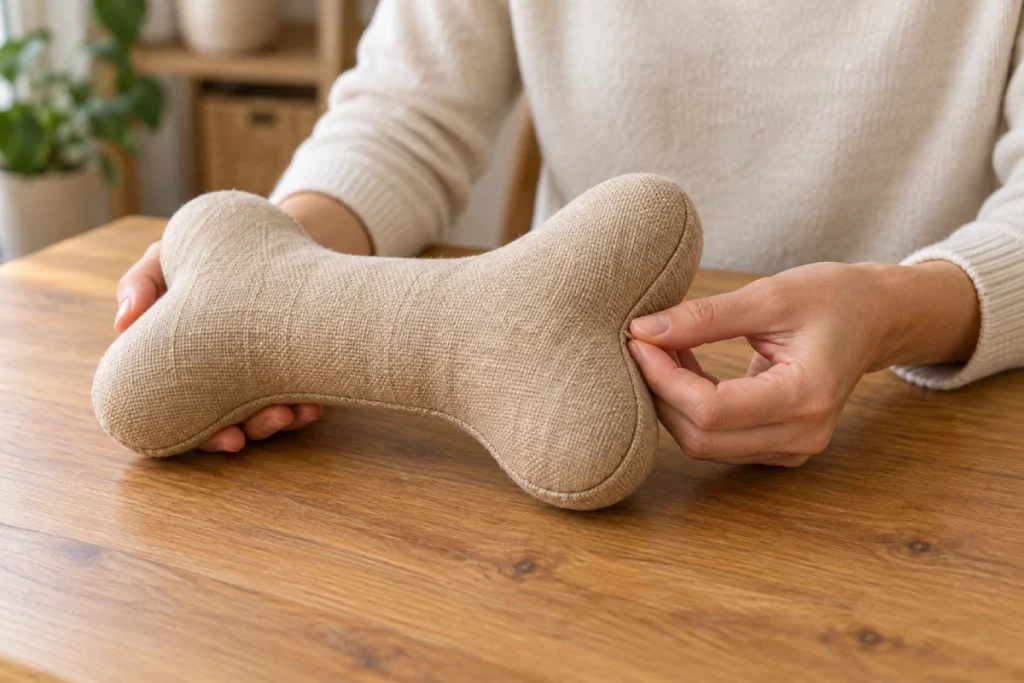
Soft: Softness does not make fabric, filling, or a hidden squeaker appropriate to swallow. A plush toy may suit one dog’s carrying game while another dog quickly tears it open. Watch for access to the contents and end use before pieces are ingested.
Questions to Ask Before You Buy
Send the manufacturer the exact product name and size, along with a brief description of your dog and how they play. Useful questions include:
- “What are this size’s actual dimensions, and which parts do those measurements cover?”
- “Is this designed for carrying, fetching, tugging, food puzzles, or sustained chewing? What use is excluded?”
- “My dog falls between your size recommendations and tends to flatten toys. Which details should I check before choosing?”
- “What damage or wear means I should replace it, and how should I clean and inspect it?”
Ask your veterinarian questions about the dog rather than asking the manufacturer to assess dental health:
- “Given my dog’s teeth and health history, what toy properties or chewing activities should we avoid?”
- “My dog has swallowed toy pieces before. What changes to toy choice and supervision do you recommend?”
- “Does my puppy’s growth, my dog’s dental treatment, or a change in chewing mean we should reassess their current toys?”
A useful answer may be a restriction or a reason to choose another activity. You do not need to find a tougher version of every toy your dog damages.
Offer a New Toy Without Pressure
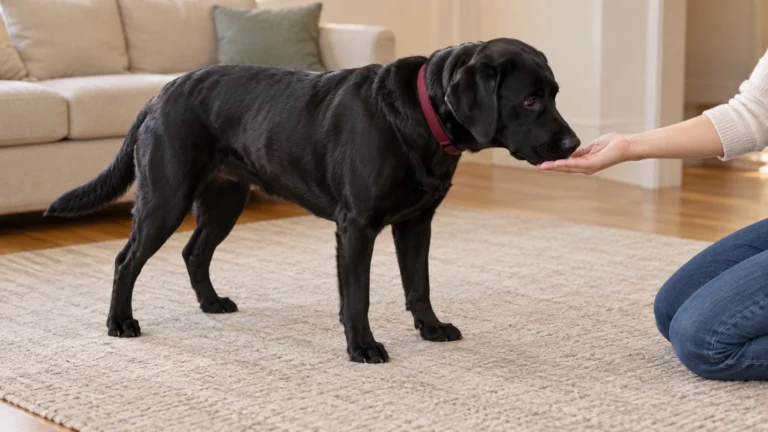
Choose a quiet, clear space and follow the preparation instructions, including removing packaging. Offer the toy without pushing it toward your dog’s face or putting it in their mouth. Let them approach, investigate, or leave. Begin with the intended activity and stay close enough to observe how the toy is being used.
Notice whether your dog can handle it comfortably, starts dismantling it, or uses it differently from the instructions. Pause if they disengage or the activity becomes difficult to manage. Our guide to dog body language during play explains how to offer a break without treating one signal as proof of an emotion.
If damage appears, end access rather than waiting to see whether a piece comes off. Do not wrestle a toy from your dog’s mouth. Once your dog has moved away and it is safe to collect, inspect it and follow the replacement instructions.
Recheck Before the Next Session
Check condition before each use and during play. A toy that becomes worn or smaller is a different item from the one you first assessed. Revisit sizing as a puppy grows, and reassess suitability when your dog’s chewing behavior or care needs change. A successful first session does not establish that the toy can be left with the dog unattended.
If you suspect your dog swallowed a toy or pieces of one, contact your veterinarian promptly. Cornell’s veterinary guidance explains that swallowed toys can cause serious intestinal obstructions. If chewing changes or your dog drops food or seems uncomfortable around the mouth, stop the activity and seek veterinary advice; VCA’s fractured-tooth guidance describes why these changes deserve attention.
Sources
- Humane World for Animals: How to Pick the Best and Safest Dog Toys
- Dogs Trust: Enrichment Activities for Dogs
- KONG: Frequently Asked Questions — manufacturer-specific use, sizing, and inspection guidance.
- AAHA Dental Care Guidelines: Nutrition and Dental Health
- 2026 WSAVA Global Dental Guidelines — risks of dental chews.
- Cornell University College of Veterinary Medicine: Gastrointestinal Foreign Body Obstruction in Dogs
- VCA Animal Hospitals: Fractured Teeth in Dogs