Snuffle Mat vs. Puzzle Feeder: How to Choose
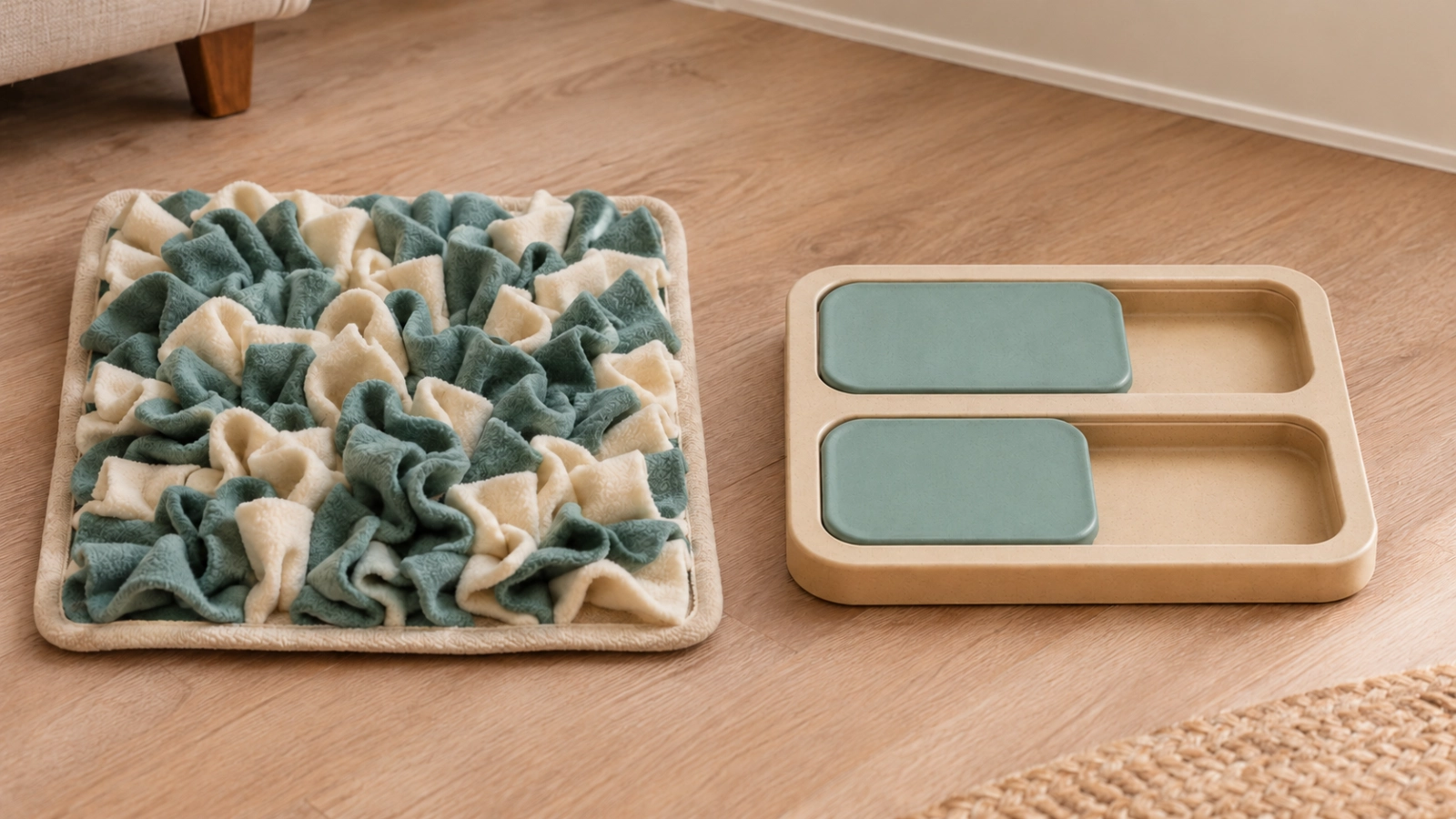
A snuffle mat offers food among fabric folds or strands; a puzzle feeder can add covers, sliders, or other parts the dog moves to reach food. Choose by comparing the actual design with your dog’s play habits, ability to use it comfortably, and your setup and cleaning routine. Neither category is automatically the better choice.
For a snuffle mat vs. puzzle feeder decision, start with individual suitability rather than a difficulty label or a promise of keeping the dog busy. These are options within everyday enrichment. Our indoor games for dogs in small spaces guide offers a broader activity menu.
How the Two Designs Work
Snuffle Mats
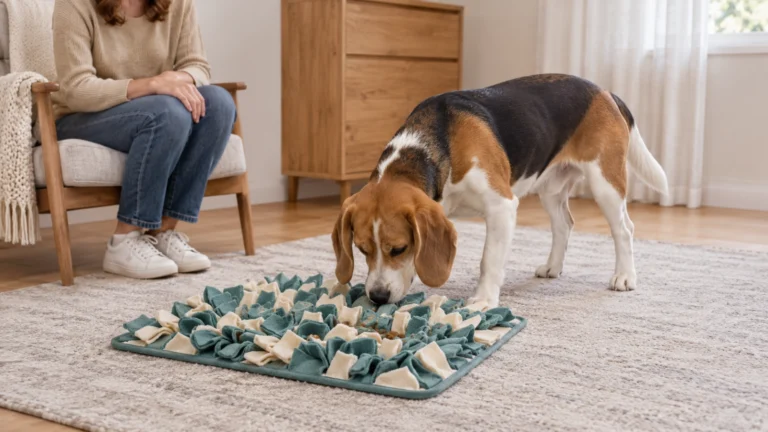
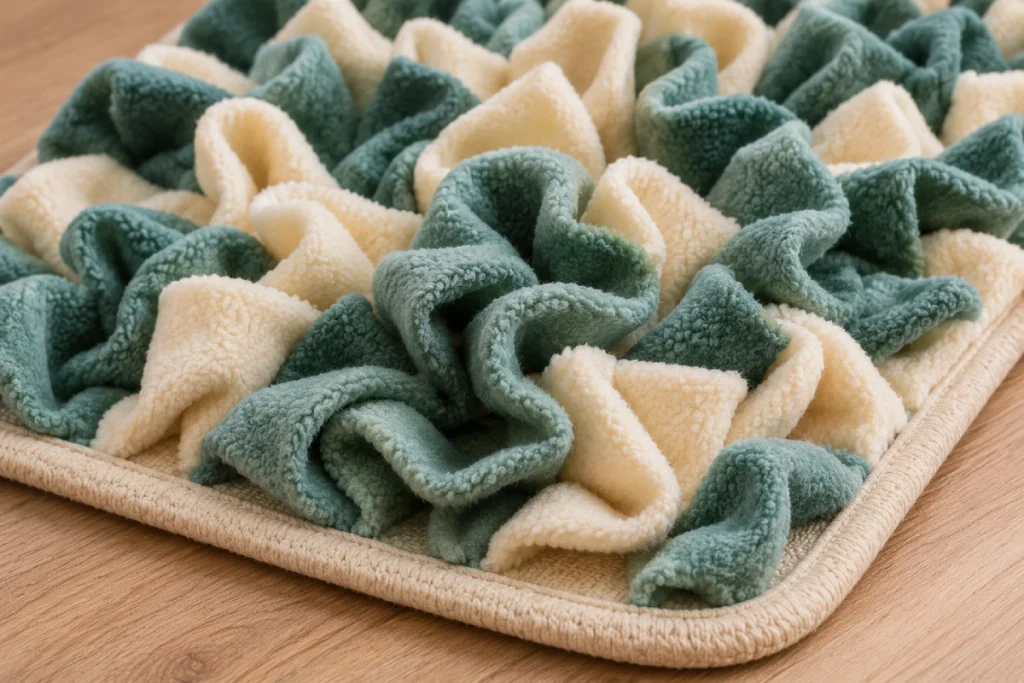
A snuffle mat holds food among fabric strips, folds, or pockets so the dog can search for it. Dogs Trust’s snuffle-mat example describes food placed among fabric strands. Dogs may investigate with their nose and also use their paws or mouth; watch how your own dog interacts with the material. A mat intended for food searching should not become something the dog tears apart or swallows.
Puzzle Feeders
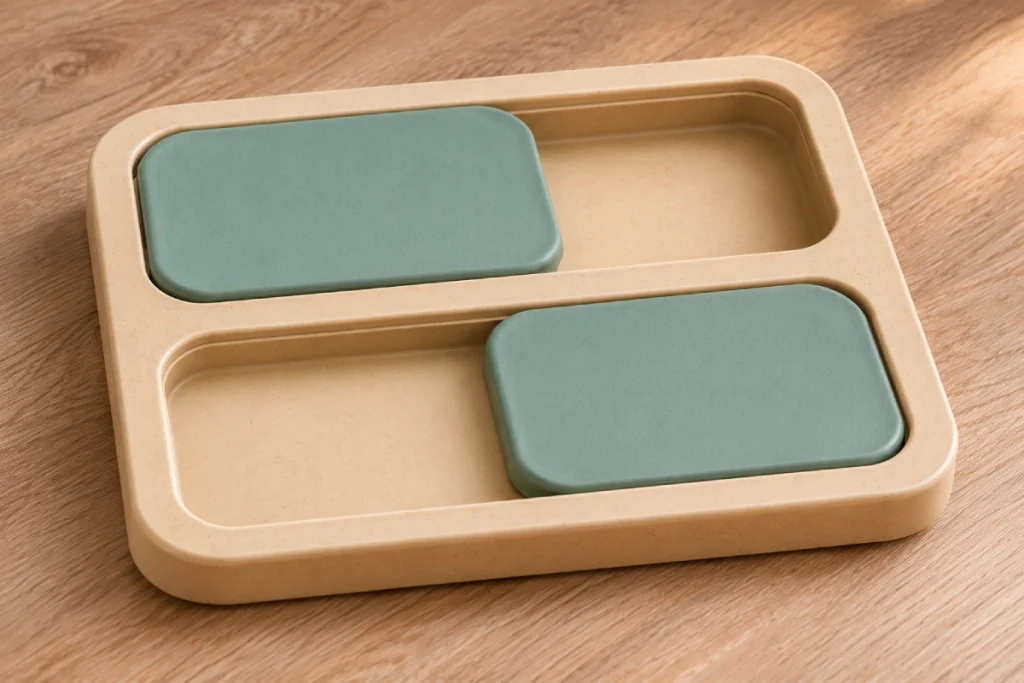
“Puzzle feeder” is a broad label, and a snuffle mat is itself a kind of food puzzle. Here, the comparison focuses on tray or board puzzles with food compartments and movable covers. Some involve one action, while others combine several. The dog may use their nose, paws, and learned movements to uncover food. Check the specific item’s instructions before deciding whether its mechanism suits them.
Snuffle Mat vs. Puzzle Feeder: A Practical Comparison
Use this table to compare actual items. Construction, food compatibility, and care directions vary within both categories. A shallow, visible setup can be easier than a deeply hidden reward, regardless of the product’s category.
| What to compare | Snuffle mat | Tray or board puzzle feeder |
|---|---|---|
| Main task | Search among fabric folds or strands. | Uncover food by moving a lid, slider, or other part. |
| Easy starting setup | Suitable food visible on top or in shallow, accessible folds. | A manufacturer-approved setup with food visible and covers open or minimally obstructing it. |
| What changes difficulty | Food visibility, depth, fabric density, and the individual dog’s approach. | Food visibility, resistance, and the number or sequence of actions required. |
| Chewing concerns | Fabric strips, seams, backing, or attachments may be pulled apart. | Boards, covers, or removable pieces may be chewed or damaged. |
| Food compatibility | Check whether the exact mat permits the food you plan to use. | Check the food type, compartment access, and capacity stated for that model. |
| Cleanup | Check between fabric folds for remaining food and follow washing and drying directions. | Check compartments and moving tracks; follow the model’s cleaning directions. |
| Floor space | Allow for the mat fully opened and the dog’s comfortable approach and movement. | Allow for the board, any moving parts, and room for the dog to approach and reposition. |
| Storage | Some designs fold or roll when clean and dry; check the instructions. | Check the complete storage footprint and how any removable parts are secured. |
An advanced-looking board is not an intelligence test, and a mat is not guaranteed to be easy. Dogs Trust’s enrichment guidance recommends considering health, abilities, dietary needs, preferences, and how the dog responds.
Check Chewing and Physical Fit First
Use what you already know about your dog. Do they investigate fabric, or immediately pull and shred it? Do they work gently with movable objects, or bite and carry them away? A dog that swallows fabric needs a different plan from one that searches without damaging it. Switching to a rigid feeder does not automatically solve a chewing or ingestion concern.
Inspect fabric, seams, backing, lids, sliders, and any separate parts. Check the manufacturer’s size and use guidance, including whether the dog can reach food comfortably. Humane World’s toy guidance emphasizes individual size and play habits, supervision, and removing damaged toys. Firm material is not proof that an item can withstand chewing.
If your dog has a history of swallowing objects or cannot use either design without dismantling it, pause the equipment choice and ask your veterinarian about suitable alternatives. Supervision helps you intervene; it does not make an unsuitable item suitable.
Plan Cleanup and Storage Before Buying
Consider the whole reset: removing uneaten food, checking hidden areas, washing as directed, drying, and storing the item. Fabric needs attention between its folds; a board may have tracks and recesses that need checking. Do not assume that a smooth-looking surface or machine-washable label makes the full job effortless.
Actual care instructions illustrate the differences. PAW5’s snuffle-mat page permits a washer and dryer, while Outward Hound’s Snuffle Palz instructions specify washing with warm water and mild soap, careful rinsing, and air drying. Outward Hound’s Dog Brick instructions specify hand washing with soap and water. These are examples of model-specific directions, not cleaning rules for every mat or puzzle.
The CDC’s pet-supply guidance says to follow the item’s cleaning instructions. Use cleaners as labeled, keep pets away while cleaning, and let items dry as directed before reuse or closed storage. Ask the maker if the care instructions are missing or unclear. Our dog toy rotation guide covers keeping ready-to-use items separate from those needing care.
Introduce Either Option at an Easy Level
Choose a quiet, clear area with secure footing and enough space for the dog to turn and leave. Stay beside them throughout, with other pets comfortably separated. Use food allowed by both the product instructions and the dog’s current feeding plan, including prescribed restrictions. Account for rewards within that plan; ask your veterinarian if dietary adjustments are needed.
Make a Mat’s First Search Obvious
Begin with suitable food visible on top or in easy-to-reach folds, following the mat’s directions. Let the dog investigate without pushing their face into the fabric. If they cannot locate the food, make it more visible. Stop if they start pulling apart or chewing the mat. There is no need to bury food more deeply just to extend the session.
For an easy first setup, observation tips, and cleanup steps, see our step-by-step snuffle mat guide.
Show One Easy Puzzle Action
Use the maker’s easiest setup. Where the design allows it, leave food visible in an accessible compartment before adding a covered one. Demonstrate a moving part as the instructions permit, without forcing the dog’s nose or paw through the action. Do not dismantle the game or remove parts unless the maker directs it. Battersea’s brain-game guidance recommends an easy start and help when the dog struggles.
End or simplify if the dog loses interest, repeatedly leaves, or starts biting the equipment. Collect leftovers and put the item away when the dog has finished and it is safe to do so. Keep ordinary feeding arrangements in place rather than making a meal depend on solving a puzzle.
Use Observed Preference to Make the Final Choice
If you have access to both types, offer them separately and start each at an easy level. Note whether the dog approaches willingly, reaches the food, needs help, damages the item, or chooses to leave. Compare the setup and cleanup you can realistically manage, too. One quick interaction does not establish a permanent preference.
Look at the whole dog and the situation. Our guide to dog body language during play and when to pause explains why a single sound or posture cannot establish enjoyment. If the dog guards an item or freezes or growls when approached, give space and stop arranging that activity. Do not reach in or punish the warning. Dogs Trust’s resource-guarding guidance recommends veterinary and qualified behavior support.
A Short Decision Checklist
- Does the design suit this dog’s known chewing and handling habits?
- Can the dog reach the food comfortably in an easy starting setup?
- Are the intended food, portion capacity, and use instructions compatible with the current feeding plan?
- Can I stay present, offer help, and allow the dog to stop?
- Can I inspect, clean, dry, and store every part as directed?
- Is the dog participating willingly, with no damage or concerning interaction around the item?
Choose the option that fits those answers, or choose neither for now. You can use our food-free enrichment ideas for dogs for other ways to offer choice and interest. Keep suitable activity, walks, company, water, and rest in the care plan; an enrichment item is one part of the day.
Sources and Further Reading
- Dogs Trust: Enrichment Activities for Dogs
- Dogs Trust: Snuffle-Mat Example
- Humane World for Animals: Choosing Dog Toys
- Battersea: Brain Games for Dogs
- PAW5: Snuffle-Mat Care Information
- Outward Hound: Snuffle Palz Safety and Care
- Outward Hound: Dog Brick Instructions, Safety, and Care
- CDC: Cleaning and Disinfecting Pet Supplies
- Dogs Trust: Resource Guarding Food and Toys