How to Rotate Dog Toys Without More Clutter
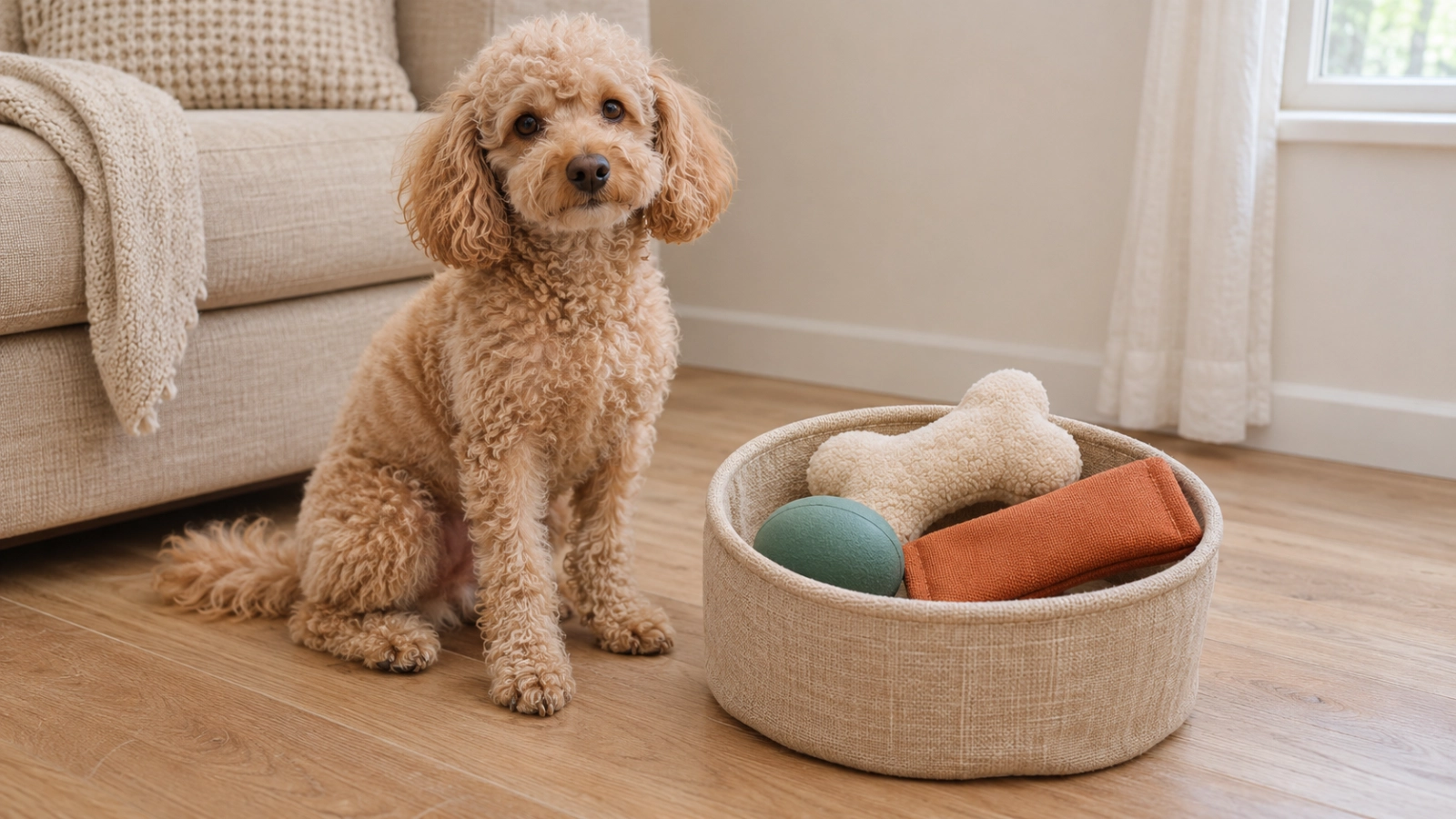
To rotate dog toys without adding clutter, sort the toys you already have, keep a suitable familiar favorite in the active selection, and store the rest together. Offer a manageable mix, inspect it during use, and change the selection according to your dog’s interest and each toy’s condition.
You do not need a new toy for every week or a fixed number on the floor. A rotation is a household organizing tool. It can make your collection easier to manage, but it does not guarantee that a dog will stop being bored, anxious, or destructive.
Sort the Current Toys Before Choosing a Rotation
Gather toys when your dog is comfortably occupied elsewhere. Check under furniture and in walking bags so you can see what you actually own. Group them by how your dog uses them: carrying or resting nearby, retrieving, playing tug with you, or working for food. Some toys fit more than one group.
Then give each toy a practical status:
- Ready to offer: Intact, clean, and still appropriate for this dog and the intended activity.
- Needs cleaning: Suitable to keep, but waiting for care and drying before it returns.
- Needs a suitability check: The dog’s use has changed, the instructions are missing, or you are unsure about size or construction. Keep it out of use while you check.
- Remove from use: Torn fabric, exposed stuffing or squeakers, loose parts, missing chunks, split surfaces, or other damage. Follow disposal instructions; do not put it in the spare-toy box.
Humane World for Animals’ toy guidance emphasizes size, individual play habits, supervision, and removing damaged toys. Looking intact does not establish that a toy suits every dog. Check the manufacturer’s intended use and sizing guidance as well.
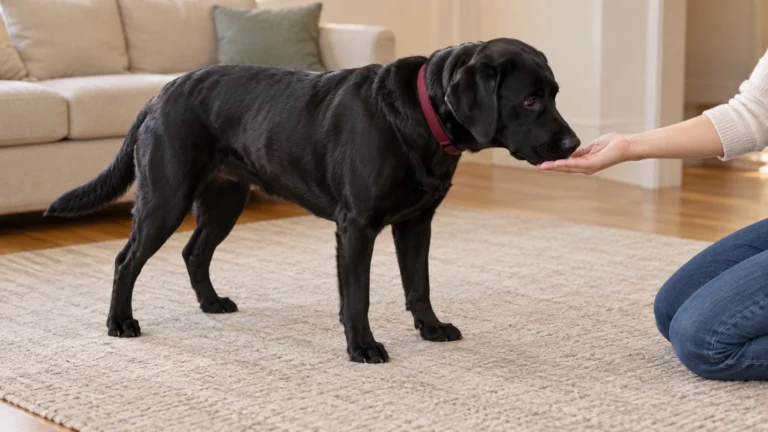
Do not take toys from your dog’s mouth to complete the sort. If they stiffen over an item, growl, or resist your approach, give space and pause the task. Dogs Trust’s resource-guarding guidance advises against taking valued items and recommends veterinary and qualified behavior support. Never punish a warning signal.
Keep a Familiar Favorite When It Helps
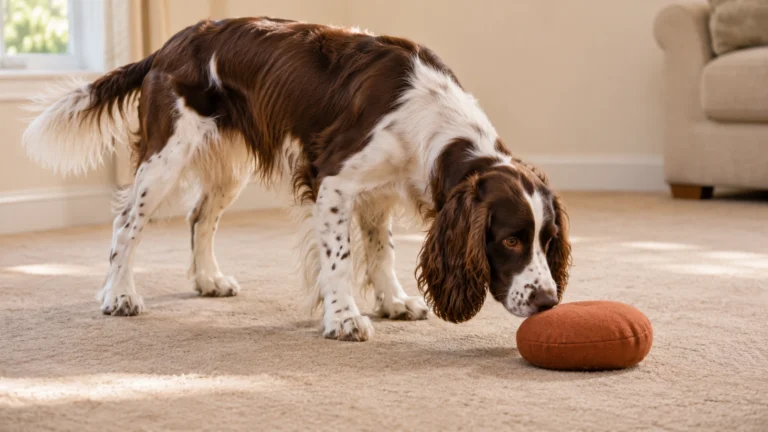
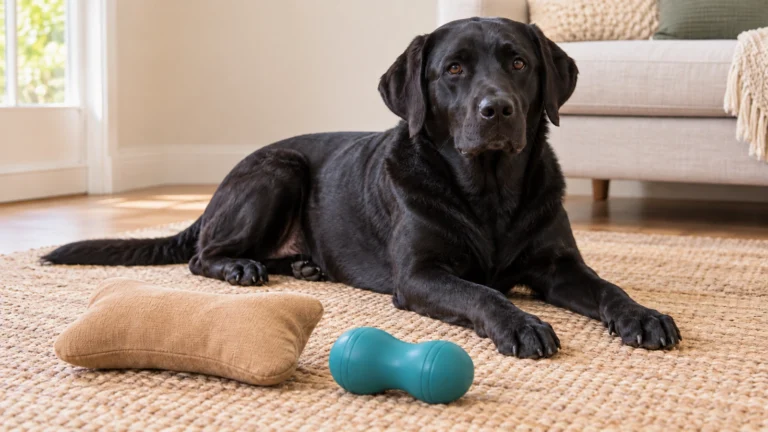
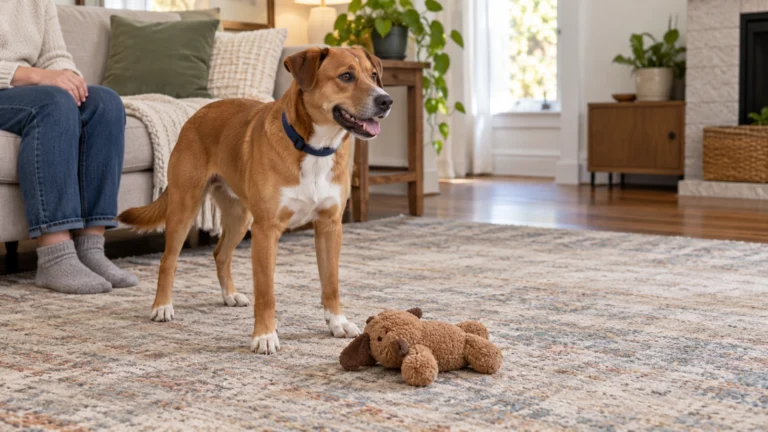
Notice which toy your dog repeatedly chooses, carries, or settles beside. A suitable favorite can stay in the active selection while other toys change. Humane World’s rotation advice specifically allows for keeping a comfort favorite available.
That favorite still needs inspection and cleaning. Keep its normal supervision requirements, and remove it if it becomes damaged. When it needs washing, offer another familiar, appropriate option if helpful; avoid clearing away every comfort item just to make the rotation look tidy.
For a household with more than one dog, consider each dog’s preferences and access separately. Do not assume that a shared basket removes competition. If items are guarded, get individual advice before changing access or arranging shared play.
Choose a Small Selection You Can Manage
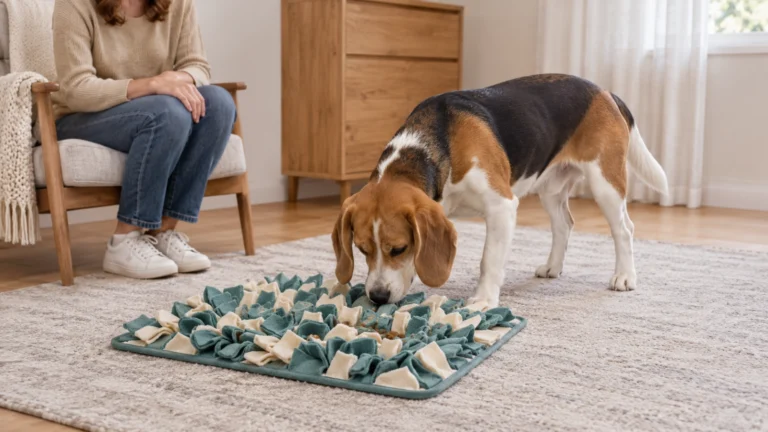
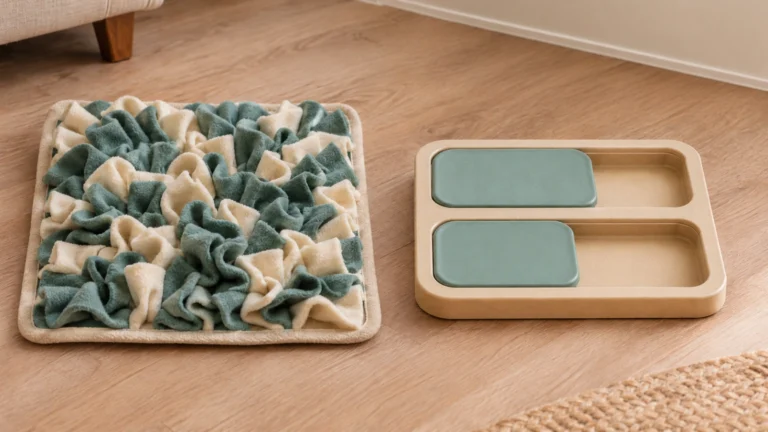
Start with the space and supervision you can realistically provide. You might keep a favorite carrying toy available when appropriate and bring out a suitable retrieve or tug toy for a game together. A food toy can be offered separately if it suits the dog and you can follow its feeding, cleaning, and supervision instructions.
These are examples, not categories every dog must use. Dogs Trust’s enrichment guidance recommends considering health, abilities, preferences, and how the dog responds. You can omit toys your dog does not enjoy or cannot use appropriately.
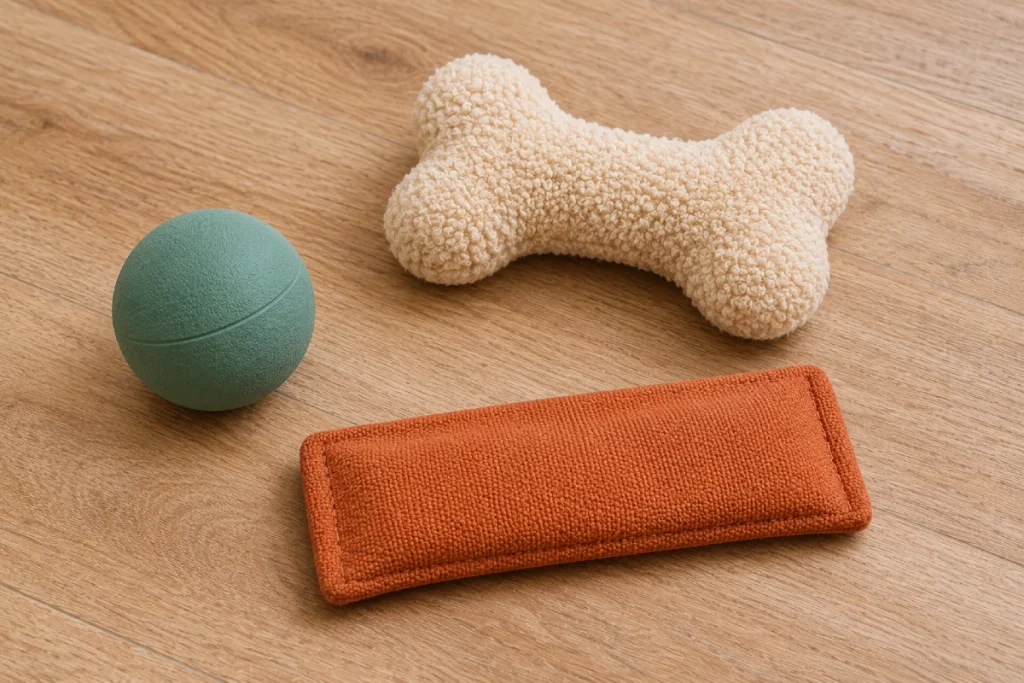
“Current selection” means the toys you plan to offer, not permission to leave all of them out unattended. Keep supervised-use toys under adult control. A tidy basket is storage, not a safety check.
Choose an activity as well as a toy. Our indoor games for dogs in small spaces offer ways to use suitable items you already own. Playing a familiar game together may be more useful than adding another purchase.
Give the Remaining Toys One Storage Place
Keep clean, dry spares together in a closed container or cupboard your dog cannot access. Choose a stable location away from walking routes. Keep toys waiting for cleaning separate, and discard damaged items instead of mixing them back into storage.
Use a short note inside the cupboard or on your phone: what is ready, what needs care, and what the dog chose. You do not need matching bins for every week. If you keep dividing the collection into more boxes, simplify the system before buying extra storage.
Give suitable large toys a practical storage place rather than replacing them with smaller toys to fit the basket. Keep care instructions where you can find them. Close the storage area after choosing the next selection, and leave the dog’s resting space and household exits clear.
Clean According to the Toy’s Own Instructions
Read the tag, packaging, or manufacturer’s page for the exact model. Check permitted washing methods, water temperature, drying, and any cleaning-product restrictions. If you cannot identify the instructions, ask the maker rather than assuming every rubber or fabric toy can be washed the same way.
The CDC’s pet-supply guidance distinguishes cleaning from disinfecting and says cleaning is usually enough for most pet items. Its sample schedule is a general example; clean sooner when items are dirty or smell, and follow item-specific care instructions.
Manufacturer restrictions matter. For example, KONG’s rubber-toy care guidance says to skip heated dishwasher drying and advises against bleach. Those directions apply to the relevant KONG products; they are not instructions for every toy in your basket.
Clean food-contact toys after each use according to their instructions. KONG’s cleaning article also recommends that frequency for food-filled toys. Rinse as directed and let items dry completely before putting them into closed storage.
Keep pets away while cleaning and follow cleaner labels. If illness or a higher-risk household situation calls for disinfection, ask your veterinarian about an appropriate approach that also meets the toy’s care restrictions. Do not improvise chemical mixtures or apply high heat to an unsuitable item.
An Optional Four-Week Household Example
Use the weeks below as convenient review points, not a care rule or a requirement to swap toys every seven days. The example assumes the listed toys are already suitable for the individual dog. Skip categories that do not fit, repeat a selection, and change things sooner when needed. No extra purchases are required.
| Week | Selection to try | Favorites note | Inspect or clean |
|---|---|---|---|
| Week 1 | Begin with the familiar favorite and an existing retrieve toy for a supervised game. | Note which item the dog chooses and how they use it. | Check condition and care instructions before offering. Set aside anything needing attention. |
| Week 2 | Keep the favorite; try an existing tug toy instead of the retrieve toy if the dog enjoys tug. | Keep the familiar option rather than removing it because the week changed. | Inspect the tug surface and seams. Clean as needed using its label directions. |
| Week 3 | Bring back a previously enjoyed toy, or offer a suitable food toy during an appropriate session. | If the favorite needs washing, offer another familiar, appropriate option when helpful. | Clean a food-contact toy after use. Dry toys fully before storing them. |
| Week 4 | Repeat what the dog used willingly. Return unused suitable items to storage. | Record the favorites you will retain in the next selection. | Review the collection again, remove damaged items, and clean the storage container as needed. |
Inspect before and during play, and check condition again afterward. The weekly review does not replace those checks. A toy can become damaged during its first session, and a stored toy still needs checking before it comes back.
Let Interest Guide the Next Change
Keep the note simple: “Carried the soft toy; ignored the retrieve toy; enjoyed a short tug game.” Describe what happened without deciding that one ignored toy proves boredom. Try a quieter setting, an easier game, a previously enjoyed item, or a rest break. Let your dog decline.
For changes during a game, use our guide to dog body language during play and when to pause. You can finish an activity without immediately replacing it with another toy.
Keep walks, appropriate activity, company, bathroom access, and rest in the care plan. Persistent destruction, distress, or a sudden change in play deserves individual attention. Contact your veterinarian if you suspect pain or illness, and seek qualified reward-based behavior support when needed. A rotation chart is not a treatment plan.