Dog Crate Size for a Small Apartment: A Buyer’s Guide
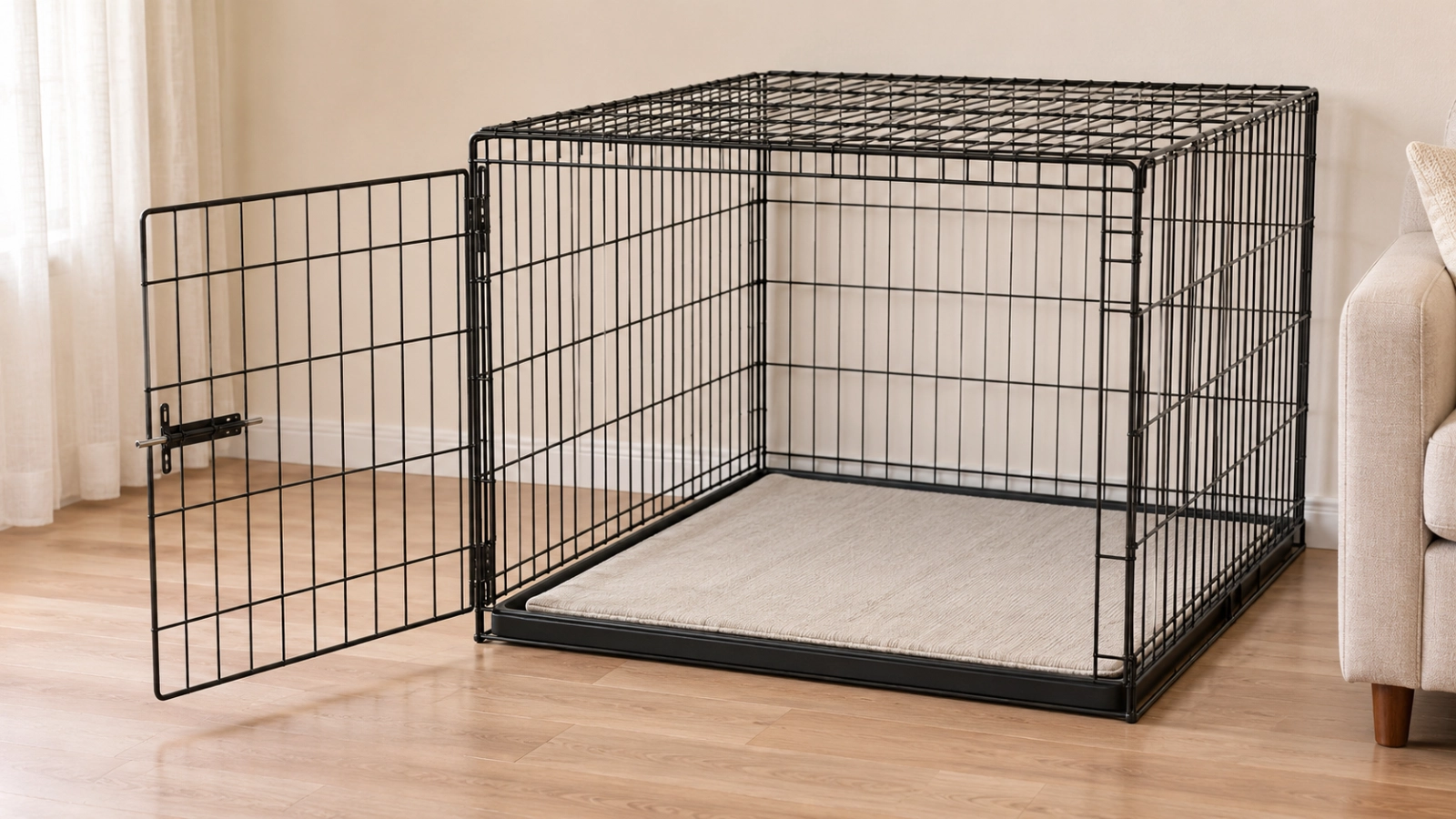
Choosing a dog crate for a small home starts with two separate questions: does it provide suitable space for your dog, and can you use it properly in the room? Begin with the dog’s needs, then compare the crate’s assembled footprint, doorway, and door movement with the space you have.
A smaller outside footprint can be useful when the usable interior still fits the dog. Making the dog crouch, curl tightly, or squeeze through an opening to suit the apartment is a different problem. If an appropriately sized crate will not work in your first location, reconsider the design, location, or boundary arrangement.
First Decide Whether a Crate Suits Your Dog
Ask the previous caregiver about any crate experience: what type they used, whether the dog entered voluntarily, and whether confinement caused difficulty. An unfamiliar crate needs a gradual introduction even if the dog has used another one before. Some dogs may prefer an open resting area or another suitable boundary.
A crate does not treat separation anxiety. The ASPCA’s separation-anxiety guidance explains that confinement can add distress for some dogs and that escape attempts can cause injury. If your dog shows persistent distress or frantic attempts to escape, stop the confinement attempt, make a safer arrangement, and seek advice from your veterinarian and an appropriately qualified behavior professional. Do not assume a stronger crate resolves the cause.
Never use the crate as punishment. Plan water, bathroom opportunities, exercise, company, and supervision around the individual dog. For veterinary-prescribed confinement, follow the veterinarian’s instructions rather than adapting a general shopping guide into a care plan.
Check the Usable Space Inside
Your dog should be able to stand normally, turn around, lie down, and stretch comfortably. The RSPCA’s crate guidance includes these movement and resting requirements. Check normal sitting posture and headroom too. Do not push the dog into a crate or shut the door to test whether they fit.
Record your dog’s natural standing and sitting height, body length, and resting space without forcing a pose. Then check the exact model’s measurement method. Breed and weight suggestions can help identify options, but they cannot describe every dog’s proportions, mobility, or preferred resting position.
Ask for usable interior length, width, and height, plus the doorway width, doorway height, and threshold height. For example, Petmate’s Vari Kennel page lists interior measurements separately from its nominal size names. Confirm that any outside measurements describe the assembled crate, rather than packaging or a folded product.
Recheck the interior with bedding and any compatible water equipment in place. A thick bed reduces headroom, and a bowl or attachment occupies space. Compare a bed’s outer dimensions with the usable crate floor; our guide to measuring your dog for a bed explains the distinction between sleeping space and a bed’s full footprint.
For a puppy, plan for growth and reassess regularly. If using a manufacturer-approved divider, follow its installation instructions and retain enough space for normal movement and rest at every stage. A divider changes the living space inside the frame; the frame still occupies its full floor footprint.
Allow for Doors, Airflow, and Everyday Access
Measure the outside length, width, and height in the intended location. Then add the space needed to open the crate door fully, reach the latch, and let the dog approach and leave. Check whether a tray must slide out into the room for cleaning. The crate’s rectangular floor footprint is only part of the space you will use.
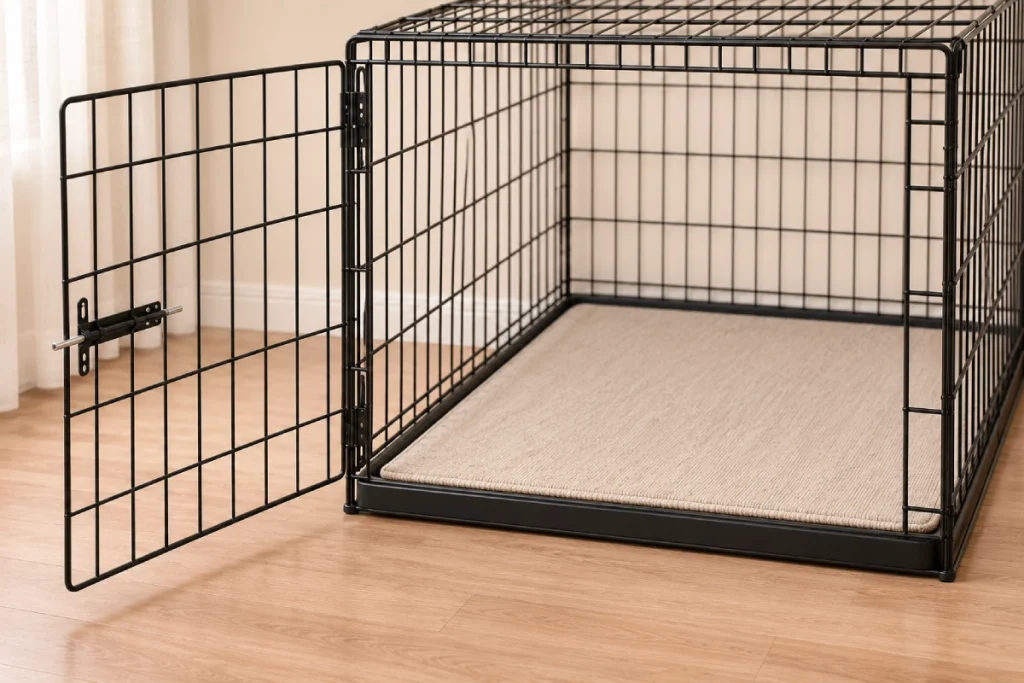
Walk the normal household route with the door open as well as closed. Can people pass without stepping over the door or dog? Can nearby furniture and room doors still move? If a model offers more than one entrance, compare the approaches while preserving access to both the dog and the equipment.
Keep ventilation openings clear of furniture, stored items, and bedding. Avoid direct heat and direct sunlight, and follow the maker’s ventilation and placement instructions. Do not cover a crate simply to make it blend into the room. Our guide to where to put a dog bed in a small home helps assess undisturbed resting locations and walking routes.
Buyer Checklist: Dog Fit and Home Fit
Copy the checklist into your notes. Answer yes, no, or unknown, then write what needs checking. Resolve missing product dimensions with the manufacturer and individual care or behavior concerns with the appropriate professional.
| Fit check | Question to answer | Answer / follow-up |
|---|---|---|
| Dog fit | Can the dog stand and sit normally, turn, lie down, and stretch with the intended interior setup? | ____ |
| Dog fit | Is the doorway suitable for the dog’s body and movement, including its threshold? | ____ |
| Dog fit | Does the construction match the dog’s chewing behavior and the maker’s use restrictions? | ____ |
| Dog fit | For a growing dog, can the setup be adjusted or replaced without restricting normal movement? | ____ |
| Home fit | Do the assembled outside dimensions and fully open door fit the proposed area? | ____ |
| Home fit | Are household routes, exits, nearby doors, and the dog’s approach clear? | ____ |
| Home fit | Can ventilation remain unobstructed and the crate stay away from direct heat and sun? | ____ |
| Home fit | Can you operate the latches, remove the tray or bedding, and clean without an awkward squeeze? | ____ |
A compact design is useful only if the dog-fit questions still have suitable answers. Folding flat may help with storage when the crate is unused; it does not reduce the space the dog needs when the crate is assembled.
Compare Construction and Cleaning Requirements
Compare the exact model’s instructions rather than choosing on appearance or a “heavy-duty” description alone. Check for secure assembly, damaged components, sharp edges, and parts that could catch the dog.
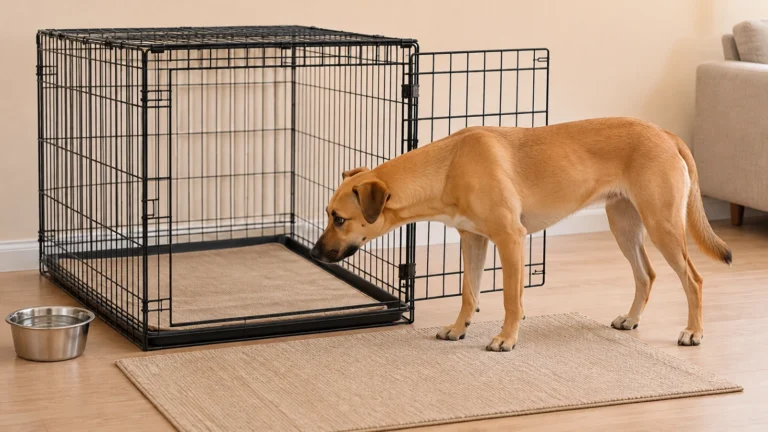
- Wire crates: Inspect panel connections, door operation, latches, and tray retention. Consider whether the tray can be removed in your chosen location. Follow the model’s assembly instructions rather than assuming every folding frame locks together in the same way.
- Molded plastic crates: Check the usable floor and headroom, ventilation openings, door hardware, and access for cleaning. Ask how the shell comes apart and which components must be refitted before use.
- Fabric crates: Read chewing and prior-training restrictions carefully. For example, MidWest’s Sportable instructions specify prior crate training and exclude chewing-stage puppies and chronic chewers. Do not assume a lightweight fabric model suits every dog.
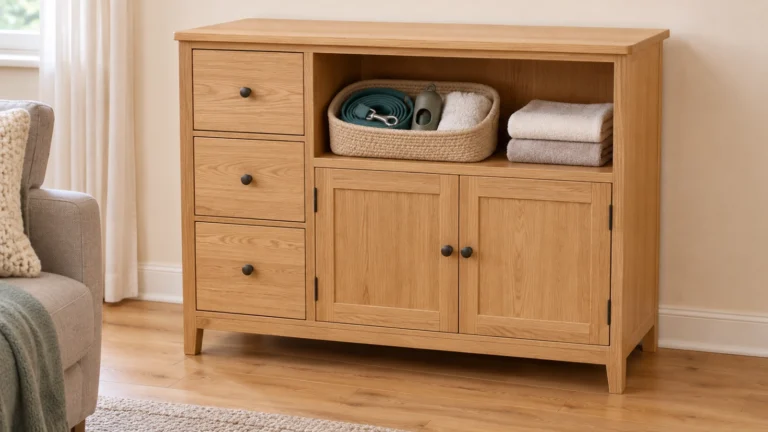
- Furniture-style crates: Check the same interior dimensions, doorway, ventilation, latch access, and cleaning questions. A design that matches the room still needs to work as appropriate dog equipment.
Find out which parts can be washed, what cleaners are permitted, and how everything must dry. Choose bedding suitable for the dog’s behavior and the crate’s dimensions. Do not assume that a removable cover makes the filling washable or that a damaged tray can keep being used.
Read entanglement warnings before use. For example, MidWest’s wire-crate instructions require removing collars, tags, and leads. Keep dangling straps and cords away from the crate, and follow the specific model’s safety instructions.
Plan a Gradual Introduction and an Alternative
Assemble and inspect the crate before inviting the dog near it. For the initial introduction, secure the door fully open using a suitable method allowed by the manufacturer. Leave the approach clear and let your dog investigate and move away without pressure. Humane World for Animals’ introduction guidance supports an open, secured door and avoiding forced entry.
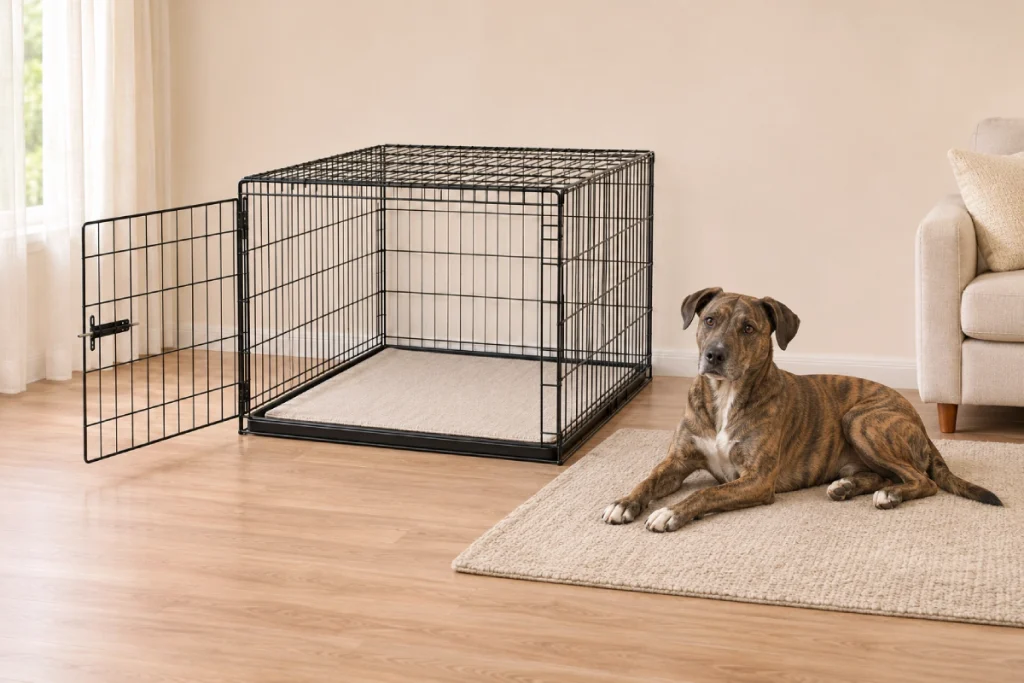
Choosing to enter an open crate does not establish readiness for a closed door or being left alone. Those are further introduction steps that need to follow the dog’s responses. This selection guide does not set a confinement timetable.
Use our guide to introducing your dog to a crate gradually for a progression checklist and signs that it is time to pause.
Have another workable arrangement ready, such as a suitably prepared room, gated area, or appropriate pen. Assess the dog’s comfort and the equipment’s suitability there too. Our puppy-proofing checklist for a small home can help you inspect accessible hazards. A different boundary is an option to assess, not a guaranteed solution to distress.
Sources
- RSPCA: Crates and Crate Introduction
- ASPCA: Separation Anxiety — individual suitability and confinement concerns.
- Humane World for Animals: Crate Training — initial open-door introduction.
- Petmate: Vari Kennel — manufacturer example of interior measurements.
- MidWest: SL54 Wire Crate Instructions — assembly and entanglement warnings.
- MidWest: Sportable Fabric Crate Instructions — model-specific use and care restrictions.