Dog Supply Storage Ideas for Small Homes
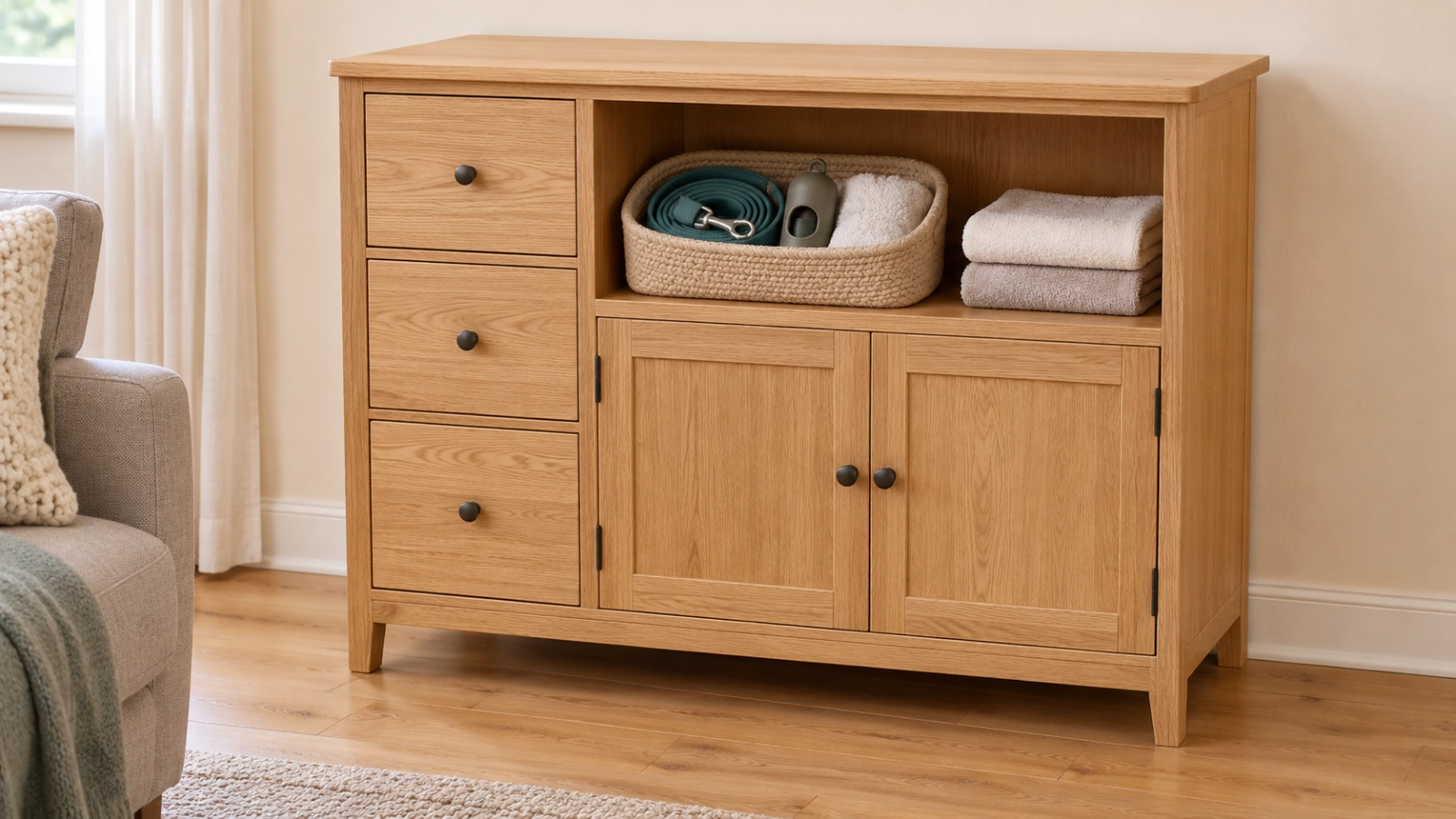
Dog supply storage in a small space works best when each task has a clear home: walking gear near your departure route, food stored according to its label, toys together, and care products secured separately. Start with the drawers and cupboards you have, then add a container only when it solves a specific problem.
Keep frequently used items easy for caregivers to reach while limiting the dog’s access to hazards. If you are still choosing essentials, our new dog checklist for small homes and apartments covers what to gather. The plan below helps organize supplies once they are in your home.
Start With Tasks and Frequency of Use
Sort existing supplies into daily use, regular use, and occasional backups. Notice where you actually use them. A brush may belong near your usual grooming spot, while replacement bedding can live farther away. Give each item one main location so household members can put it back without asking.
Check drawer opening space, door swings, and the route past the storage. Keep heavy supplies stable and avoid creating stacks that must be moved for every task. AKC’s apartment-preparation guide suggests closable storage for items a puppy could reach. Choose security for the dog in front of you, including their ability to open or reach things.
A Storage Plan by Zone
These compact options are examples, not required purchases. Separate zones can be different drawers or compartments rather than separate pieces of furniture. Food, medicine, and cleaner instructions take priority over a convenient location.
| Zone | Keep here | Compact option | Items to secure |
|---|---|---|---|
| Walking | Usual walking gear, waste bags, and a clean, dry towel | A closed drawer or small cabinet near the departure route | Loose bags, straps, and clips; keep the exit clear. |
| Rest | Spare clean covers and bedding | One shelf or closed box for fully dry spares | Chewable packaging; keep supplies off the dog’s bed and approach. |
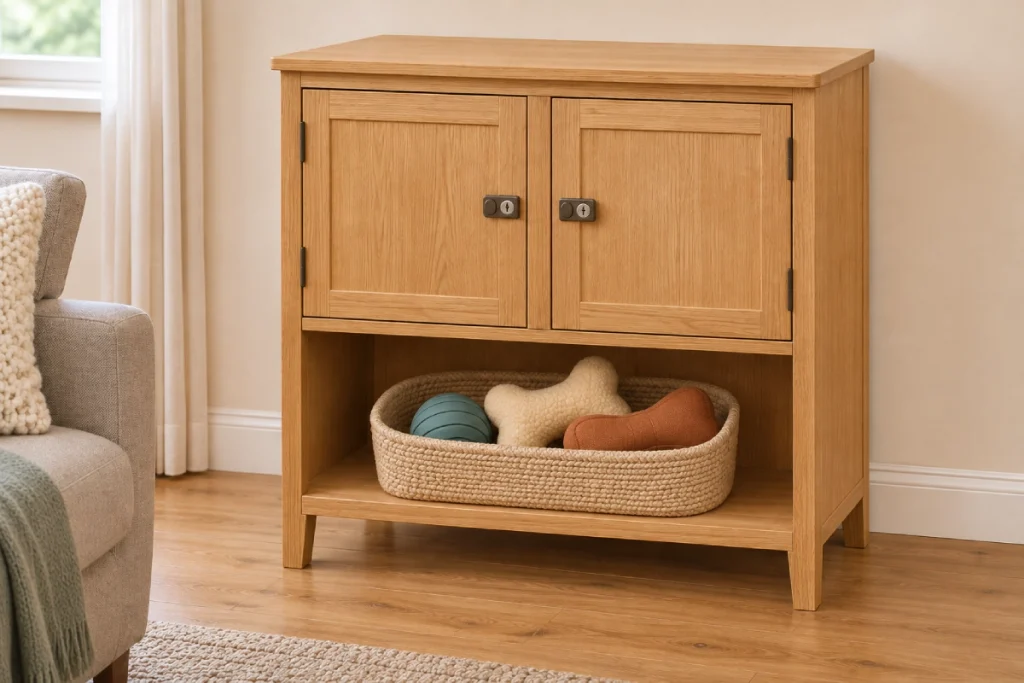
| Toys | Current selection and clean, dry spares | One basket where appropriate, plus closed spare storage | Damaged toys, small parts, and toys requiring supervision. |
| Food and treats | Current food, treats, and dedicated feeding utensils | Original packaging in suitable secure storage; a lidded bin if appropriate | The food supply; keep cleaners and medicines elsewhere. |
| Grooming | Clean brushes, combs, and other suitable tools | A dry box or drawer at the usual care spot | Sharp tools and care products the dog could chew or swallow. |
| Medicines | Original labeled veterinary containers | A dedicated locked compartment that meets storage instructions | All medicines; separate human medicines and each pet’s supplies. |
| Cleaning | Original labeled cleaning products | A different secured cupboard or compartment | Chemicals and used cleaning tools; keep them away from food and bowls. |
Walking Supplies: One Compact Station
Choose one closed drawer, cabinet compartment, or secure caddy near the route you use to leave. Keep the usual leash, collar or harness, waste bags, and dry towel together. Store straps and bags beyond the dog’s reach rather than leaving long loops hanging low.
Place keys and any access card where the responsible person can find them. Keep dirty towels and used equipment apart from clean supplies while they await care. When you return, put the kit back in the same place and replace anything used up. This small reset keeps the next trip straightforward.
An Everyday Walk Packing Check
- Walking equipment: Pick up the dog’s usual correctly fitted gear. Check its condition, clips, and fastenings before use.
- Identification: Check that the identification used with the walking setup has current contact details.
- Waste bags: Check that there are usable bags in the holder or pocket.
- Your access and contact items: Take keys, any entry card, and a phone as appropriate.
- The individual outing: Consider conditions and the dog’s care plan, including drinking water and a suitable bowl when needed. Bring rewards only if appropriate for the dog and activity.
The ASPCA’s general dog-care guidance supports current identification and access to clean drinking water. Adapt the kit to the dog and outing rather than filling a bag with every supply you own.
Store Food With Its Label and Packaging
Read the food label for storage conditions and instructions after opening. Keep dry food cool and dry; follow refrigeration or freezing directions for products that require them. Unused canned or pouched food needs prompt refrigeration or disposal, not a place in the cupboard with unopened supplies. There is no single storage duration for every food.
FDA’s pet-food storage guidance recommends retaining original packaging. If using a second container for dry food, put the whole bag inside when possible. Keep the product name, manufacturer, lot number, UPC, and best-by information available. Close the bag and container appropriately, and secure the food and treat supply from the dog.
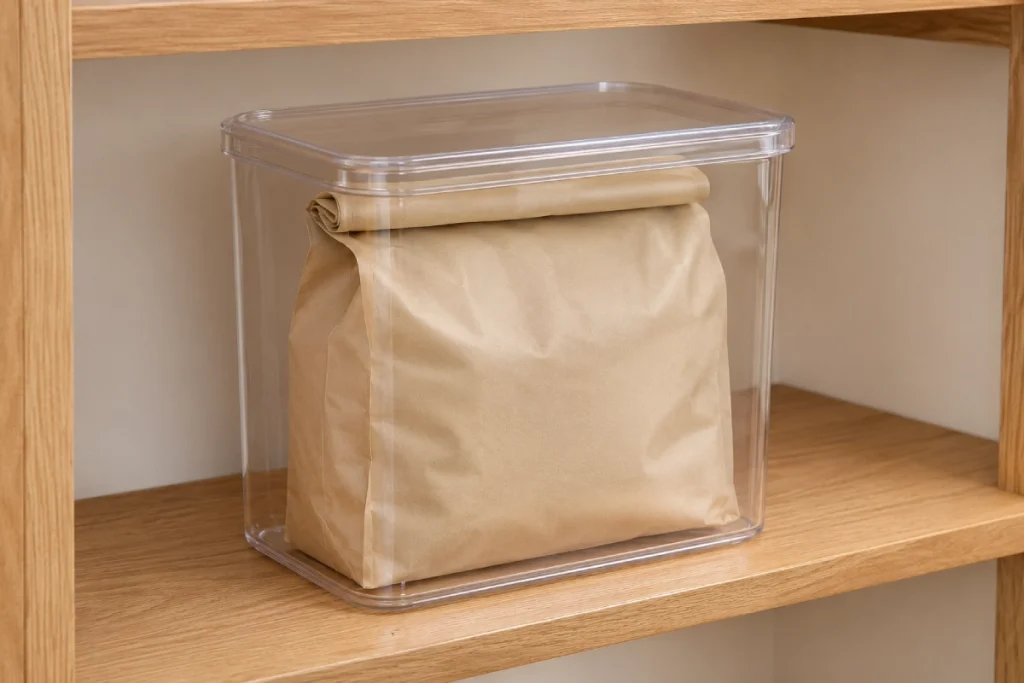
Clean and dry the storage container between bags rather than continually topping it up. Keep feeding utensils separate from cleaning tools. FDA’s handling guidance recommends washing bowls and dedicated scooping utensils after use. Store them clean and dry where the caregiver can find them.
Keep Medicines and Cleaners Secured Separately
Use separate secured compartments for medicines and cleaning products, away from food, treats, bowls, and toys. Keep medicines in their original labeled containers, with human medicines and each pet’s medicines separated to reduce mix-ups.
FDA’s medication-storage guidance warns that high shelves and child-resistant packaging may not stop a pet. Choose a locked location the dog and children cannot access. Follow the medicine’s storage label; ask the veterinarian or pharmacist if refrigeration or another requirement changes your arrangement. Keep directions with the medicine rather than transferring it to a treat jar.
Keep cleaners in their original containers with labels intact, close them properly, and return them to secured storage after use. EPA’s pet-protection guidance advises against storing or spraying cleaning products near pet food and water dishes. Keep pets away from products and treated areas as the label directs.
If you suspect the dog has swallowed a medicine or harmful product, contact your veterinarian promptly and keep the package information available. For a broader check of reachable hazards, use our room-by-room puppy-proofing checklist.
Make Rest and Toy Storage Easy to Reset
Keep spare bedding folded and fully dry in its own space. Leave the dog’s actual resting place accessible and uncluttered. Store brushes and other care tools separately from the bed so resting does not become an invitation for an unplanned grooming session.
Give toys a clear home, with supervised-use items and clean spares stored appropriately. Separate toys needing cleaning or removal from the ready selection. Our guide to rotating dog toys without creating more clutter helps you choose what stays available while keeping a suitable familiar favorite.
Use a Brief Restocking and Cleaning Routine
After a task, return clean items, separate anything wet or dirty, and close secured storage. Dry towels and equipment according to their care instructions before putting them into closed containers. Deal with damage or spills when noticed rather than waiting for a scheduled review.
Choose a convenient recurring stock check, such as a household weekly reset. Check waste bags, food remaining, laundry, tool condition, and package dates. Set reorder points from actual use and delivery time, with prescribed refill arrangements handled through the clinic. This is an organizing routine, not a replacement for label instructions or care due sooner.
Follow each item’s cleaning directions. The CDC’s pet-supply cleaning guidance distinguishes cleaning from disinfecting and emphasizes care instructions. Keep pets away during cleaning, follow product directions, and never mix cleaning chemicals. Ask your veterinarian about additional precautions if illness or household health needs affect cleaning.
Copy a Simple Supply Inventory
Copy this entry once for each supply you want to track. Use the exact location, such as “entry drawer,” rather than “somewhere near the door.” Choose a restock trigger that fits your household; there is no universal quantity to keep.
Supply: ______________________________
Zone and exact location: ______________
Amount on hand: _______________________
Restock trigger: ______________________
Label, storage, or care note: _________
Person responsible: ___________________
Last checked: _________________________
For example: “Waste bags; entry drawer; one spare roll; add to the shopping list when the spare is opened.” This is an illustrative household choice, not a required stock level. For medicines, keep the original directions authoritative and follow the clinic’s refill plan; an inventory is not a dosing record.
If an item repeatedly ends up somewhere else, reconsider its location before buying another organizer. Keep the system easy enough for every caregiver to use while protecting the dog’s access to rest, water, and clear routes through the home.
Sources and Further Reading
- American Kennel Club: Preparing an Apartment for a New Puppy
- ASPCA: General Dog Care
- FDA: Proper Storage of Pet Food and Treats
- FDA: Safe Handling of Pet Food and Treats
- FDA: Properly Store Medications to Keep Your Pet Safe
- EPA: Read the Label First—Protect Your Pets
- CDC: Cleaning and Disinfecting Pet Supplies