How to Use a Snuffle Mat for Dogs: A Beginner’s Guide
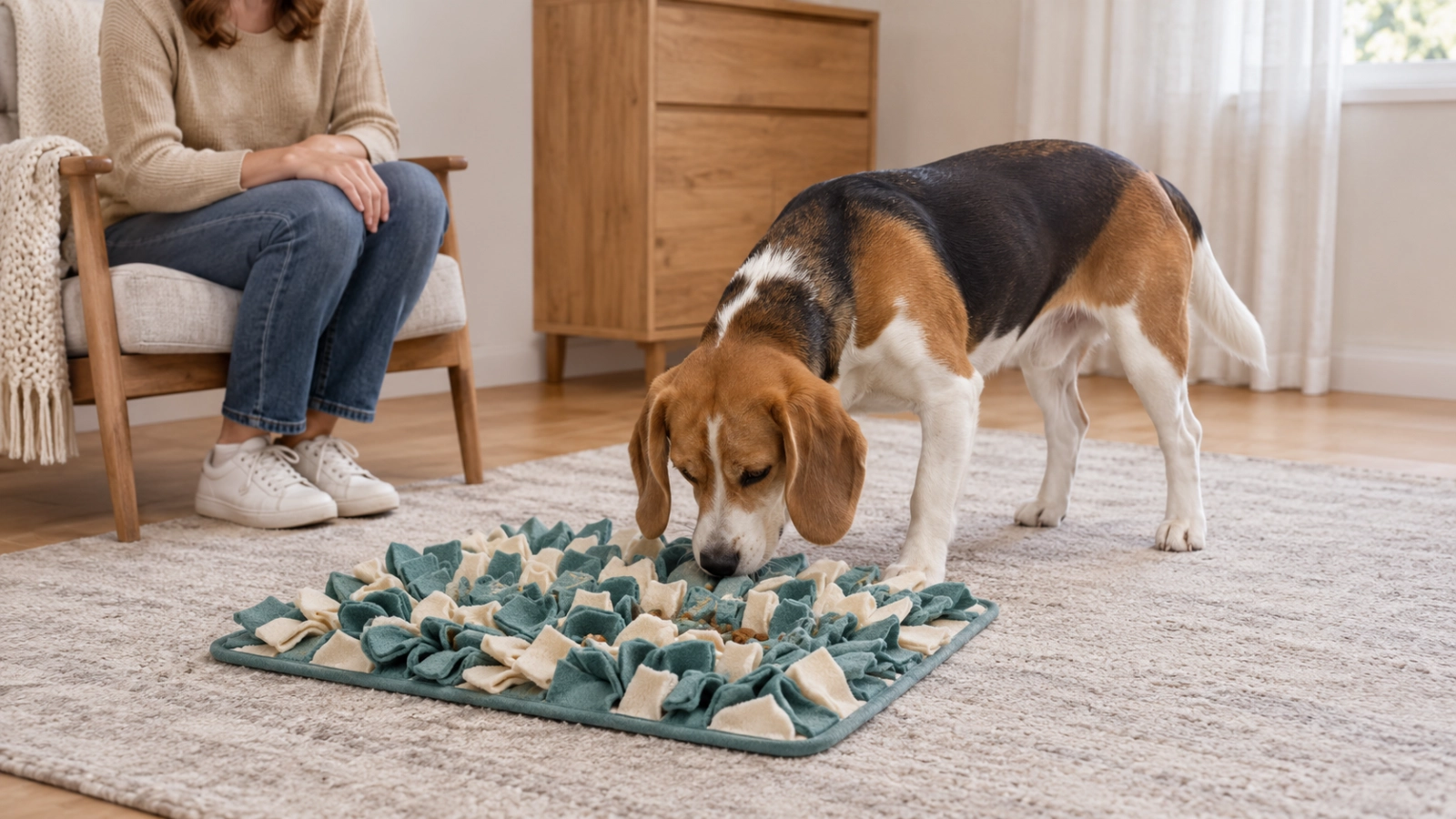
To introduce a snuffle mat, place suitable food where your dog can find it easily, let them approach by choice, and stay to supervise the entire session. Begin with visible food on top or in shallow folds, following the product instructions. Simplify the search if your dog struggles, and stop if they chew or tear the material.
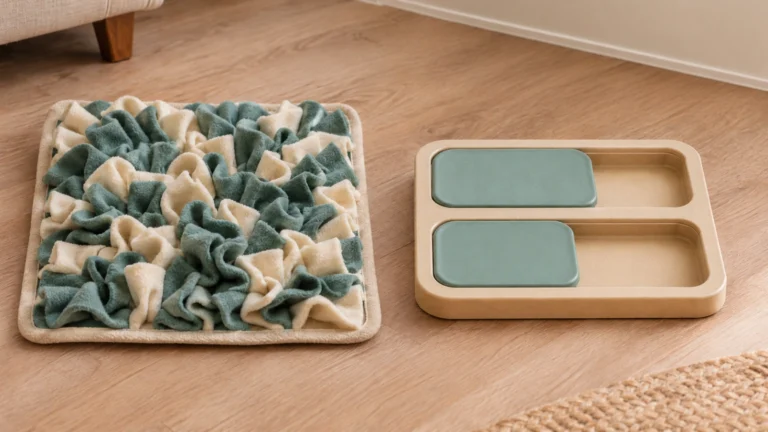
A snuffle mat holds food among fabric folds or strands for a dog to search through. This guide covers the first session and the cleanup afterward. If you are still choosing equipment, start with our snuffle mat vs. puzzle feeder comparison.
Check the Mat and Your Dog’s Suitability
Read the exact product’s size, use, supervision, food-compatibility, and care guidance before adding food. For example, Outward Hound’s Snuffle Palz safety instructions say it is not a chew toy and is not recommended for heavy chewers. Check the restrictions for the mat you own.
Consider how your dog handles fabric. If they routinely tear it apart or swallow pieces, do not offer a fabric mat simply because you can watch them. Ask your veterinarian about suitable alternatives, especially with a history of swallowing objects. Humane World’s toy guidance emphasizes matching items to the individual dog and removing damaged ones.
Choose food that fits both the mat’s instructions and your dog’s current feeding plan. Set aside suitable food from that plan rather than automatically adding extra snacks. Follow prescribed dietary instructions, and ask your veterinarian if you are unsure whether the food or feeding method is appropriate. There is no universal amount for a first session, and the whole meal does not need to go into the mat.
Your First-Session Checklist
- Directions checked: I know how this mat should be used, washed, and dried.
- Condition checked: The fabric, seams, backing, and attachments are intact, with no loose or missing pieces.
- Food checked: The food is allowed for my dog and compatible with this mat.
- Space prepared: The area is quiet and clear, with secure footing and room to approach, turn, and leave.
- Supervision arranged: I can watch throughout. Other pets are comfortably separated, and children will not approach the food activity.
- Easy setup ready: Food will be visible and reachable without pulling apart the fabric.
- Finish planned: I can collect the mat safely, remove leftovers, inspect it, and complete the required cleaning.
Make the First Search Obvious
Open and position the mat as its maker directs. Place a small amount of the selected food on top or in shallow, accessible folds, where the dog can see and reach it. Avoid packing food deeply into dense fabric. You can watch how the dog handles an easy setup before deciding whether this equipment suits them.
Allow a willing approach without pushing the dog’s nose into the mat, holding them in place, or insisting on a sit first. Stay nearby and watch without hovering over the food. Let the dog collect the visible pieces before expecting them to search farther into the fabric.
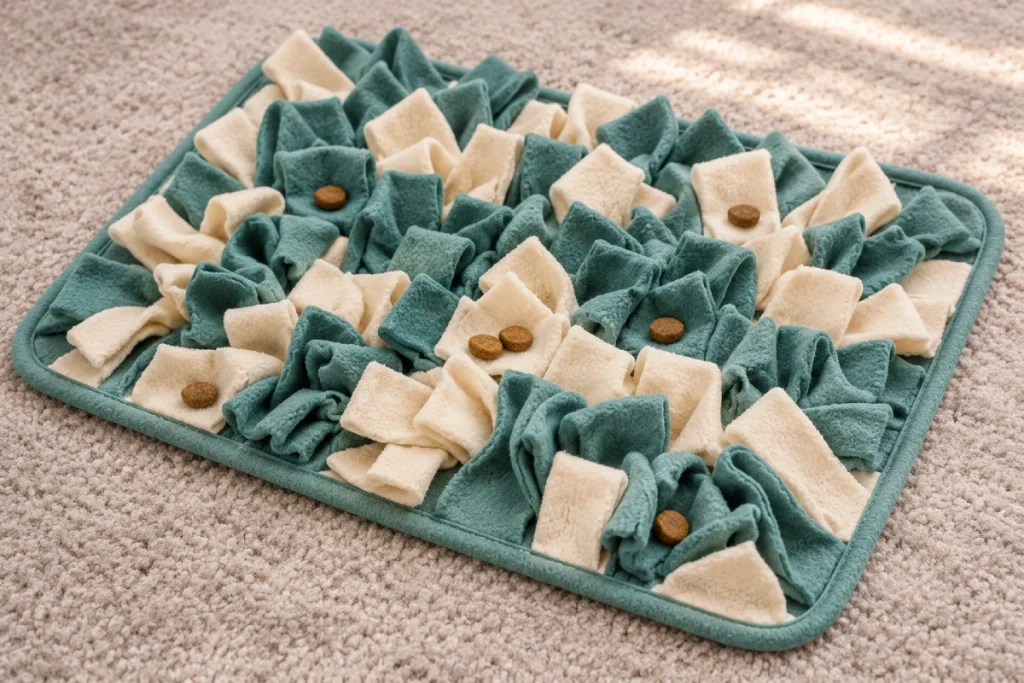
If they cannot locate a piece, help by making it visible and accessible. Move the fabric aside only when the dog has stepped away and it is safe to reach. Battersea’s brain-game guidance recommends an easy start and help when a dog struggles. If the mat is still confusing, our beginner Find It game offers a simpler search without fabric folds.
Watch What the Dog Does With the Mat
Notice whether your dog locates food and moves between accessible spots, or begins gripping, lifting, shaking, or tearing the mat. A paw touching the fabric is not automatically a problem. Stop if searching turns into chewing or tearing the material, even if food remains.
Look at the whole dog and the setting. A bark, pause, or glance toward you cannot establish frustration on its own. Check the food’s visibility, the mat’s stability, distractions, and whether the dog wants to continue. Our guide to dog body language during play and when to pause explains this context-first approach.
| What you notice | What to check | A sensible adjustment |
|---|---|---|
| The dog searches but misses the food or repeatedly looks to you. | Is food buried, trapped, or difficult to reach? | When safe to reset, expose the food on top. End if the easier version is still unhelpful. |
| The dog grips, shakes, or tears the fabric. | Is the interaction shifting from food searching to material chewing? | Stop the activity. Retrieve the mat when the dog has released it and moved away safely; reassess suitability before offering it again. |
| The mat slides or bunches under the dog. | Is the surface stable, and is the mat positioned as directed? | Pause and reset on suitable secure footing. Stop using this setup if it will not stay stable. |
| The dog walks away. | Is there a distraction, little interest, or possible discomfort? | Let them leave and end the session. Keep ordinary feeding arrangements available; do not make eating depend on the puzzle. |
| A seam opens, a strip loosens, or backing is damaged. | Are any pieces loose or missing? | Remove the mat from use when safe. If a piece may have been swallowed, contact your veterinarian promptly. |
If your dog stiffens over the mat, growls when approached, or guards it, stop approaching and give space. Do not grab the mat or punish the warning. Pause mat sessions and seek veterinary and qualified, reward-based behavior support. Dogs Trust’s resource-guarding guidance explains why taking items or confronting a guarding dog can make the situation worse.
Adjust One Part at a Time
If the dog willingly uses the easy setup without damaging the mat, you can try a slight change next time. For example, leave most food obvious and place some just inside a shallow fold, if the design permits. Change visibility before making several parts of the task harder at once.
Choose an easier setup next time if the dog needs repeated help. Let them leave whenever they want to stop. Repeating an easy version is fine; deeper hiding is optional. Dogs Trust’s enrichment advice recommends matching activities to abilities, dietary needs, and preferences, then adjusting from the dog’s response. Avoid repeatedly refilling the mat just to stretch the session.
Finish, Inspect, and Clean
Collect the Mat Safely
Finish when the selected food is gone, when the dog chooses to stop, or sooner if the interaction becomes unsuitable. Wait until they have released the mat and moved away before collecting it. Do not chase them or wrestle it from their mouth. If you cannot retrieve it safely, get individual advice rather than reaching into a guarded item.
Check between folds and underneath for uneaten food. Handle leftovers according to the food’s storage instructions. Inspect strips, seams, backing, and any attachments, and check the floor for detached material. Put a damaged mat out of use. If you think your dog swallowed any part, contact your veterinarian promptly rather than waiting for signs of illness.
Follow the Exact Cleaning Directions
Use the mat’s own washing and drying instructions. They vary: PAW5 permits a washer and dryer for its Wooly mat, while the Snuffle Palz directions specify spot cleaning or washing with warm water and mild soap, careful rinsing, and air drying. These examples illustrate why a machine-washable claim or fabric appearance cannot supply care instructions for a different model.
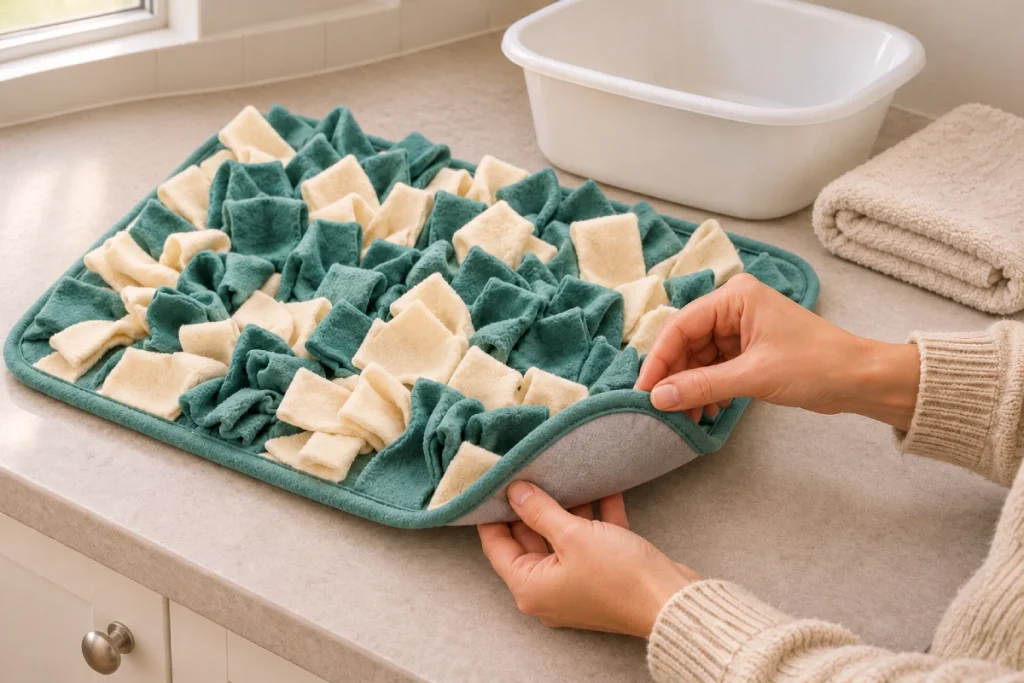
Remove food residue after the session and clean as the product and food-contact instructions require. Do not use a generic toy-cleaning calendar to leave food residue in a mat. If directions are missing or unclear, ask the manufacturer before choosing a wash cycle, heat setting, or cleaner.
The CDC’s pet-supply cleaning guidance recommends following item-care and cleaner labels. Keep pets away during cleaning and follow any rinsing and drying requirements. Let the mat dry completely before storing it out of the dog’s reach, then inspect it again before the next use.
Keep the next session just as easy if that worked well. If this mat does not suit your dog, choose another activity; our food-free enrichment ideas for dogs offer options beyond food puzzles. Leave room for water, ordinary care, and undisturbed rest.
Sources and Further Reading
- Dogs Trust: Snuffle Mats and Food Searching
- Dogs Trust: Enrichment Activities for Dogs
- Humane World for Animals: Choosing Dog Toys
- Battersea: Brain Games for Dogs
- Outward Hound: Snuffle Palz Safety and Care
- PAW5: Wooly Snuffle-Mat Care Information
- CDC: Cleaning and Disinfecting Pet Supplies
- Dogs Trust: Understanding Your Dog’s Body Language
- Dogs Trust: Resource Guarding Food and Toys