Food-Free Enrichment for Dogs: 8 Simple Ideas
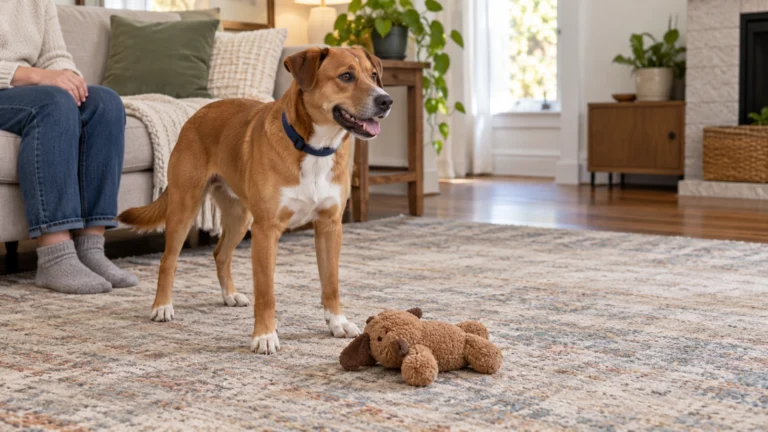
Food-free enrichment for dogs can be as straightforward as sniffing an interesting spot, finding a favorite toy, or choosing a quiet place to rest. Start with something your dog already seeks out, offer an easy version, and let their response guide what happens next.
The eight options below use no edible rewards or food puzzles. That does not make food-based enrichment a bad choice; it simply gives you other ways to add interest. For a broader mix of activities, including food games, see our indoor games for dogs in small spaces.
Choose for Your Dog’s Preferences
Notice what your dog chooses during ordinary moments. Do they carry toys, investigate smells, invite a game, seek gentle contact, or prefer company without touching? Their interests may change with the setting and time of day. Breed alone cannot choose the activity for them. Dogs Trust’s enrichment guidance recommends considering the individual dog’s health, abilities, preferences, and engagement.
Use toys sized and designed for your dog’s way of playing, following the manufacturer’s guidance. Inspect them before and during use. Remove damaged items from use, including toys with exposed stuffing, loose parts, or missing pieces. Humane World’s toy guidance emphasizes individual suitability and supervision; an intact-looking toy is not suitable for every dog.
Stay with your dog during these games and introductions. Keep children out of tug games and give other pets their own comfortable space instead of arranging competition. Follow any individual veterinary instructions about movement or activity.
An Eight-Activity Food-Free Chooser
Choose one option that fits today’s dog and space. This is a menu, not a daily checklist, and you do not need to buy everything in the equipment column.
| Activity | Equipment | Easy adaptation |
|---|---|---|
| 1. Sniff-focused outing | Usual suitable walking equipment | Pause at a quiet, familiar sniffing spot instead of seeking a new route. |
| 2. Find a familiar toy | An intact toy the dog values | Let the dog watch you place it in plain view nearby. |
| 3. Gentle tug together | A suitable tug toy with room between hands and mouth | Offer a brief, gentle game, then pause. |
| 4. Short ground-level retrieve | A suitable toy and clear, nonslip floor | Place the toy close by rather than rolling it. |
| 5. Find a familiar person | An adult helper if useful; optional toy | Keep the person close and partly visible. |
| 6. Choose and explore a toy | Two suitable toys you already own | Offer one familiar toy if two choices seem confusing. |
| 7. Quiet company with optional touch | No special equipment | Sit nearby without petting if that is the dog’s preference. |
| 8. A choice of resting spots | Two appropriate resting surfaces | Use an existing bed and a comfortable, nonslip mat. |
1. A Sniff-Focused Outing
During an outing that suits your dog’s care plan, pause where they want to investigate a suitable patch of ground. Give them time to sniff while keeping them away from trash, unknown substances, traffic, and other hazards. You can revisit a quiet familiar spot; novelty is optional. Let the dog move on rather than pulling them back to a smell you selected. This option adds variety without filling a small home with equipment.
2. Find a Familiar Toy
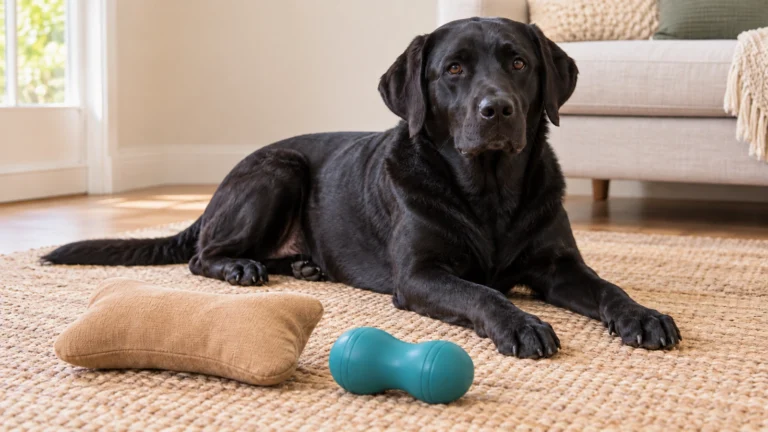
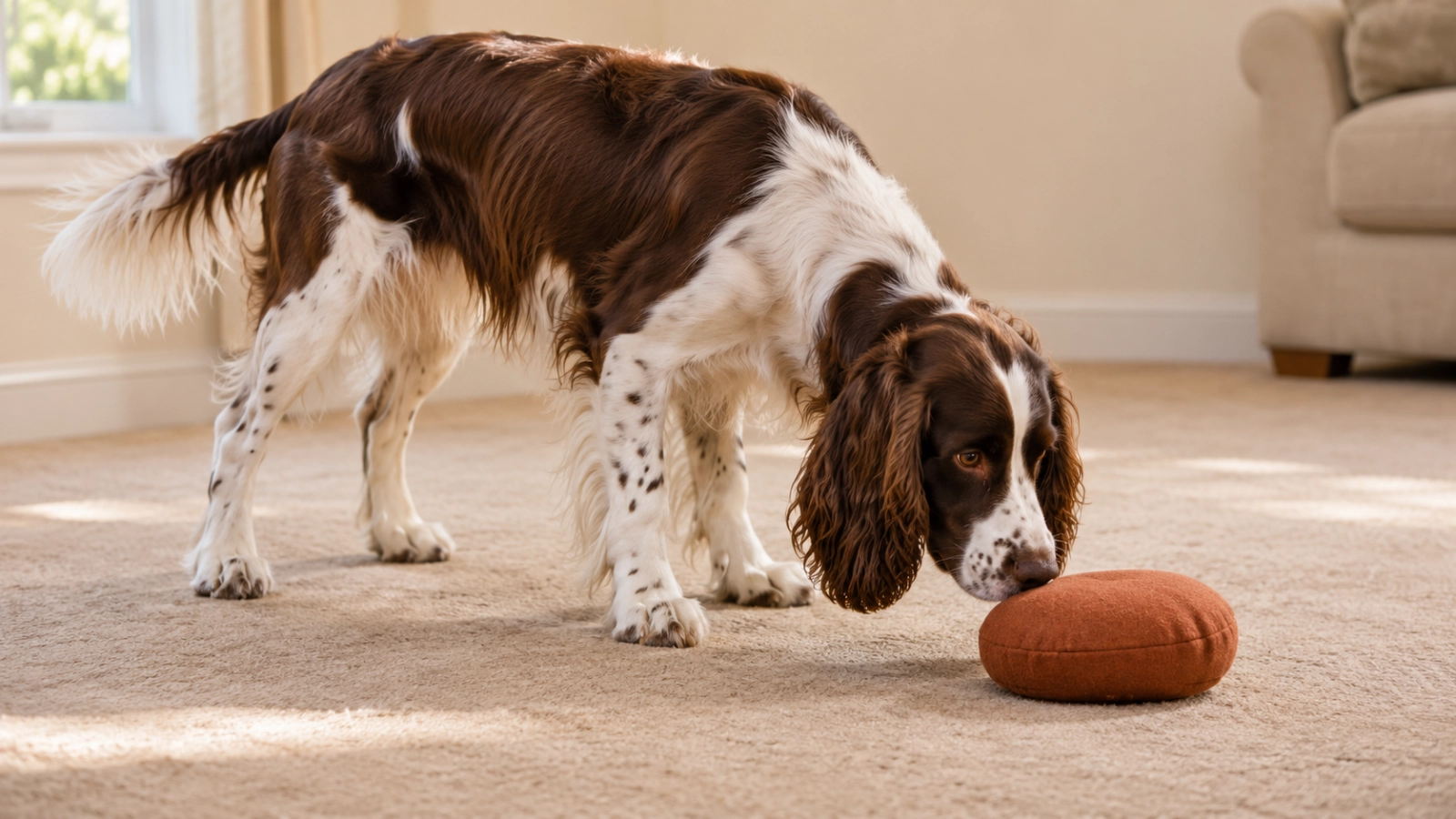
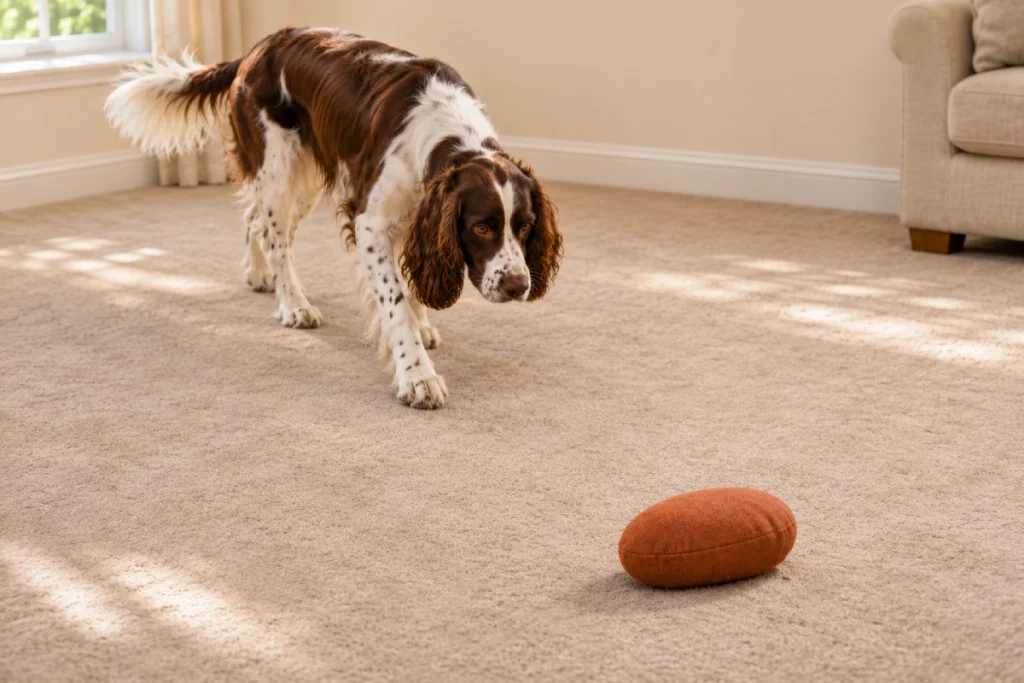
Show your dog a toy they enjoy, then place it on clear floor where they can easily see and reach it. Say “find it” if you use that cue. Let them investigate and enjoy the toy appropriately; bringing it back is optional. If they lose track, point or make the placement more obvious. Our beginner Find It guide explains the toy option and easy resets in more detail.
3. Gentle Tug Together
An adult can offer a suitable tug toy and let the dog choose whether to take hold. Keep movements gentle and low, with room between your hands and their mouth. Never lift the dog by the toy. Battersea’s play guidance advises against sharp upward jolts. Use a familiar release cue or a willing exchange for another toy. Do not pry the mouth open or chase the dog. Pause if teeth contact skin or clothing.
4. A Short Ground-Level Retrieve
Place a suitable toy nearby and see whether your dog wants to pick it up. If they enjoy returning it, invite another easy turn after they willingly release it. A gentle floor-level roll is an option only where they can approach without sliding or colliding with furniture. Keep the route short and clear. Carrying the toy away can simply be the end of that round; a formal retrieve is not required.
5. Find a Familiar Person
Have an adult move just around a nearby interior corner while remaining partly visible, then call the dog once. Another adult can keep the dog company if helpful. Welcome the dog with a toy game or praise if they enjoy it. The AKC’s cognitive-games guide includes person-search games. Begin with an obvious person and an open route; skip disappearing if that worries your dog. No closed doors, stairs, or squeezing into hiding places are needed.
6. Choose and Explore a Toy
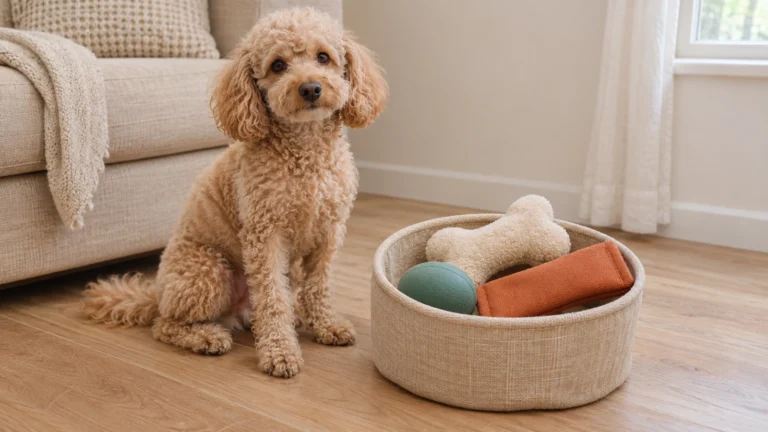
Set two appropriate toys apart on open floor, leaving room for the dog to approach, turn, or leave. They might sniff one, carry the other, or ignore both. There is no correct selection. Let them investigate without repeatedly pushing a toy toward them. Use what you already own, and keep a suitable familiar favorite available when helpful. Our dog toy rotation guide can help organize the remaining collection.
7. Quiet Company With Optional Touch
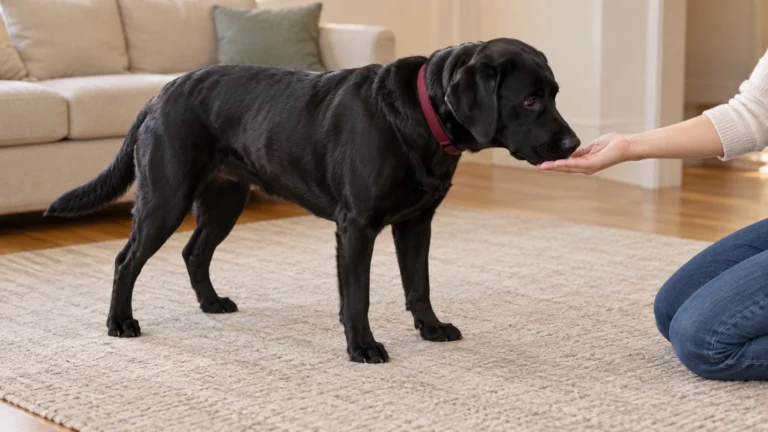
Sit nearby and let your dog choose whether to approach. If they already enjoy petting, offer brief, gentle contact in a familiar place on their body, then stop your hand and observe. Battersea’s advice on interacting with dogs recommends pausing contact and allowing choice. Being close to you does not automatically invite touch. If they turn away or leave, let them. Quiet company without petting is also an option; do not hug or restrain them to continue.
8. A Choice of Resting Spots
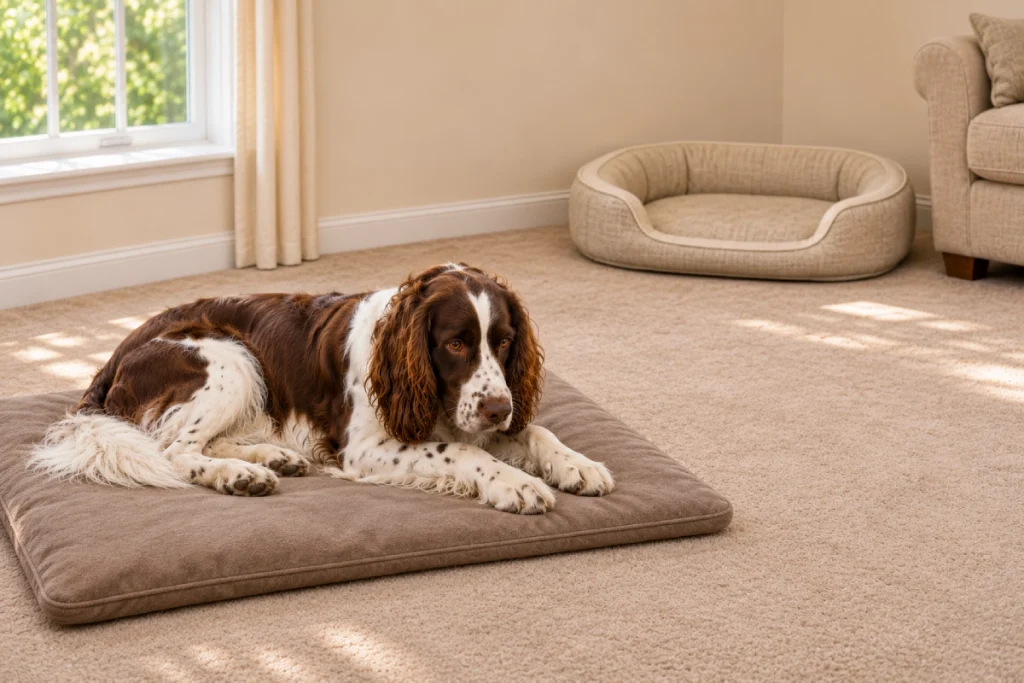
Keep two appropriate resting options available, such as the dog’s usual bed and a comfortable mat in another quiet spot. Leave clear access to both and let the dog choose without moving them between the two. The RSPCA’s home-environment guidance calls for a comfortable place to rest undisturbed. Our guide to choosing a dog bed location in a small home covers placement. Leave a sleeping dog to rest rather than waking them for enrichment.
Make the Setup Work in a Small Home
Clear cords, small objects, and anything the dog could knock over. Use a surface with secure footing; mats should lie flat and stay in place. Allow room for the dog’s whole body to turn. A long hallway is not automatically a suitable retrieve route. When space is limited, choose a visible toy search, optional contact, or a resting choice rather than adding speed.
For example, you might place one familiar toy on open floor while you sit nearby. If the dog investigates, allow an easy interaction. If they choose the nearby mat instead, leave them there. You have offered a choice without adding obstacles, more equipment, or another task.
Watch the Response and Leave Room for Rest
Watch the whole dog and what is happening around them. Voluntary approaches and continued participation are useful observations, but no single posture, wag, or sound proves enjoyment. Stop adding movement if the game becomes harder to manage. If the dog leaves, do not follow with the toy or repeatedly call them back. For more detail, see dog body language during play and when to pause.
If your dog freezes over a toy, growls when you approach, or guards an item, give space and stop the activity. Do not reach in, chase, or punish the warning. Dogs Trust’s resource-guarding guidance recommends veterinary assessment and behavior support. Get individual help before restarting activities around guarded items. Contact your veterinarian for a sudden change in behavior or concern about pain.
Keep water available and allow undisturbed rest afterward. These ideas add choices alongside meals, bathroom breaks, suitable activity, and company. They do not need to fill every quiet moment. A short note such as “chose sniffing, ignored tug, rested on the mat” can help you select another option next time.
Sources and Further Reading
- Dogs Trust: Enrichment Activities for Dogs
- Humane World for Animals: Choosing Dog Toys
- Battersea: How to Play With Your Dog
- American Kennel Club: Cognitive Games, Including Person Searches
- Battersea: How to Approach a Dog
- RSPCA: Creating a Good Home for Your Dog
- Dogs Trust: Understanding Your Dog’s Body Language
- Dogs Trust: Resource Guarding Food and Toys